

A week in Barcelona is obviously not enough to learn all about this city, but it did give us a good intro to the history of the Gothic Quarter, the incredible architecture of Antoni Gaudí, and a chance to check out the National Art Museum of Catalonia in the National Palace.
Lodging in Barcelona
We chose to stay in an Airbnb in the Gothic Quarter which was a great location for wandering the narrow streets, seeing the old buildings, and getting buses or metros around the city. We chose one of the cheapest options we could find, and it was still around $200 USD per night. Even outside of the Gothic Quarter the prices were similar. We only searched for lodging about 3 weeks before our arrival, so maybe we missed out on the better deals.
Our stay in Barcelona started off a bit rough with a few issues in our Airbnb. The apartment was essentially a large studio, with a bed, couch, and kitchen. The bathroom had a decent shower and wasn’t too small, but it had a stinky smell. The walls were thin, and we could hear the neighbors and any noise outside, though thankfully it was only really loud on Friday and Saturday night. On the first night, the kitchen sink started leaking onto the floor. We had to find the leak, find a way to slow it down and put a bucket under it, and line the floor with towels. We contacted the manager who texted back quickly. The next day they came to fix it, but the fix failed so we had to contact them again and this time they really fixed it. Once the sink leak was addressed, we accepted the stinky bathroom and occasional noise and still enjoyed our stay.
The Gothic Quarter
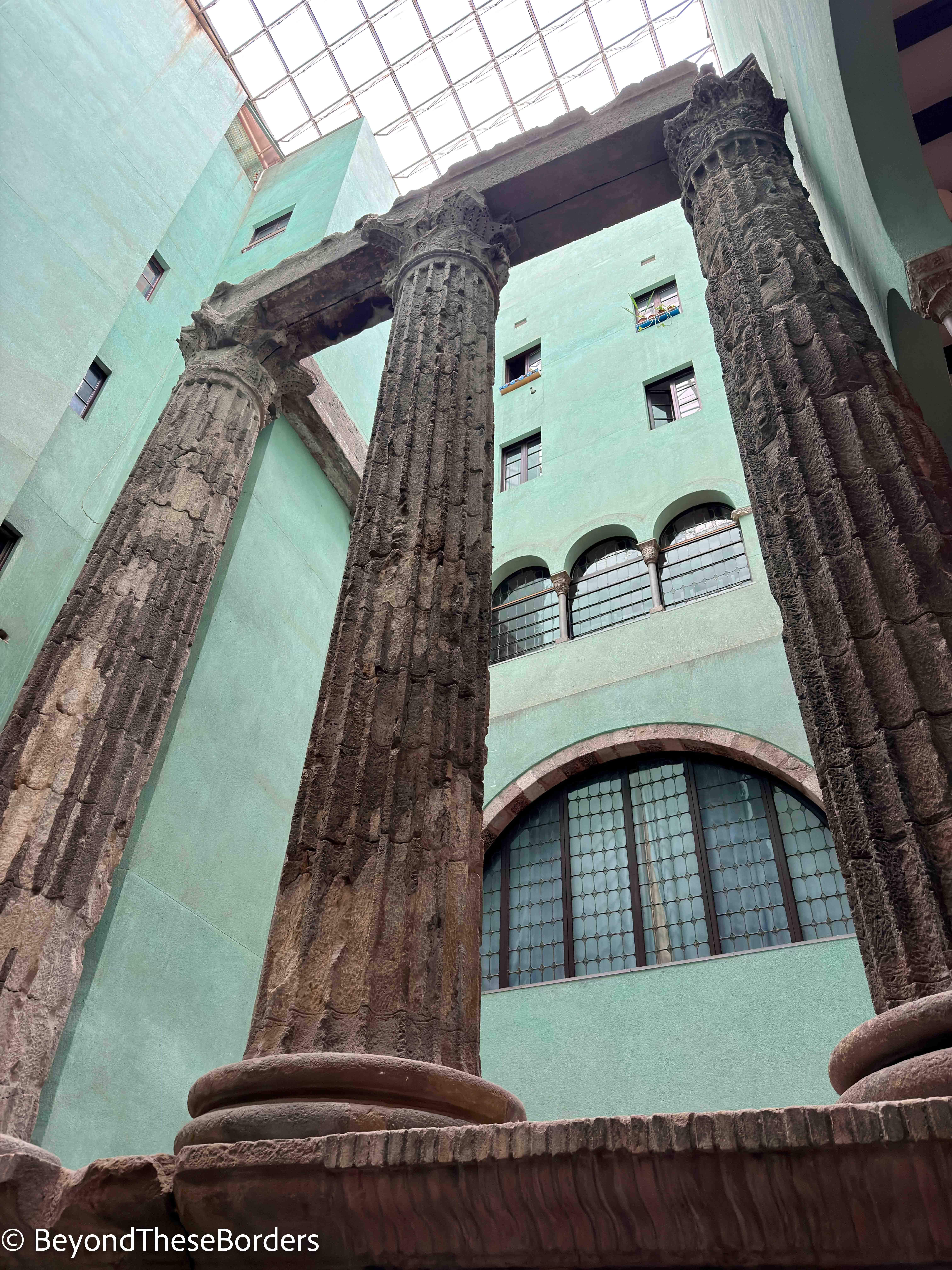
Temple d’August
The Gothic Quarter is the oldest neighborhood in Barcelona with buildings from the 13-15th century. People actually lived here during Roman times and there are still a few Roman ruins that can be found in the area like the Temple d’August. These columns were part of a temple that was constructed during the 1st century CE in the forum of the city. According to the Barcelona City History Museum, the temple stood at least until the 11th century. During the late Middle Ages, pieces of it were taken and incorporated into other buildings. In the 19th century a few columns of the temple were able to be restored. They are located inside the courtyard of a building within the Gothic Quarter and can be viewed for free.
Palau Reial Major (Grand Royal Palace)
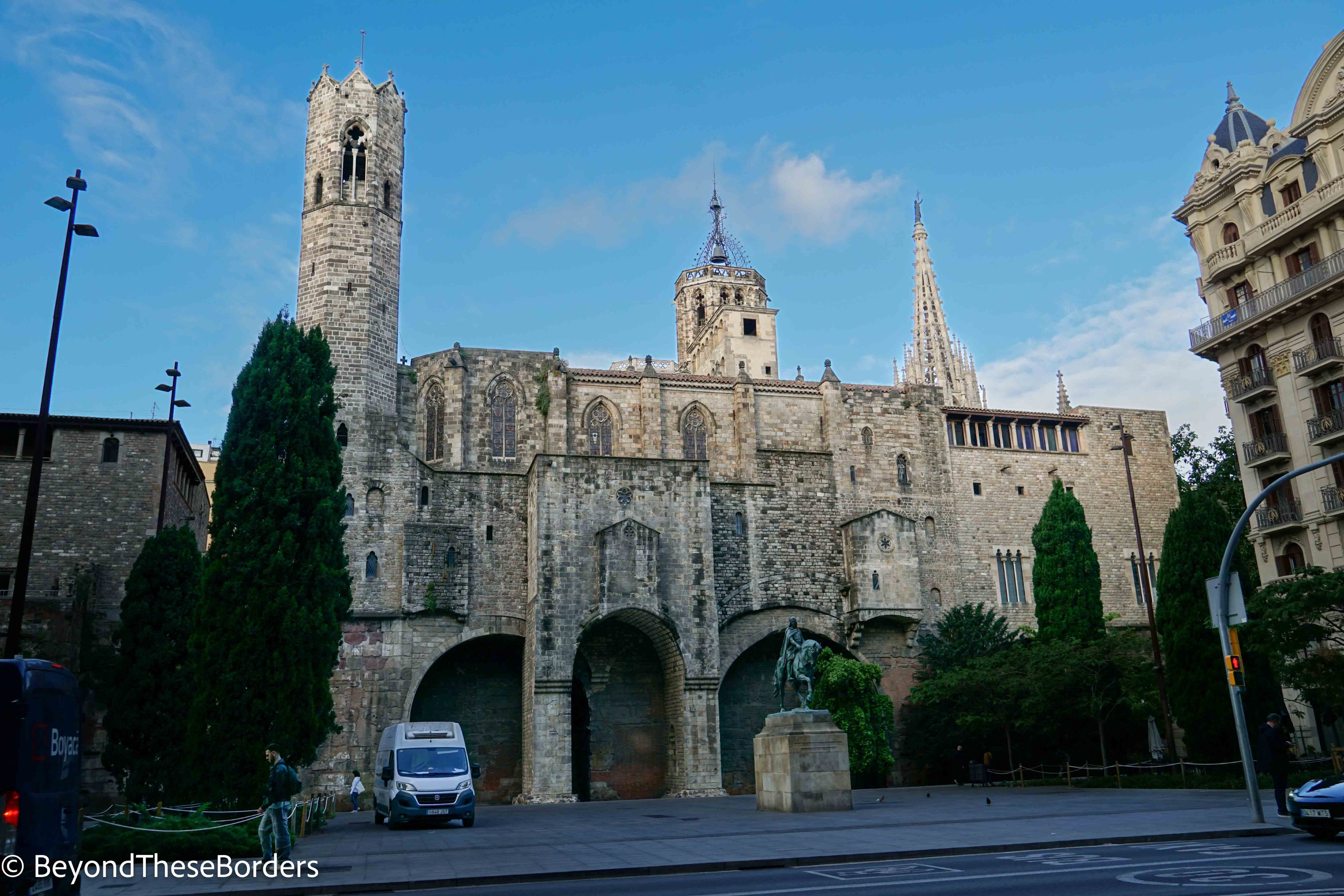
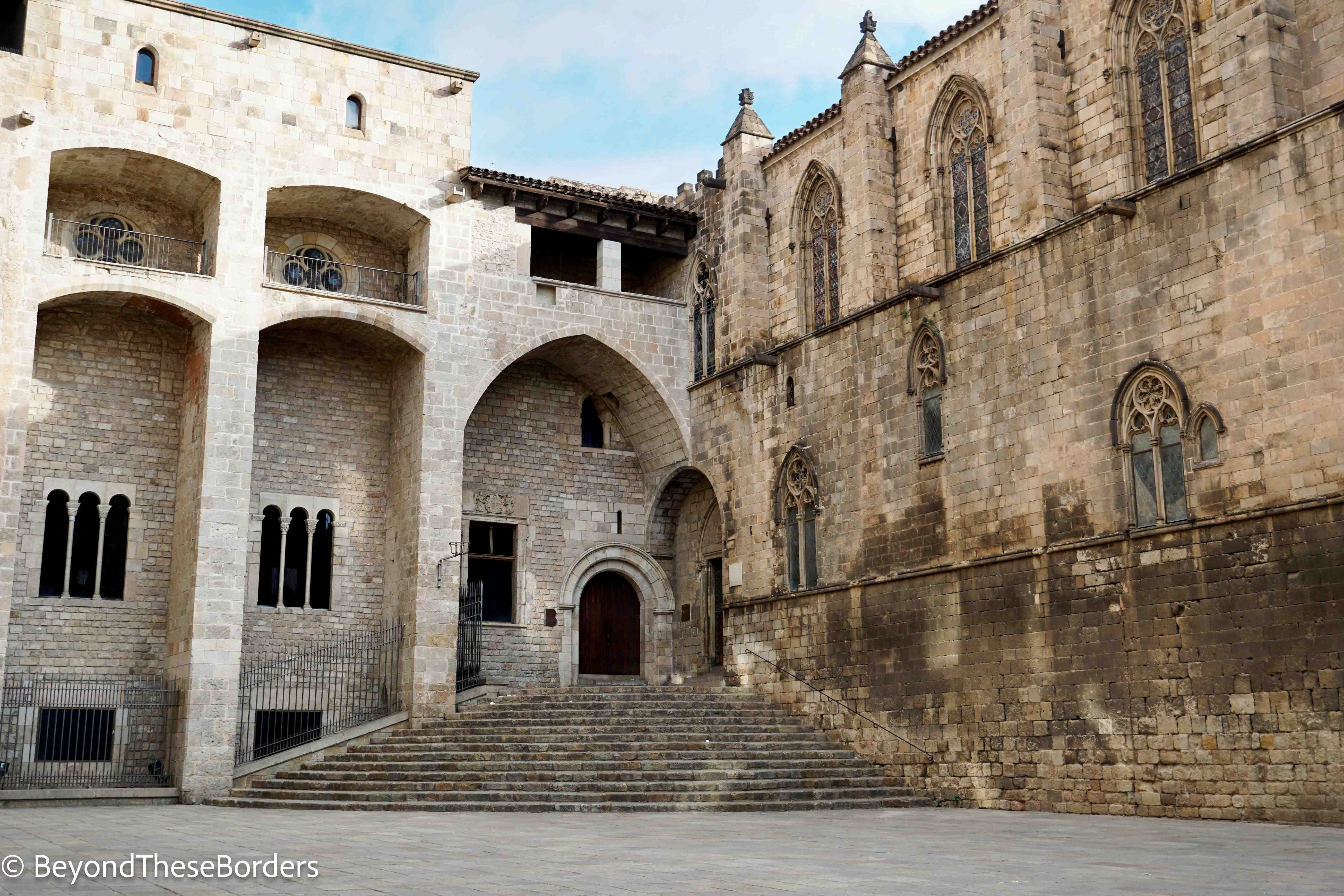
The first structure that sparked my attention in the Gothic Quarter was a giant, very old building. I looked at Google Maps and found that it is part of the medieval royal palace of Palau Reial Major. This is where the Counts of Barcelona and later the Kings of Aragon lived in the 13th-15th centuries. Later, the Crown of Aragon united with the Kingdom of Castile and the royal palace was moved to Madrid.
Catedral de Barcelona (Barcelona Cathedral)
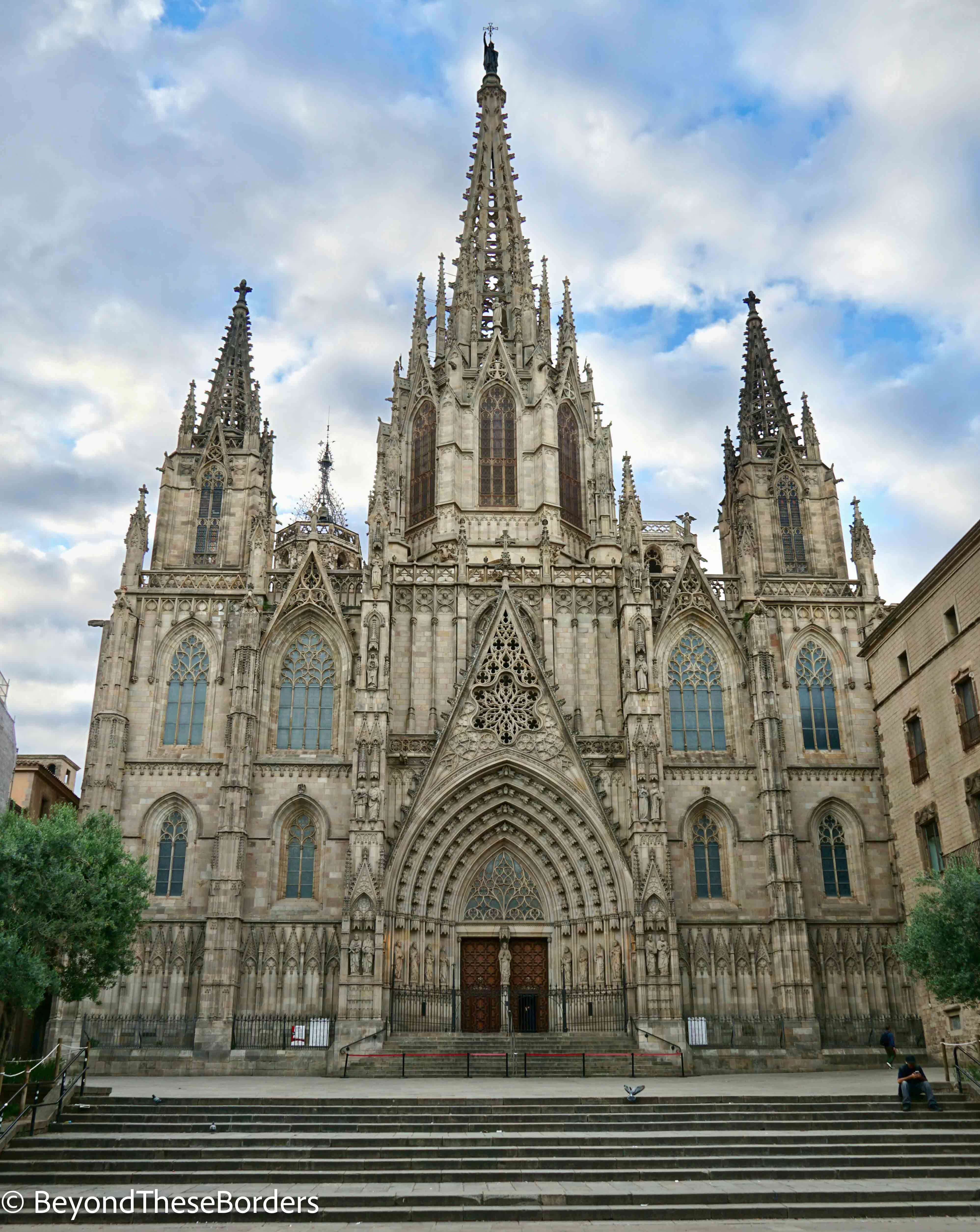
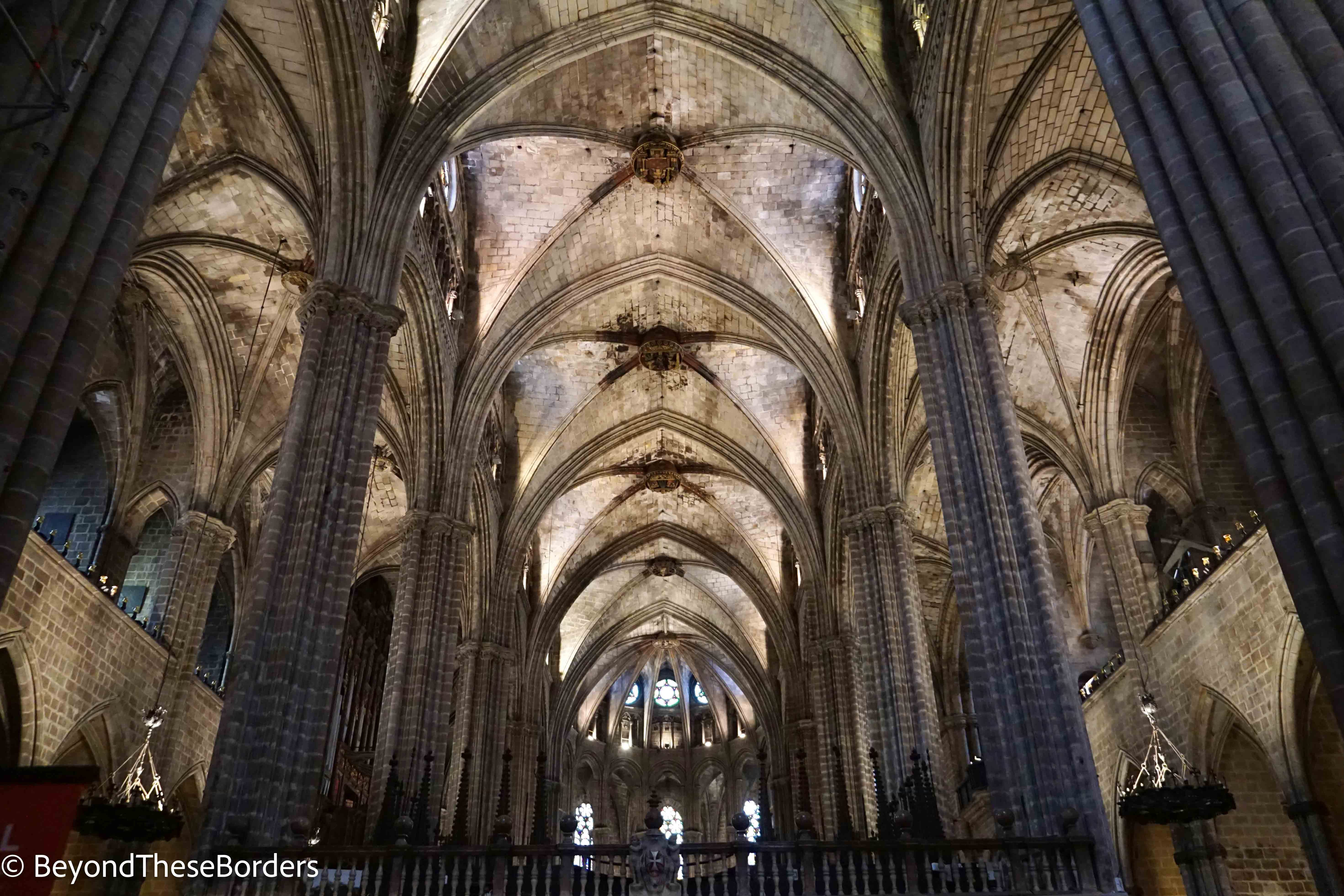
The main church in the Gothic Quarter is the Barcelona Cathedral. The Gothic exterior is quite striking though not especially complex. I love the layers around the front door and the spired pinnacles. The majority of the cathedral was built between the 13th and 14th centuries, however some of it, including the facade wasn’t finished until 500 years later.
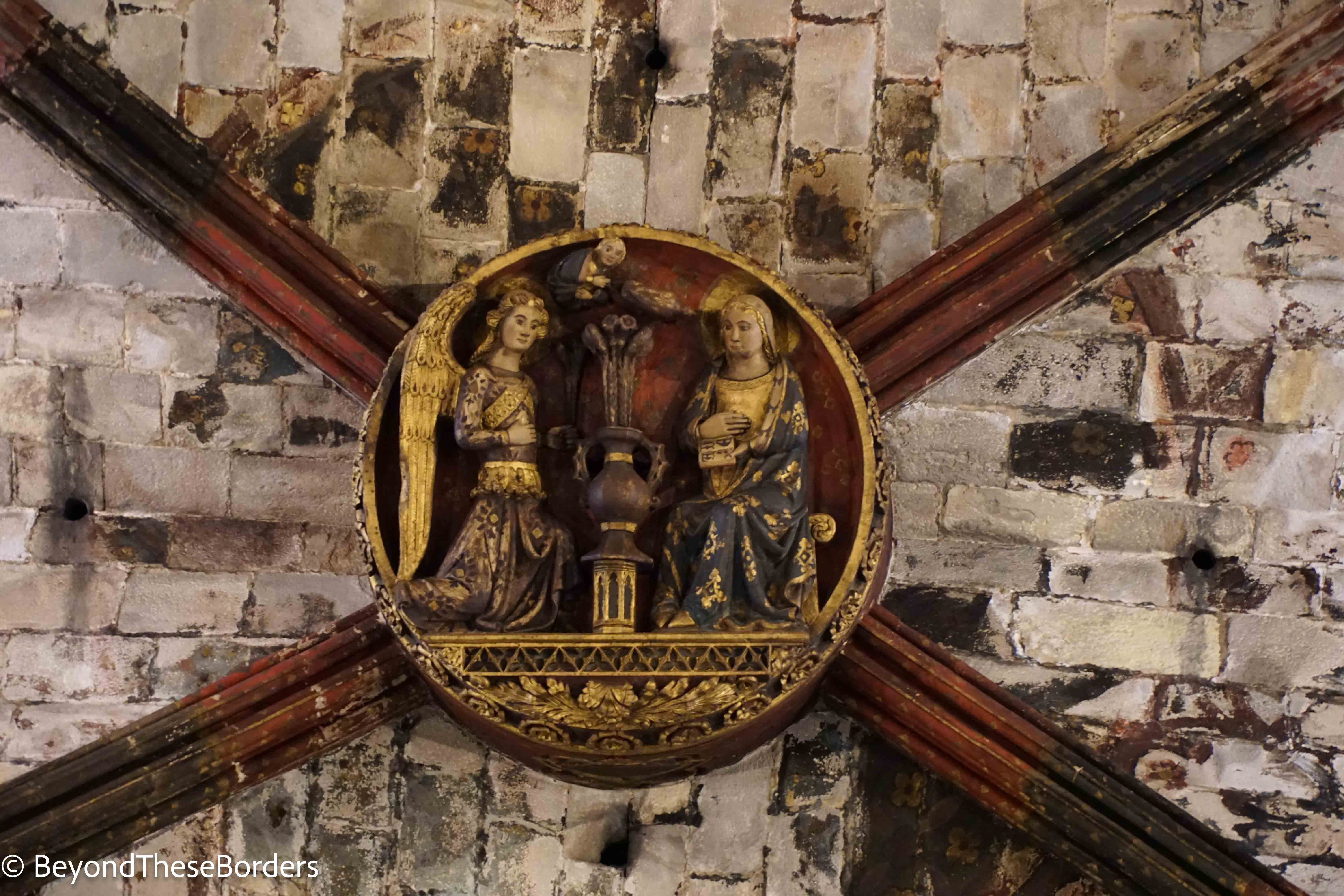
Inside, the layout is typical of Gothic churches, with 3 aisles, or naves. It specifically has Catalan Gothic style with the 3 naves being almost equal in height instead of the central nave being much higher. In the center of each vaulted ceiling, the arches intersect into a circular “keystone”. There are 215 keystones in the church and they each are unique with a story or coat of arms.
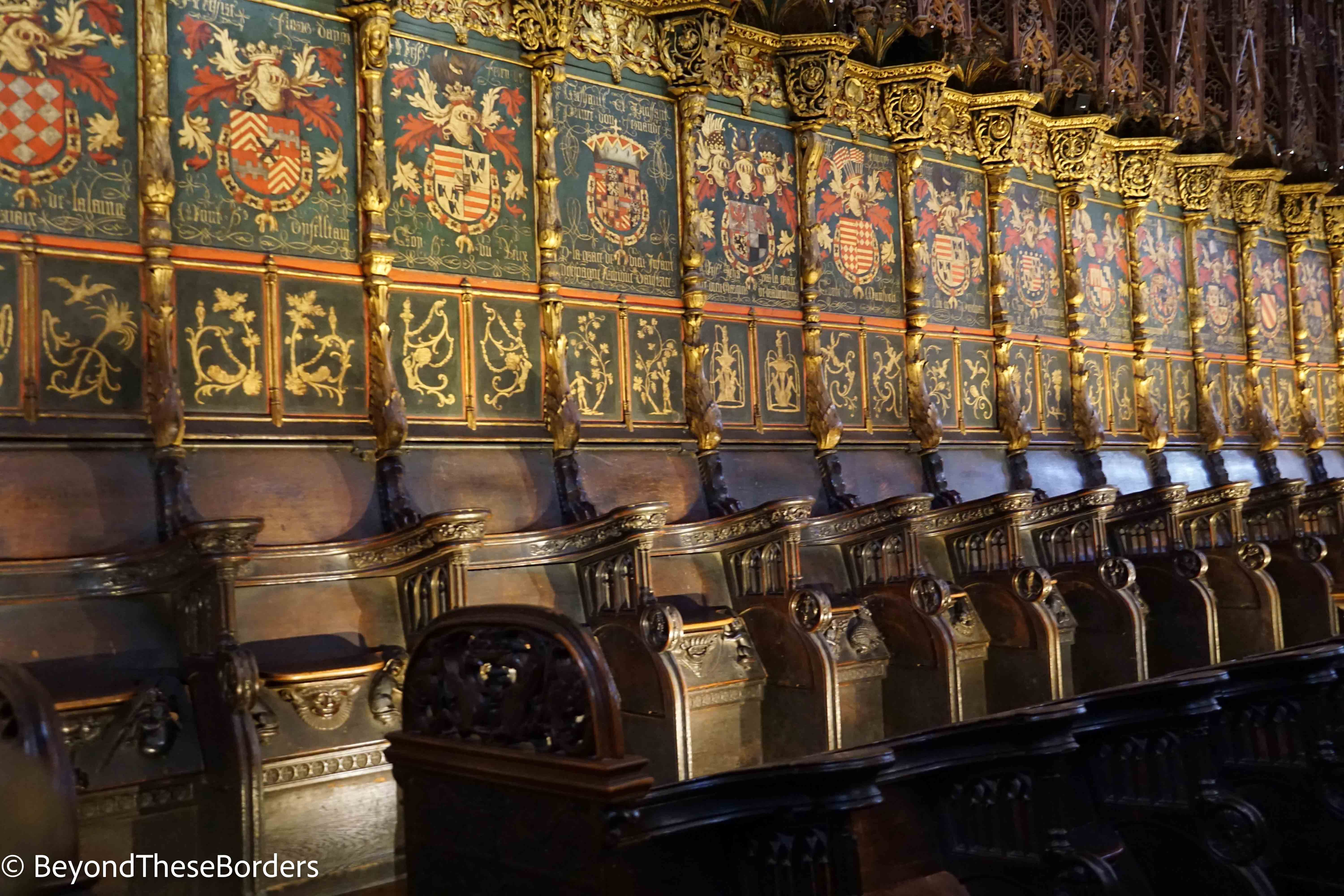
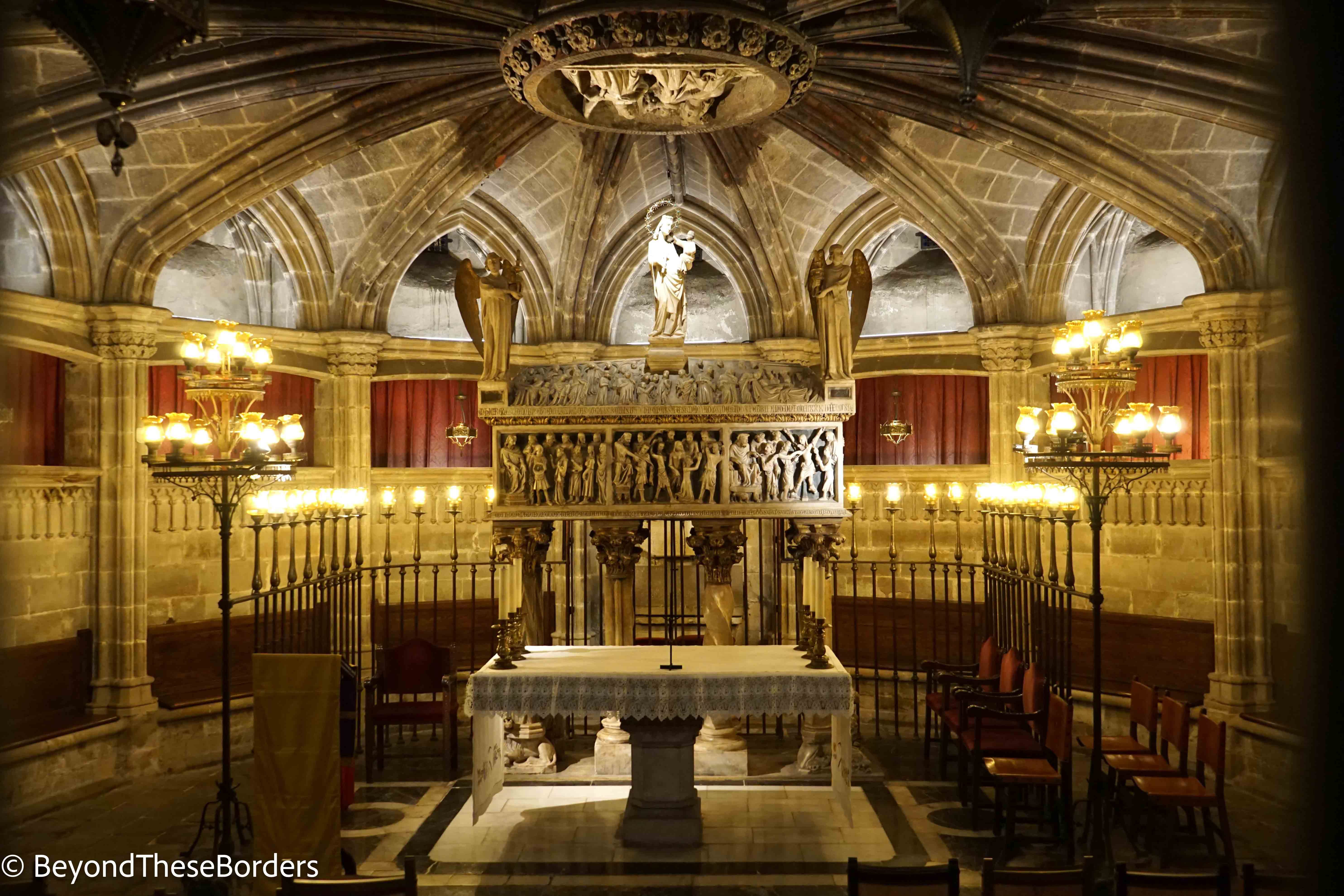
The choir stalls are decorated with the coat of arms of the knights of the Order of the Golden Fleece. Under the raised high altar is the crypt holding the remains of Saint Eulalia. She is the patron saint of Barcelona and the cathedral is dedicated to her. Saint Eulalia was a 13 year old girl who in 303 CE refused to renounce her Christian faith and was martyred.
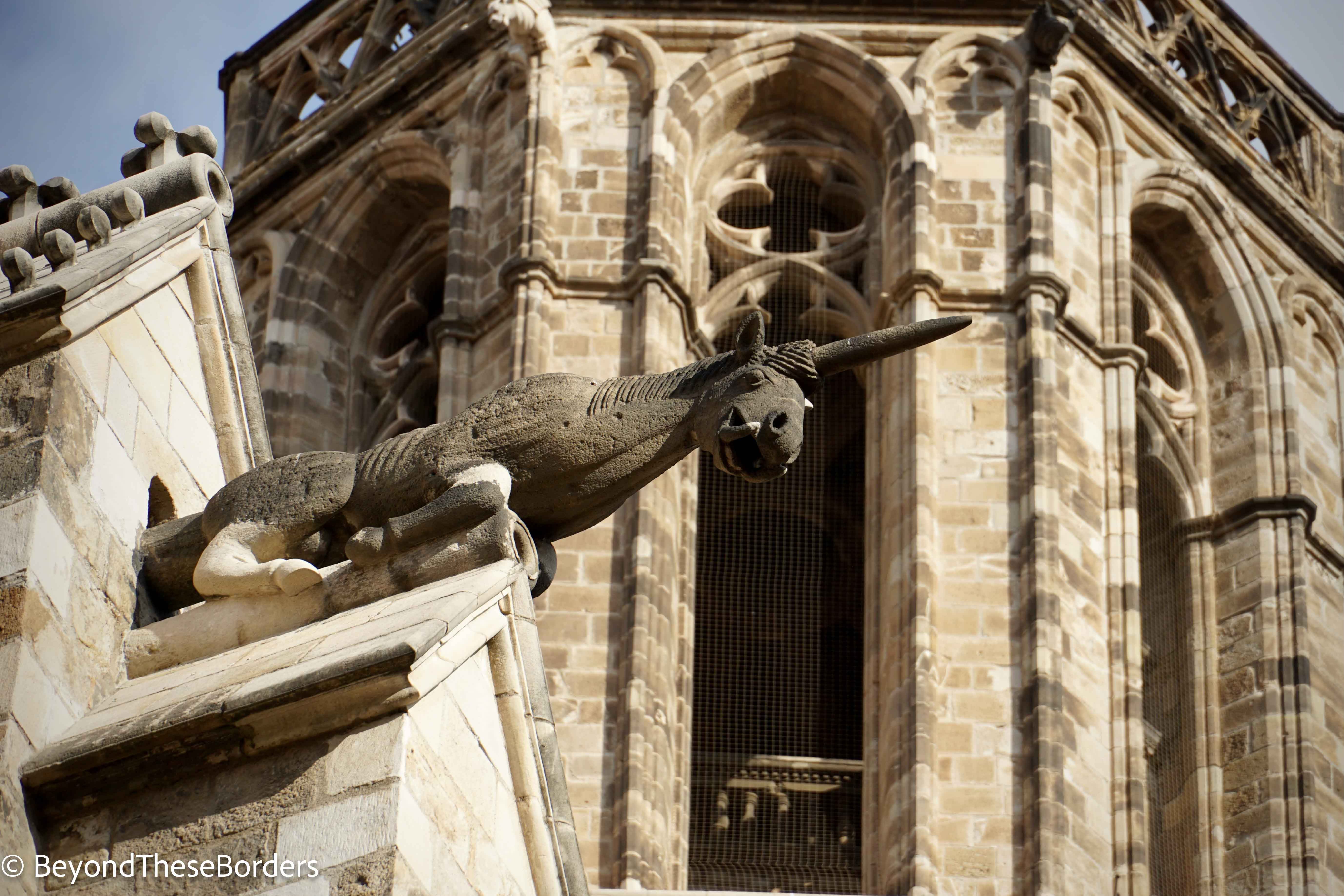
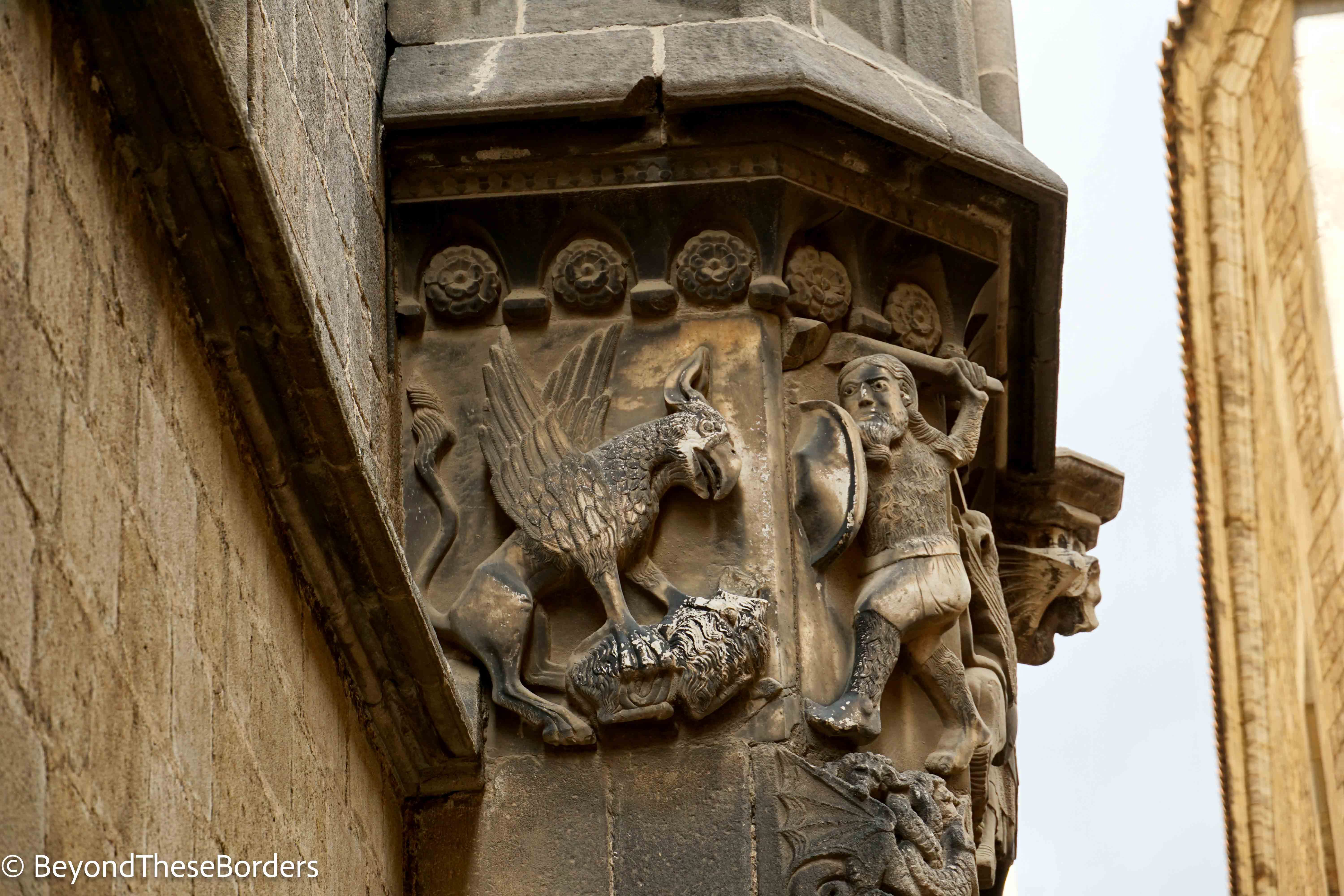
There are a couple fun things to look for on a walk around the exterior of the cathedral like the gargoyle that is a unicorn, sticking out from the building. There is also “Wilfred the Hairy”, the image of a hairy man with a shield and sword fighting a creature. He is considered the father of Catalonia as he was the first to unite the region in the 9th century.
Plaça Nova (New Square)
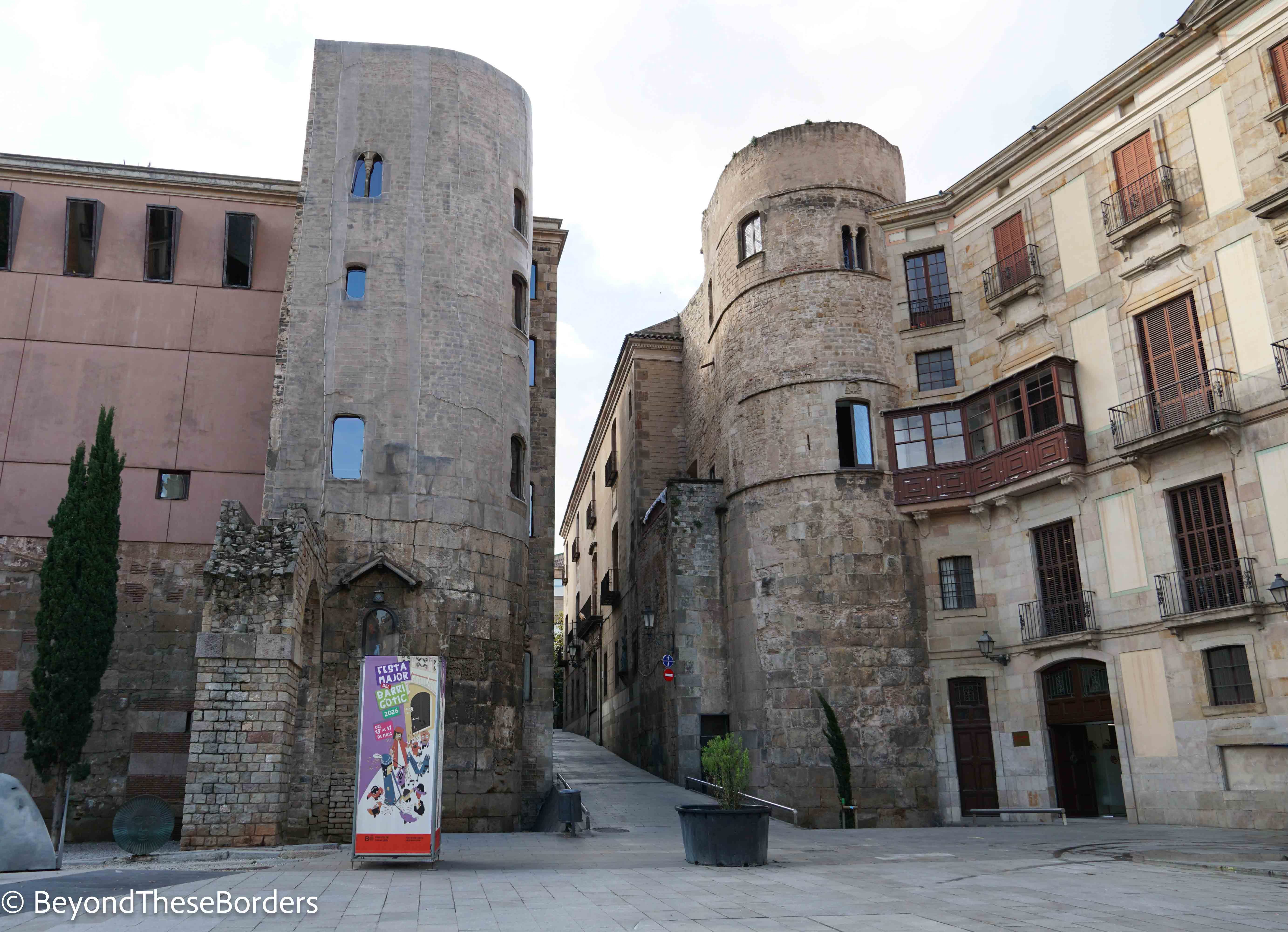
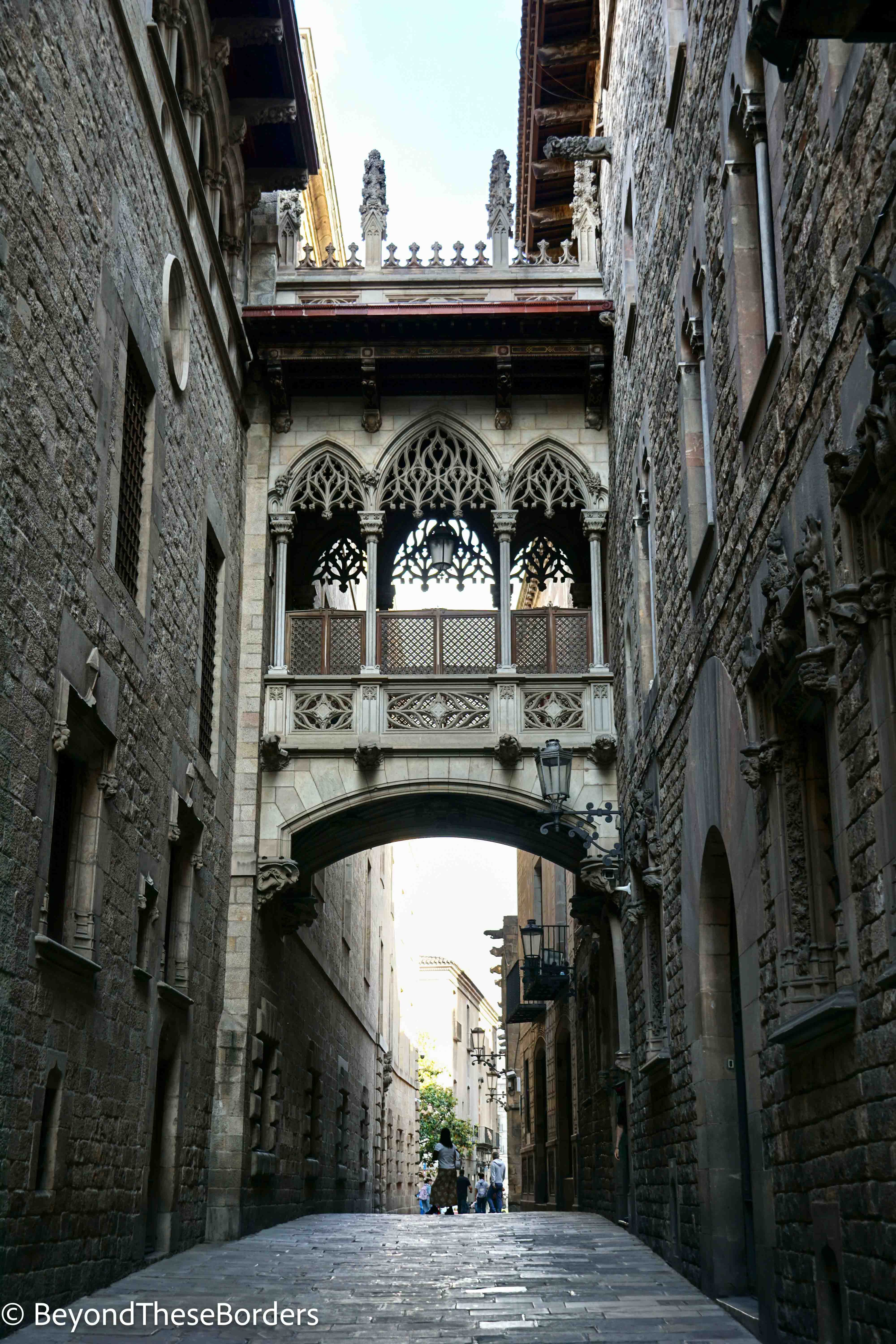
From Plaça Nova you can see two Roman towers which rise up on each side of where the main gate into the walled city used to stand. The towers were constructed in the 4th century CE. If you enter between them and walk a ways along the street, you will pass under a beautiful foot bridge that connects two buildings. It looks ancient like it has withstood the test of time but in reality it was built in 1928, connecting two government buildings. It is called the Pont del Bisbe (Bishop’s Bridge) and if you look up while directly under it you will see embellishments. There is a skull with a sword through it which is associated with a few myths including the possibility that it’s a curse.
Plaça de Sant Jaume (Saint James Square)
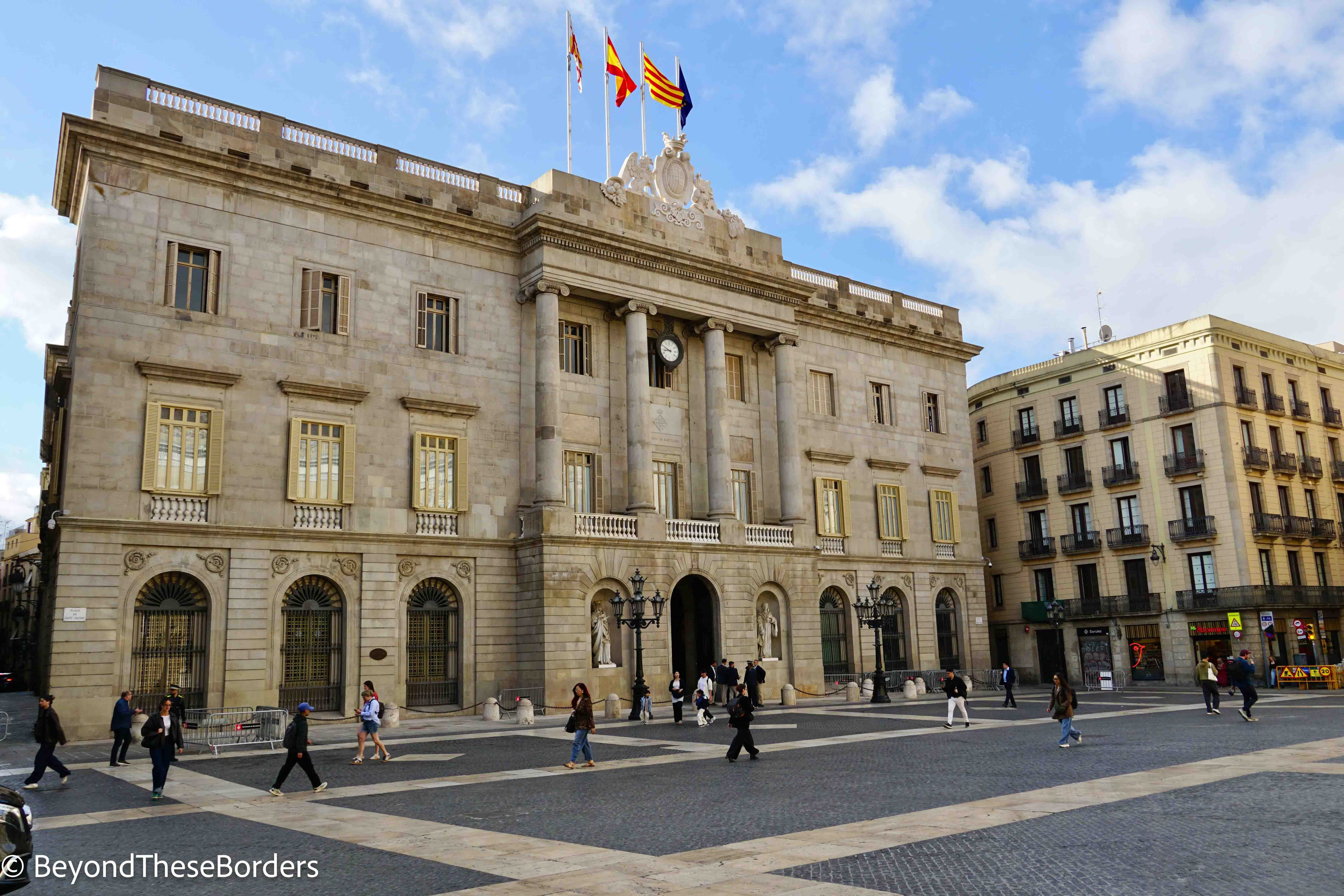
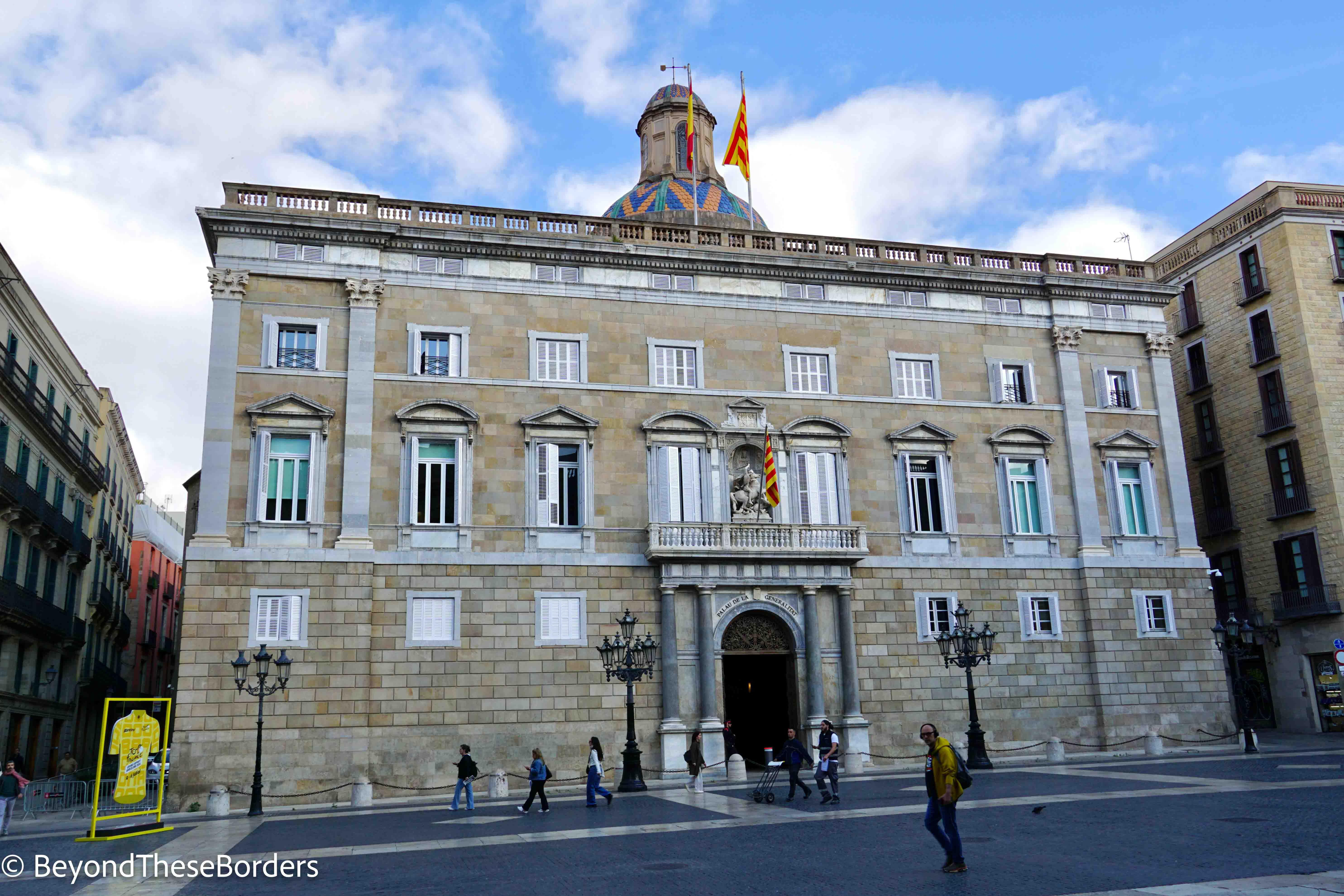
Plaça de Sant Jaume has long been the administrative center of the city. Back in Roman times, this square was where the forum and the Temple d’August were located. The current name of the square came from a church that was there during medieval times, but was demolished in 1823. The city council used to meet on the porch at the front of that church. This square now holds the 2 most important administrative buildings of current day Barcelona: the Palace of the Government of Catalonia and Barcelona City Hall.
Palau de la Música Catalana (Palace of Catalan Music)
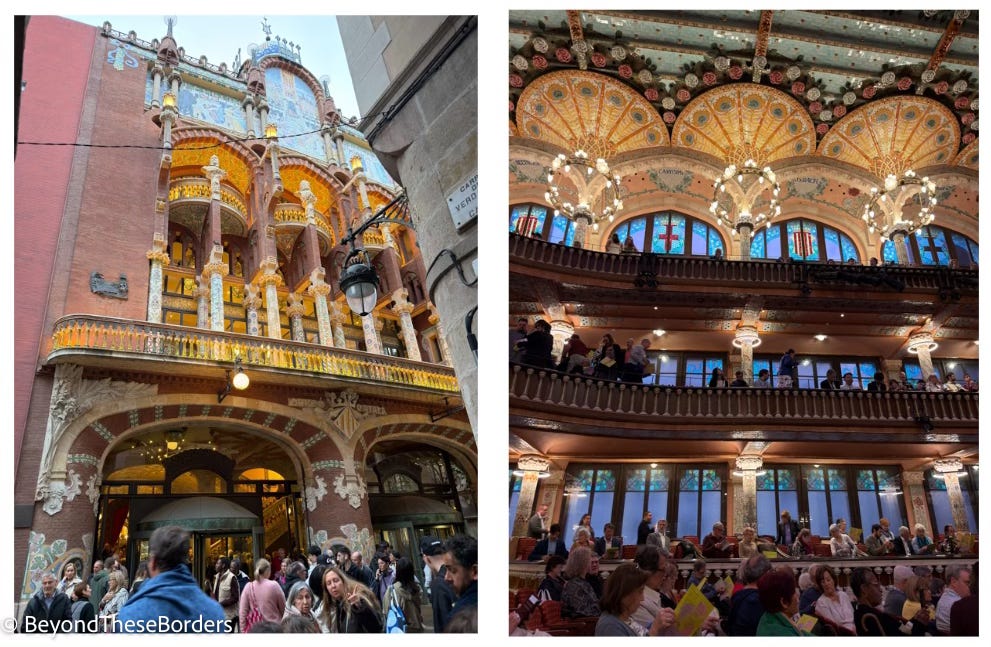
The Palau de la Música Catalana, built from 1905-1908, is one of the few modernist buildings in the Gothic Quarter. Most other modernists buildings (like those by Gaudí) are in the nearby Eixample neighborhood.
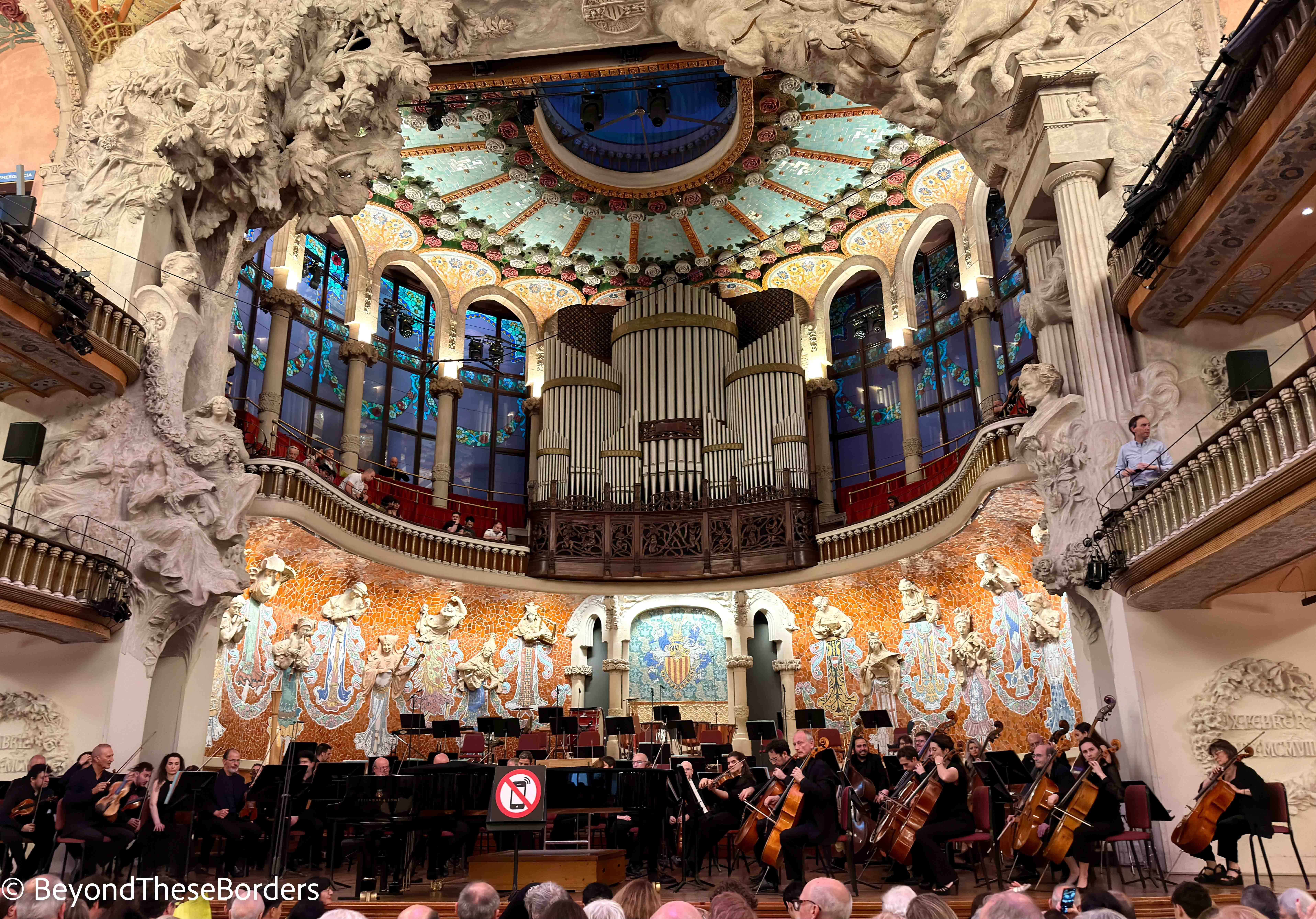
We chose to visit this building by attending a symphony here. The cramped streets meant it was hard to see the exterior of the building, but we had plenty of time to appreciate the interior. The stage is surrounded by sculptures that we admired but at the time didn’t know why they were significant. There were women, horses, a couple of men, and a tree. Turns out they are depictions of an opera, a Catalan song, of Beethoven, and a Catalan music director. We sat dead center in the middle of the orchestra, directly underneath the beautifully decorated ceiling adorned with a spectacular stained glass skylight. Stained glass windows also fill the walls behind the two levels of balconies.
We attended a symphony which included 4 pieces of music. They were the following: Lera Auerbach’s Sogno di Stabat Mater, Sergei Rachmaninoff’s Rhapsody on a Theme of Paganini Op. 43, Igor Stravinsky’s Pulcinella, suite and Pyotr Ilyich Tchaikovsky’s Capriccio Italien, Op. 45. The music was wonderful and a great way to experience this beautiful building.
Parc de la Ciutadella (Citadel Park)
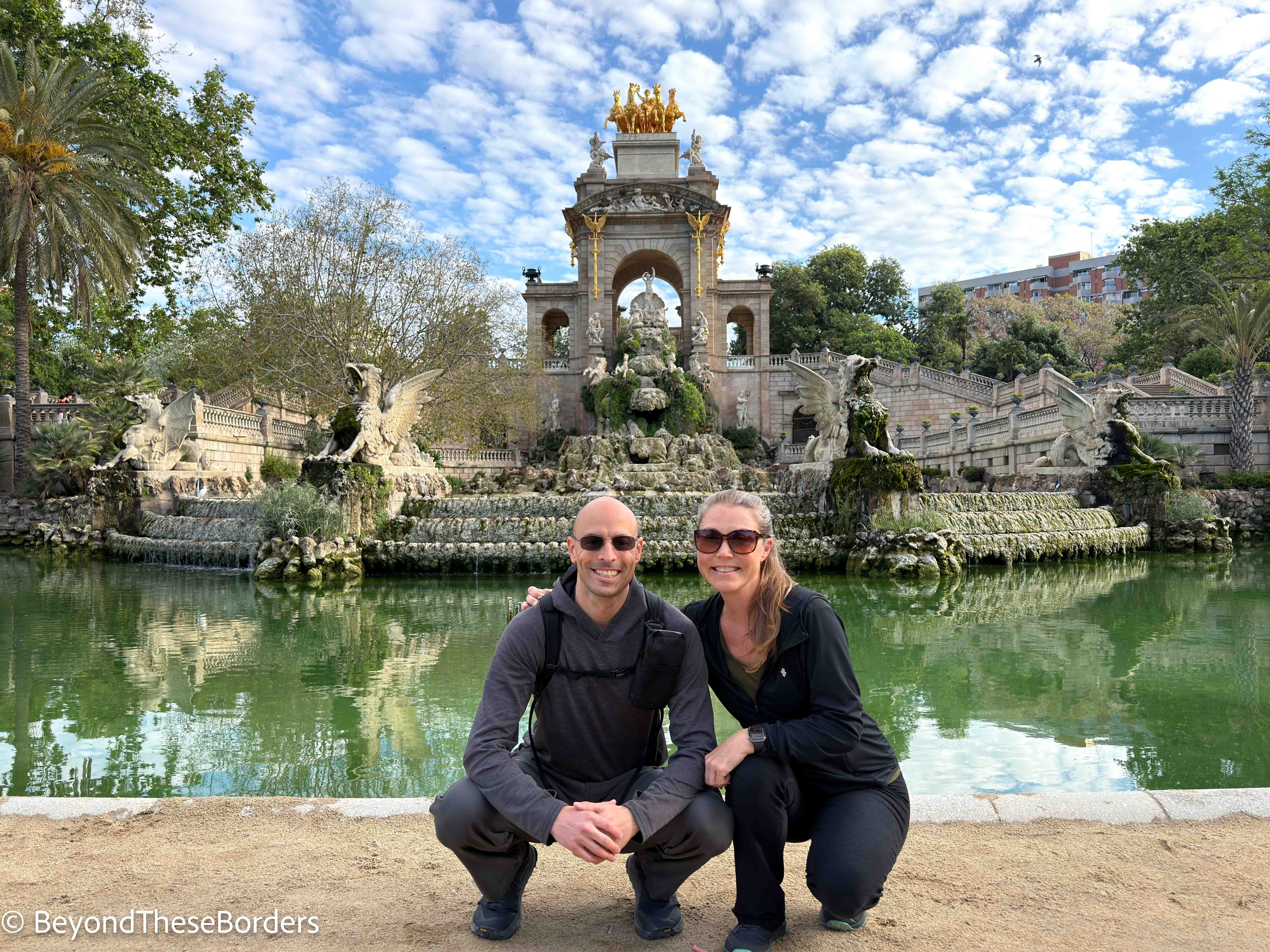
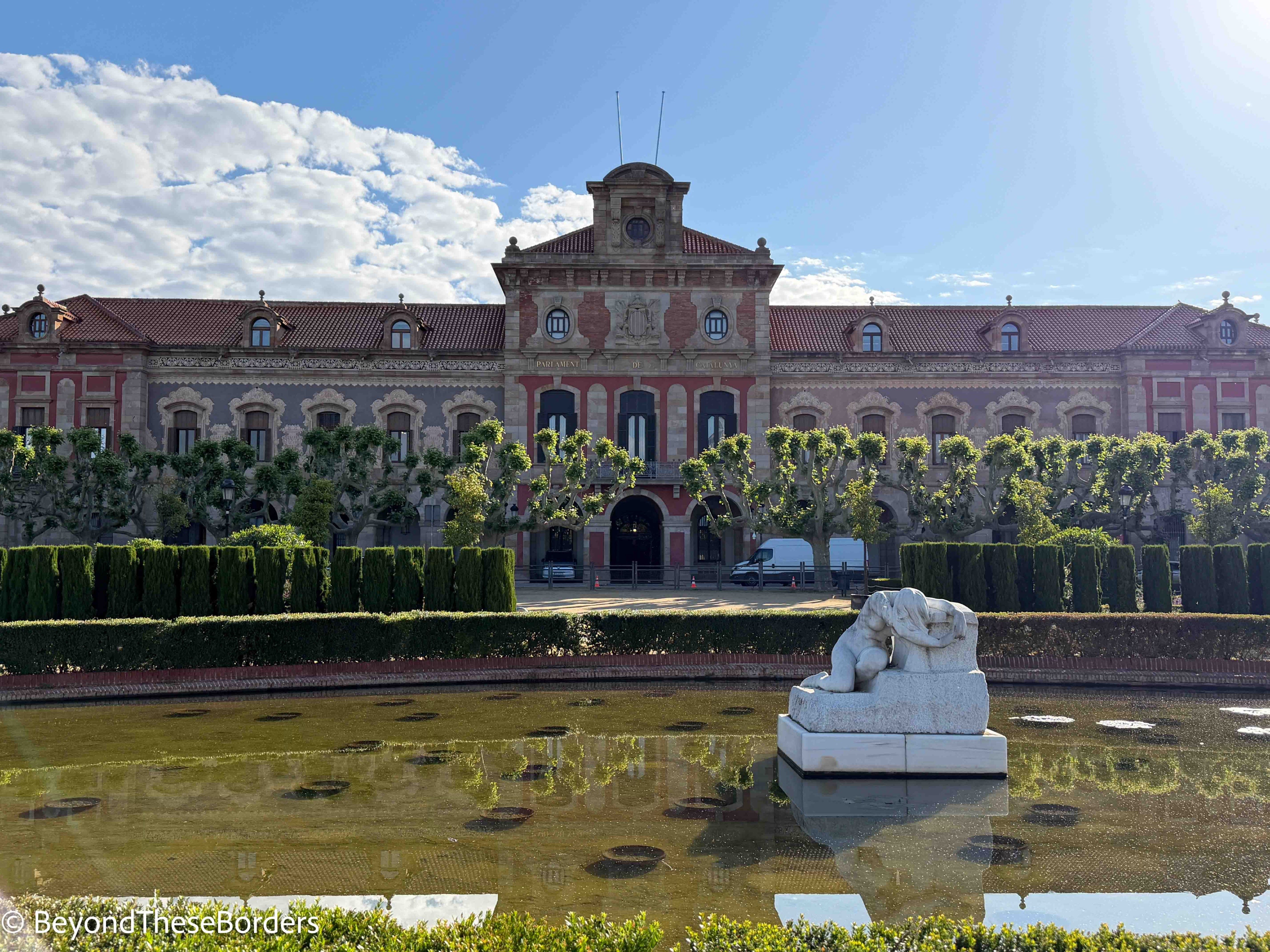
Just outside of the Gothic Quarter is a city park that has walking paths and several attractions including the zoo, the Catalan Parliament, a Museum of Modern Art, a small lake, and a really beautiful fountain. Citadel Park has an interesting history as well. When Charles II, King of Spain wasn’t able to have children, this left a question for who would be the next ruler. This led to the Spanish War of Succession which ended with Philip V becoming the next King of Spain. Barcelona had supported the opposing side, so Philip V built the citadel in 1715 just outside Barcelona to control the people by imposing a military presence. Long hated by the locals, the area of the citadel was turned into a park in 1872. Then in 1888, after further renovations it was the site of the World’s Fair.
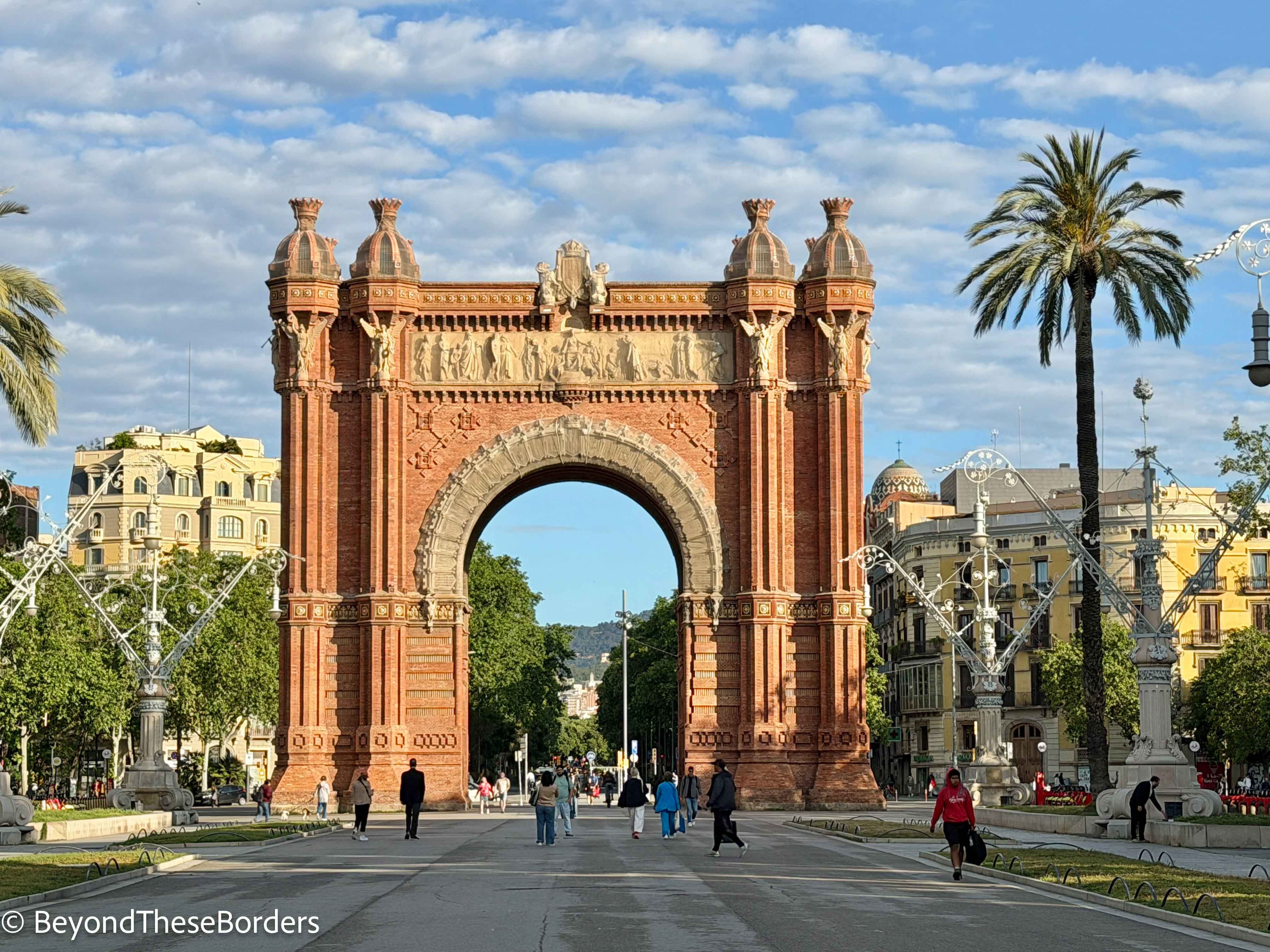
Barcelona has its own Arc de Triomf, a short walk north of the park along a pedestrian zone. The Arc de Triomf was built as the main access gate to the World’s Fair in 1888.
Architecture of Antoni Gaudí
Antoni Gaudí is a famous Catalan architect who lived from 1852 until 1926. He was part of the Modernisme movement though his work went even further, with his designs being inspired by nature. Many of his works include interesting geometric designs seen in nature. A wealthy man named Eusebi Güell commissioned many of Gaudí’s famous works, a few of them having “Güell” in the name. Gaudí is most well known for the still under construction church, the Sagrada Família.
Park Güell
Park Güell, built between 1900-1914 and commissioned by Eusebi Güll, was originally designed to be a private park for a community of about 60 homes. This plan failed as almost none of the lots sold, but eventually the city purchased it and made it into a city park.
We purchased our tickets a couple weeks in advance to get early morning tickets. We wanted to enjoy the park before it fills up with so many tourists. You are allowed to enter for 30 minutes from your reservation time and can stay as long as you wish, but cannot re-enter if you leave.
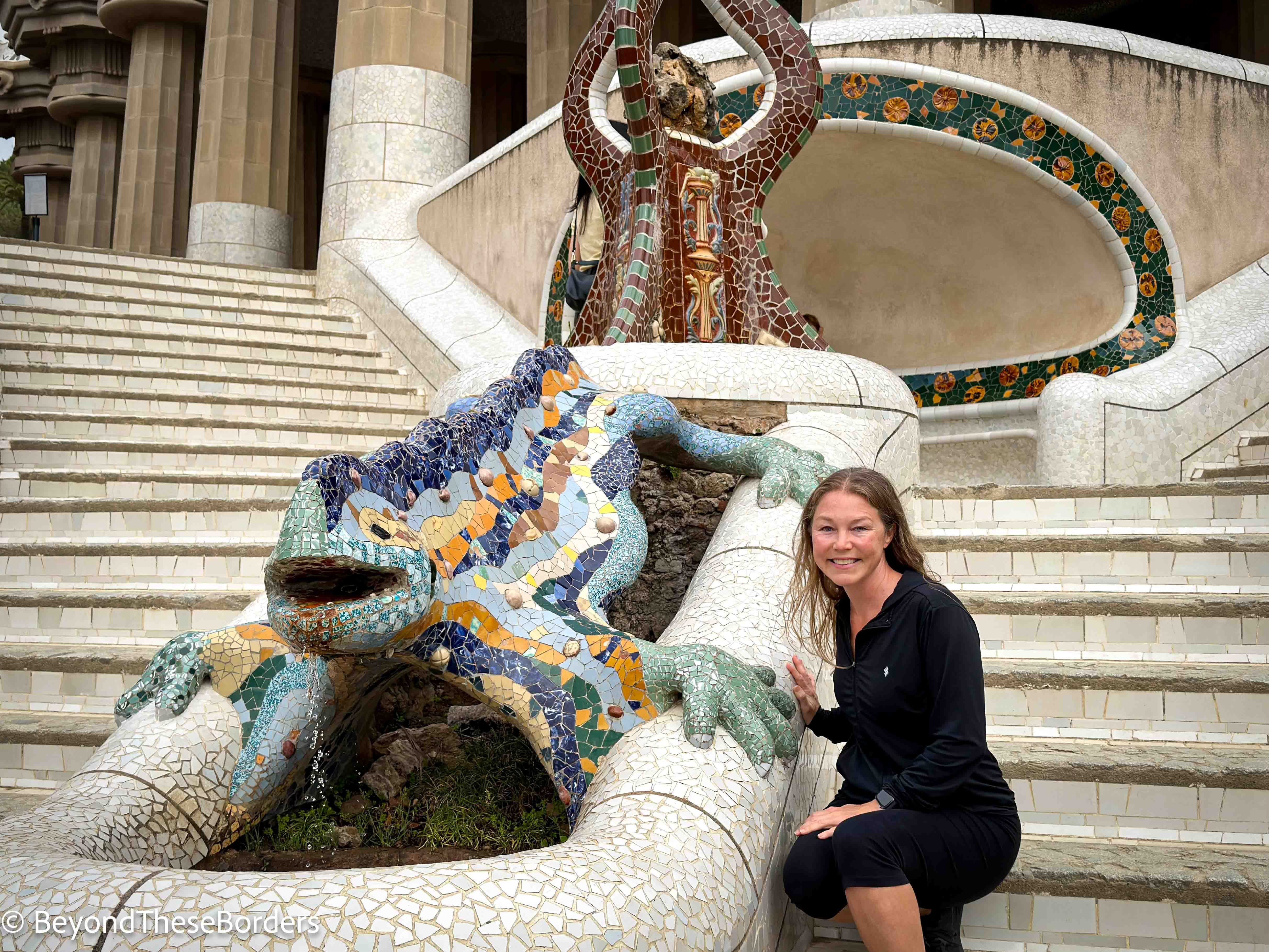
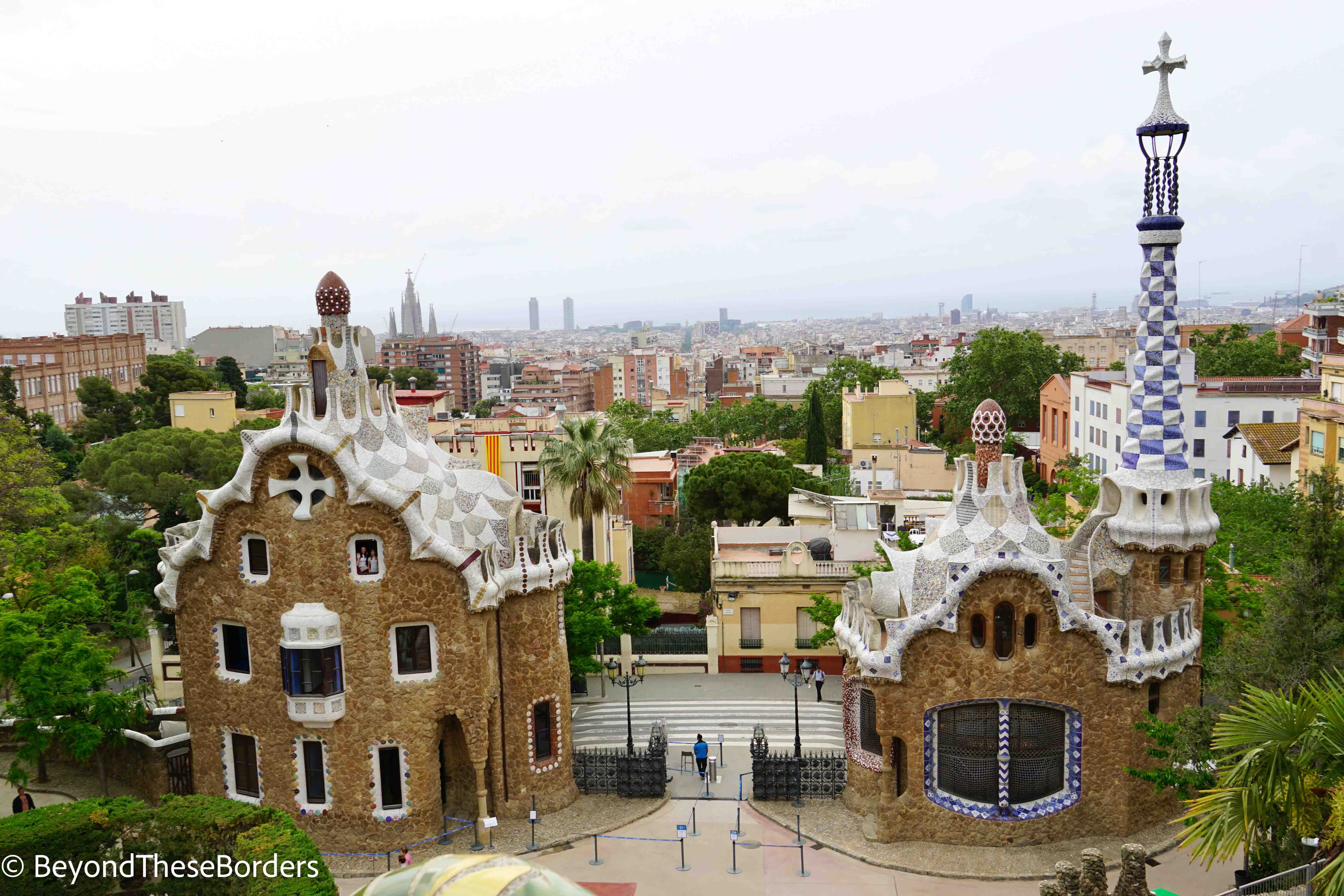
Surrounding the park is a stone and glazed ceramic wall. The main entrance has two buildings that look straight from a Hansel and Greta fairy tale. Between them is a perfect view of the twin staircase leading up into the “Room of 100 Columns”. The iconic “dragon” or salamander is found towards the top of this staircase. Many of the structures in the park are covered in mosaics. Even many areas that seem to be a single color are actually covered with mosaics.
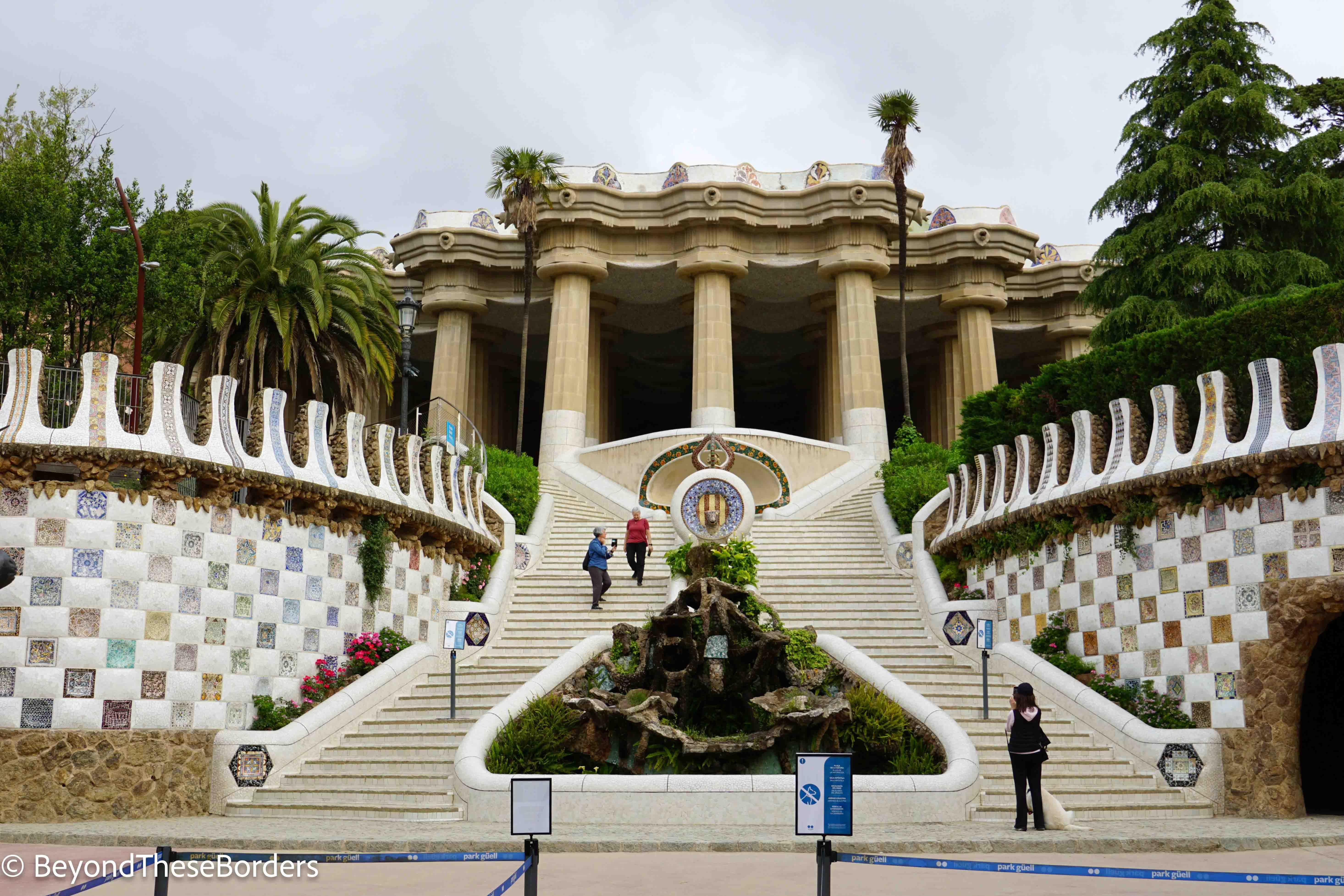
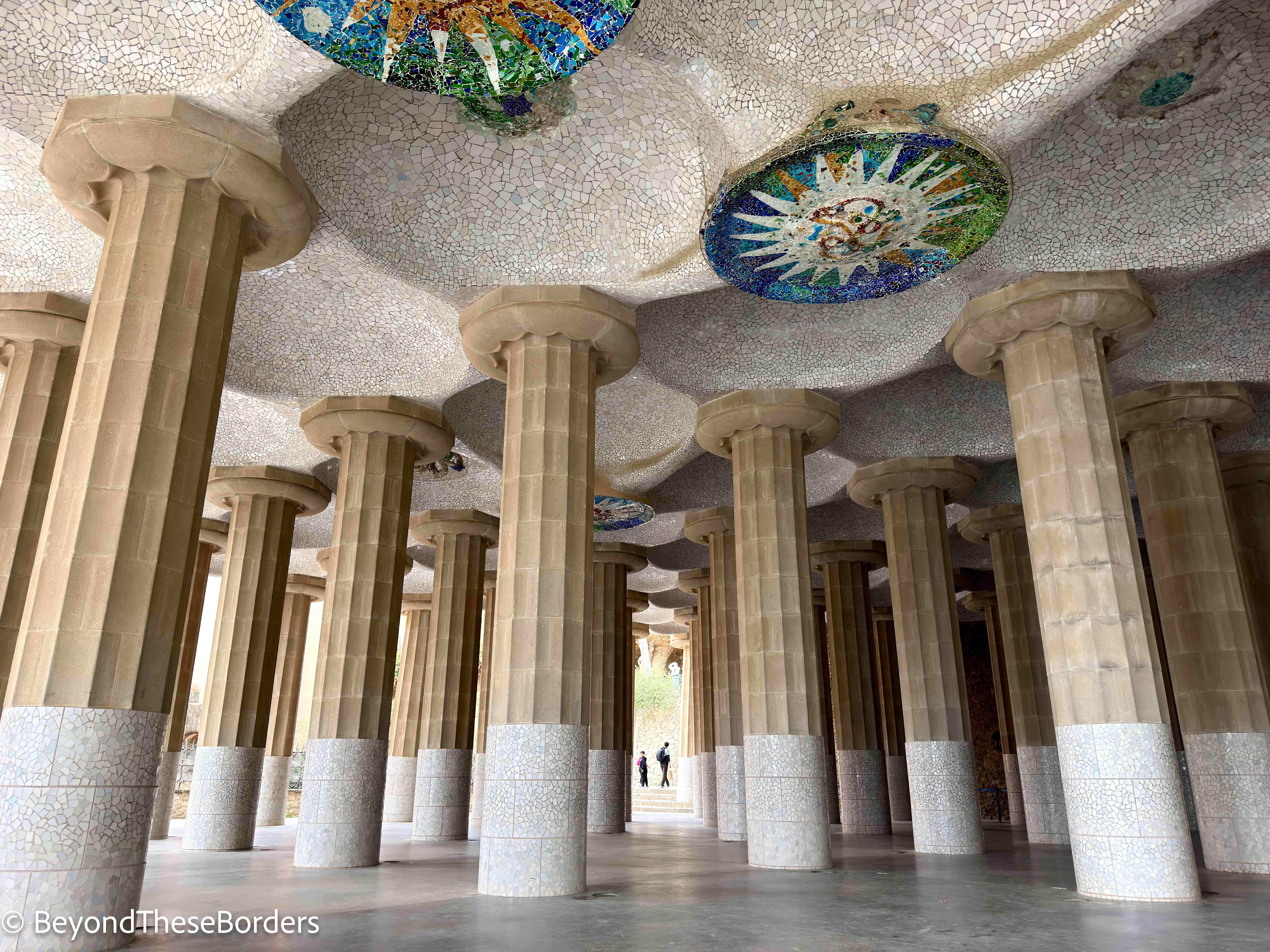
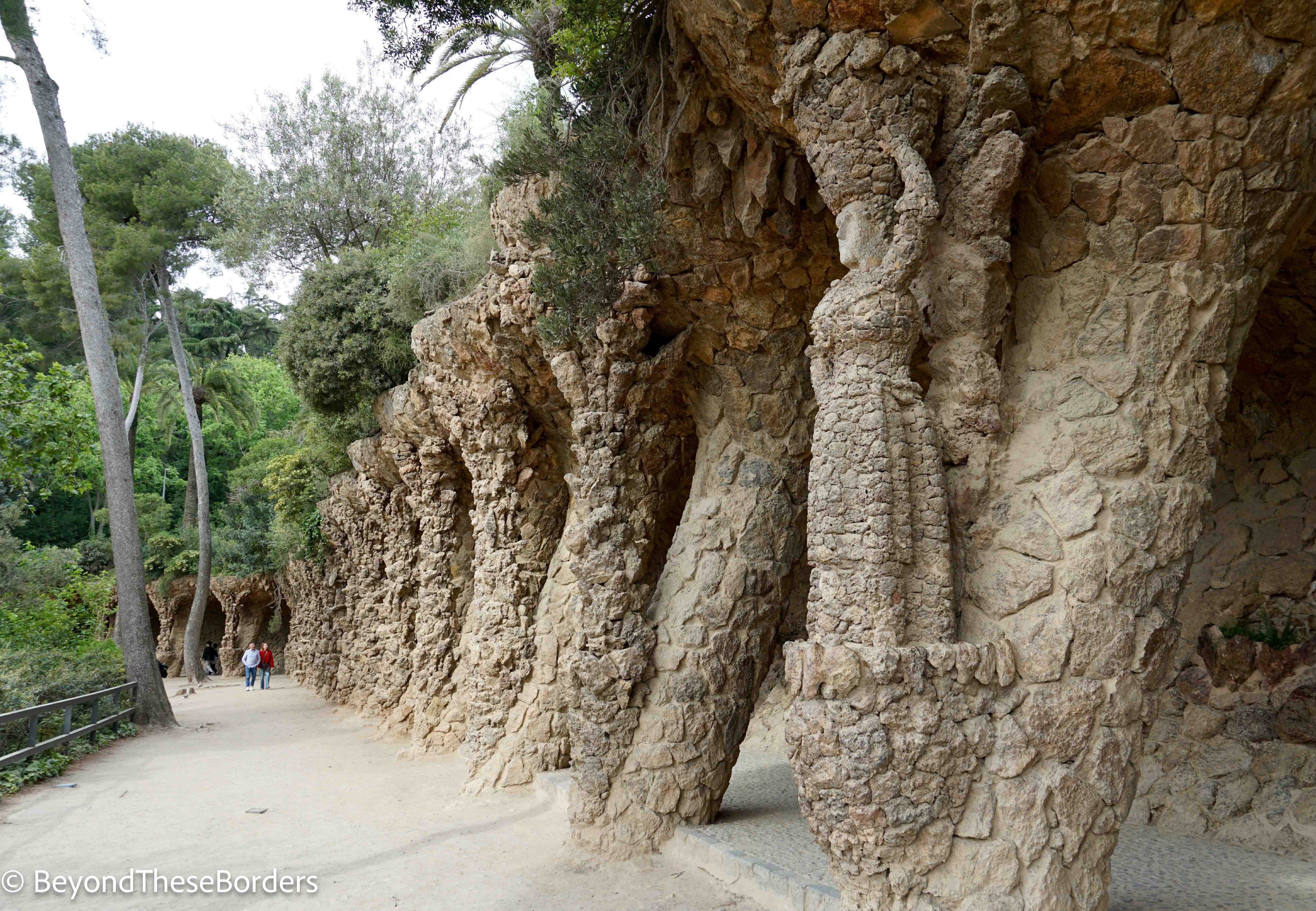
The “Room of 100 Columns” was originally supposed to be the local market. It actually only has 86 columns despite its name. The park has paths winding up the steep hill leading to porticos, some open spaces with views, and a couple houses. One of these houses was actually Gaudís home. In 1906 Gaudí moved into this house which is now a Gaudí museum and can be visited with an extra fee.
Casa Batlló
Antoni Gaudí was hired to build the residence of Josep Batlló with permission to demolish the standing building. Gaudí instead did a whole renovation from 1904-1906 without tearing down the existing structure. Casa Batlló stands next to other very interesting buildings. The neighboring buildings were renovated by other Modernisme architects of that time and the block is known as “The Block of Discord”.
The facade was marine inspired, colorful with waves and bubbles. The roof appears to be covered in scales like a fish or some say like a dragon. Bone-like columns seem to brace the lower floors and the balconies look like skull masks watching over the street.
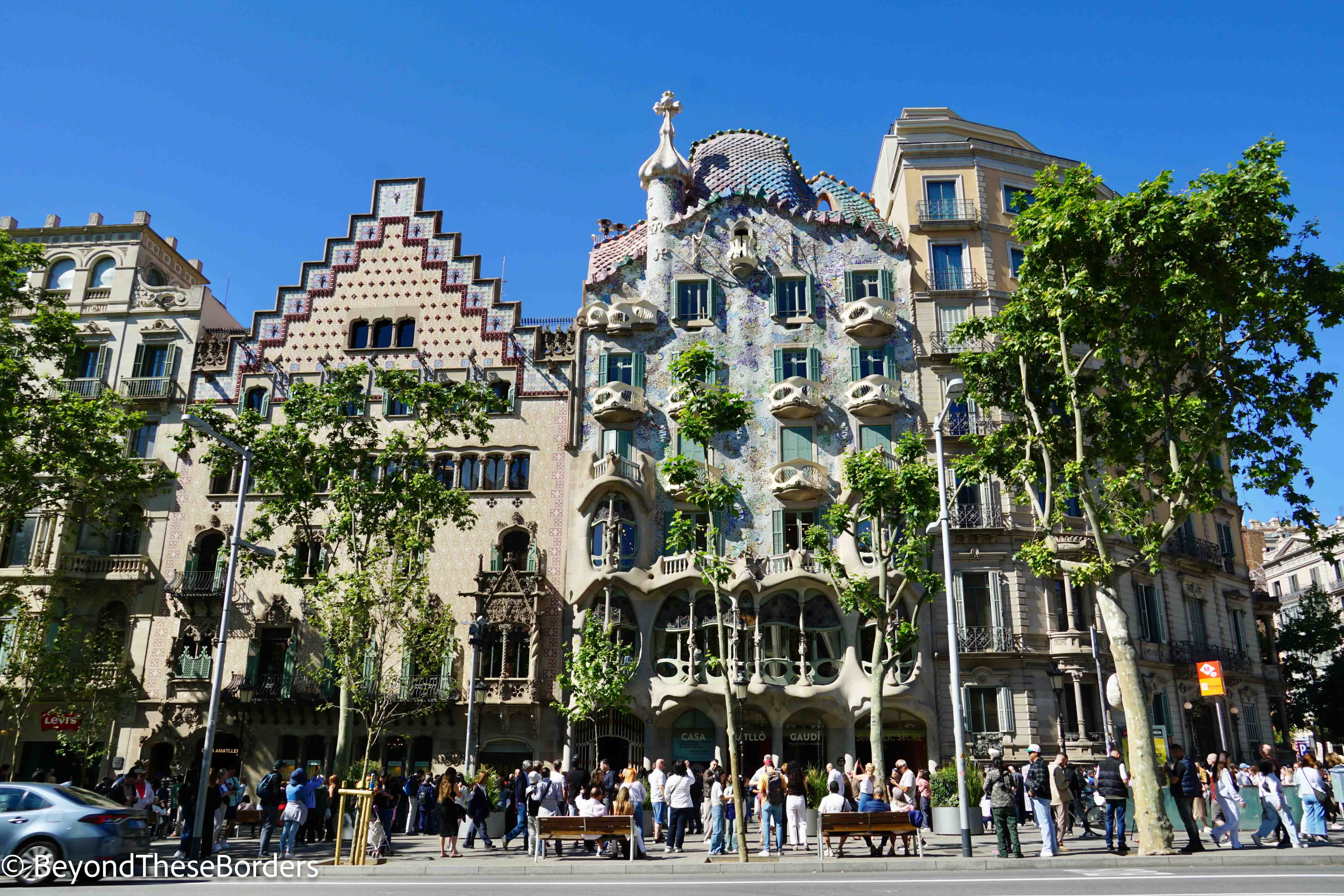
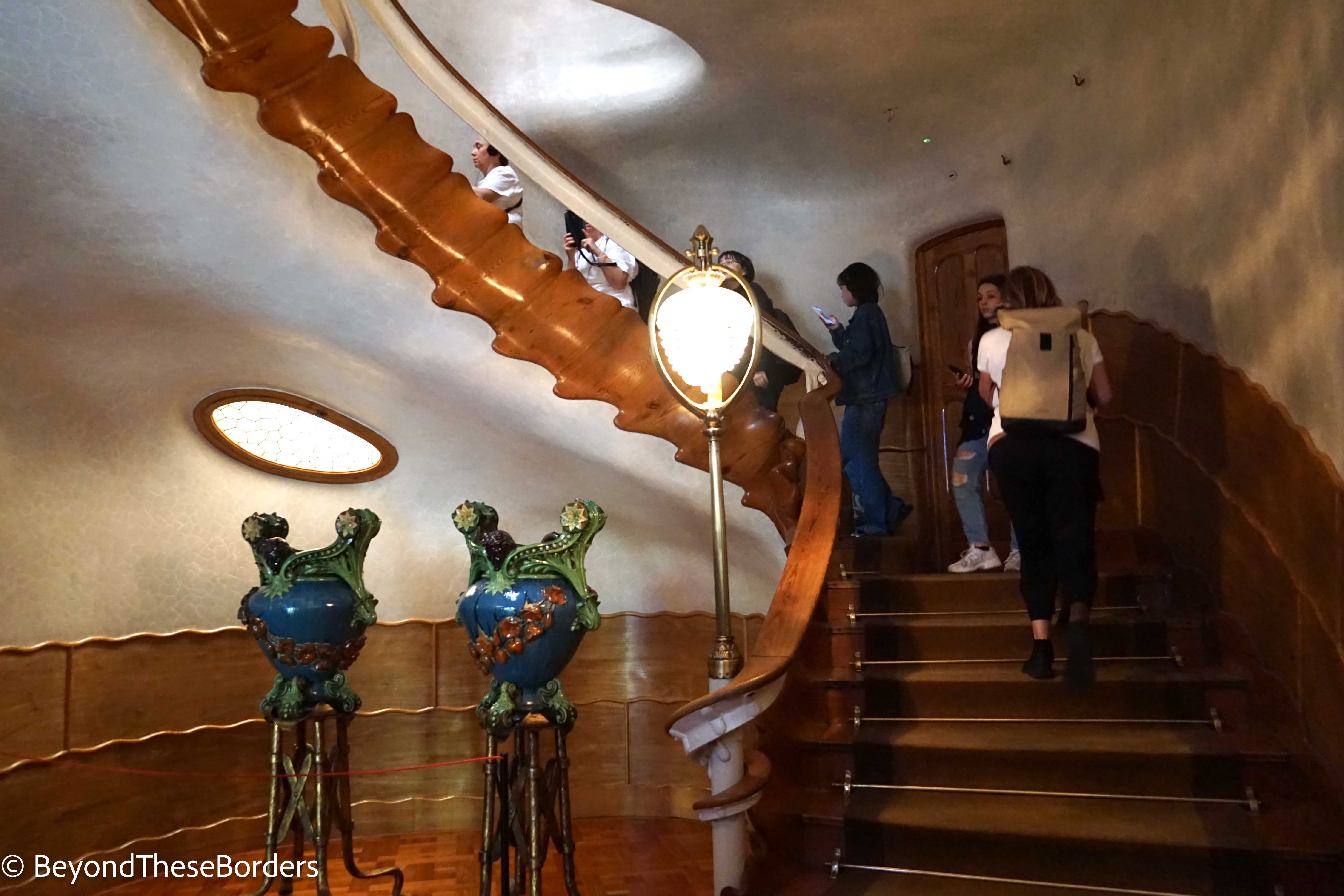
I opted to take a tour to see the inside of the building and loved the designs I saw. This is a very popular tourist site, so it was crowded throughout the tour. It would be amazing to see it with less people. An audioguide was included in the tour, which gave some information of the artistic choices and what different rooms were used for.
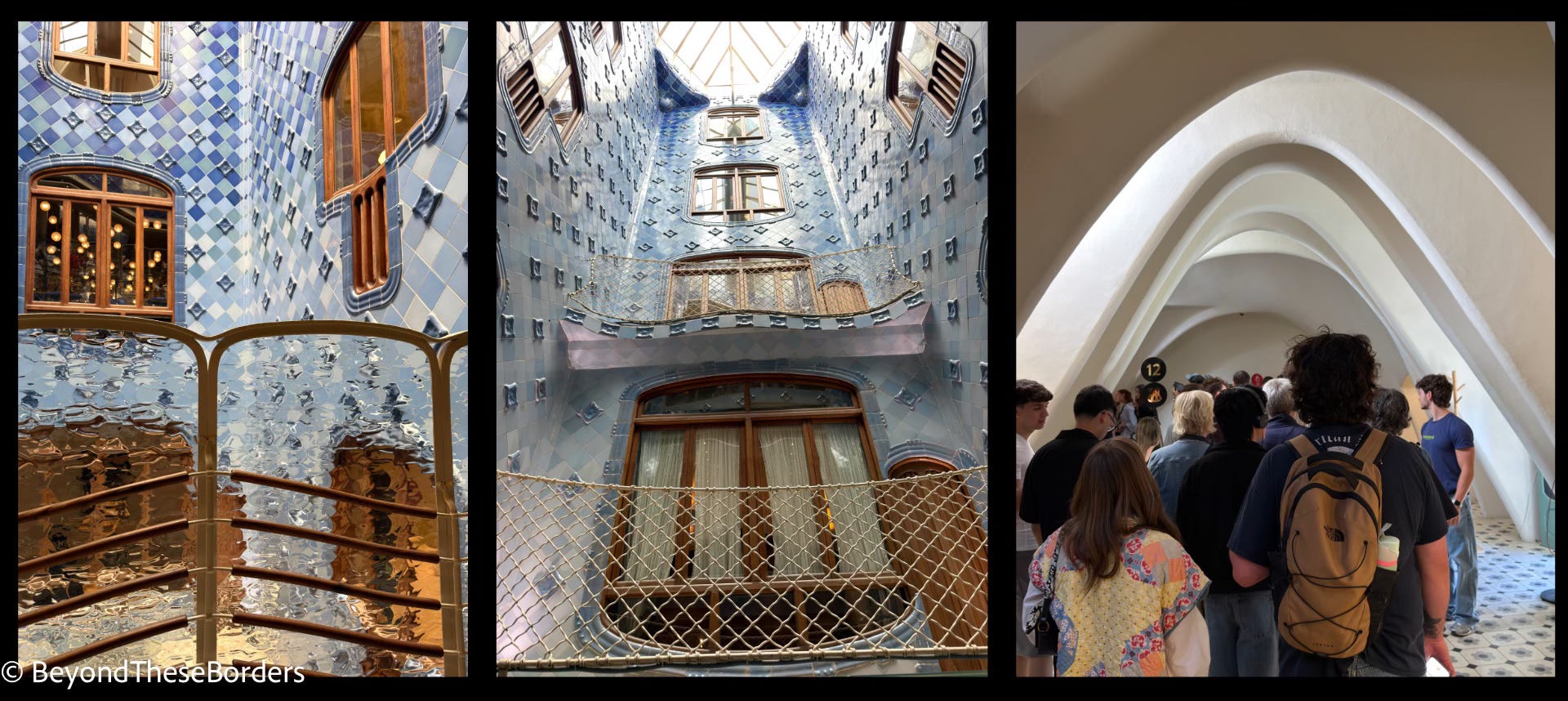
Upon entrance, you climb up a curving staircase which resembles a backbone of interlocking vertebrae. Looking behind you from the stairs, the rounded, glazed windows distorting the sunlight create a sense of being under the sea, possibly in a submarine.
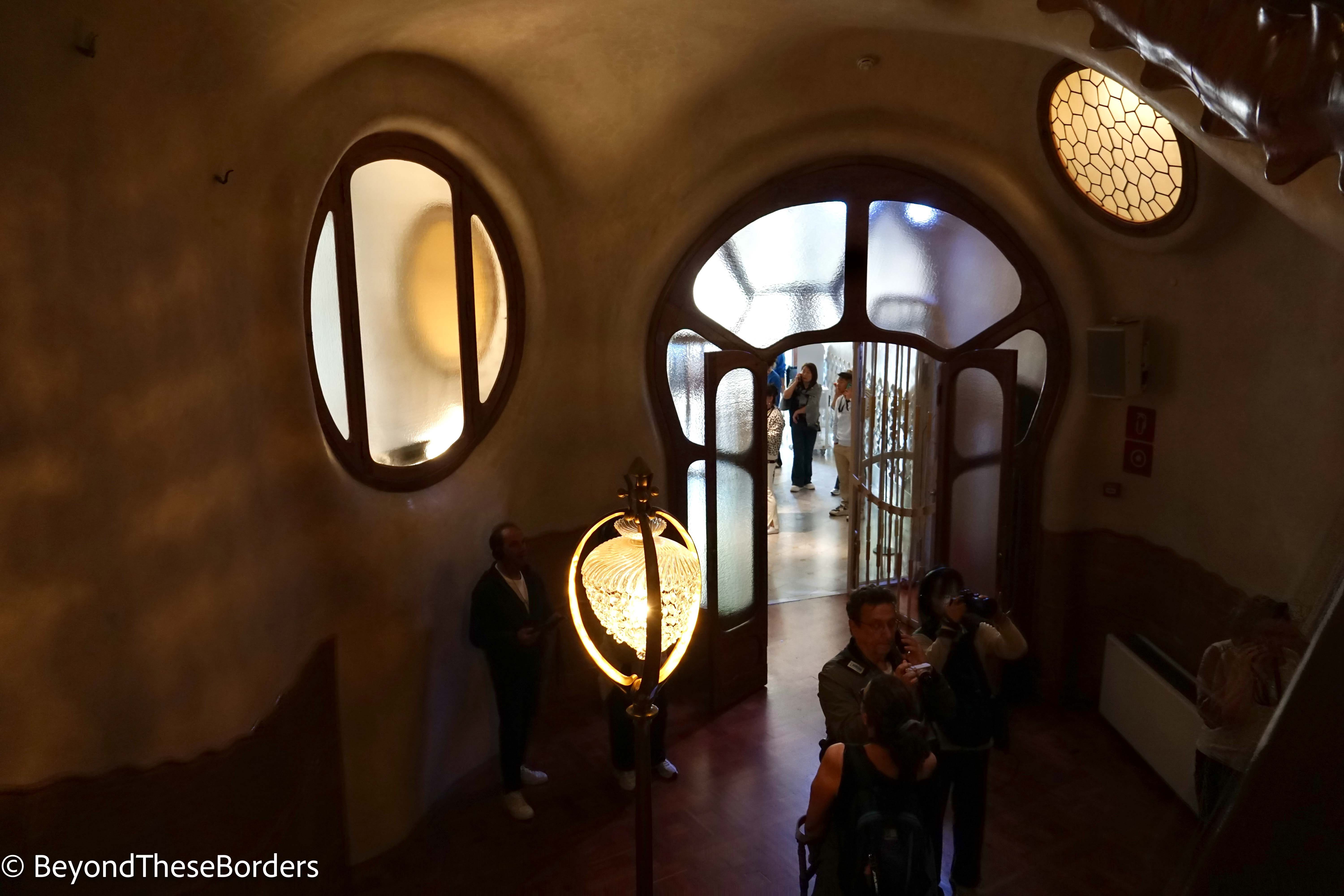
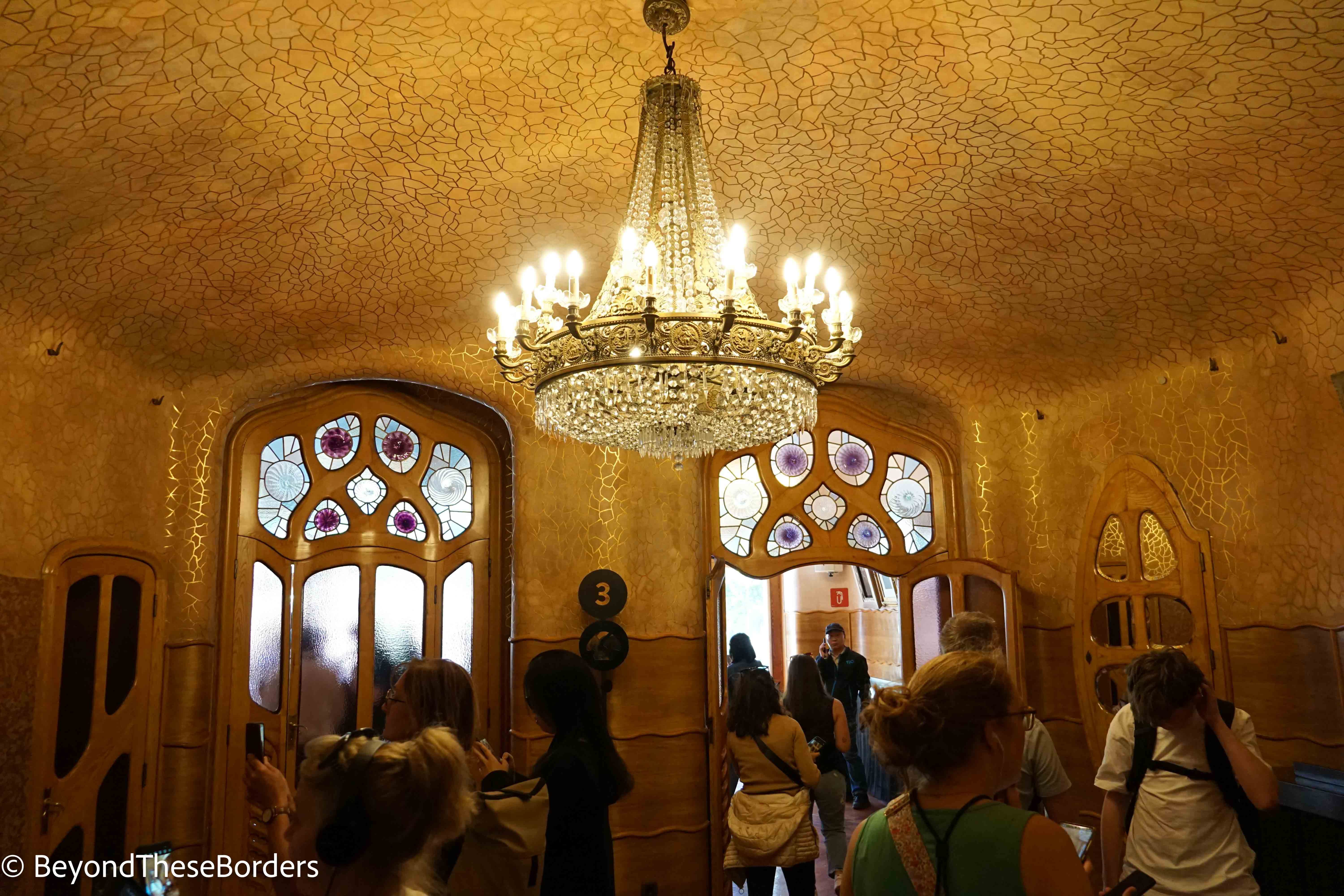
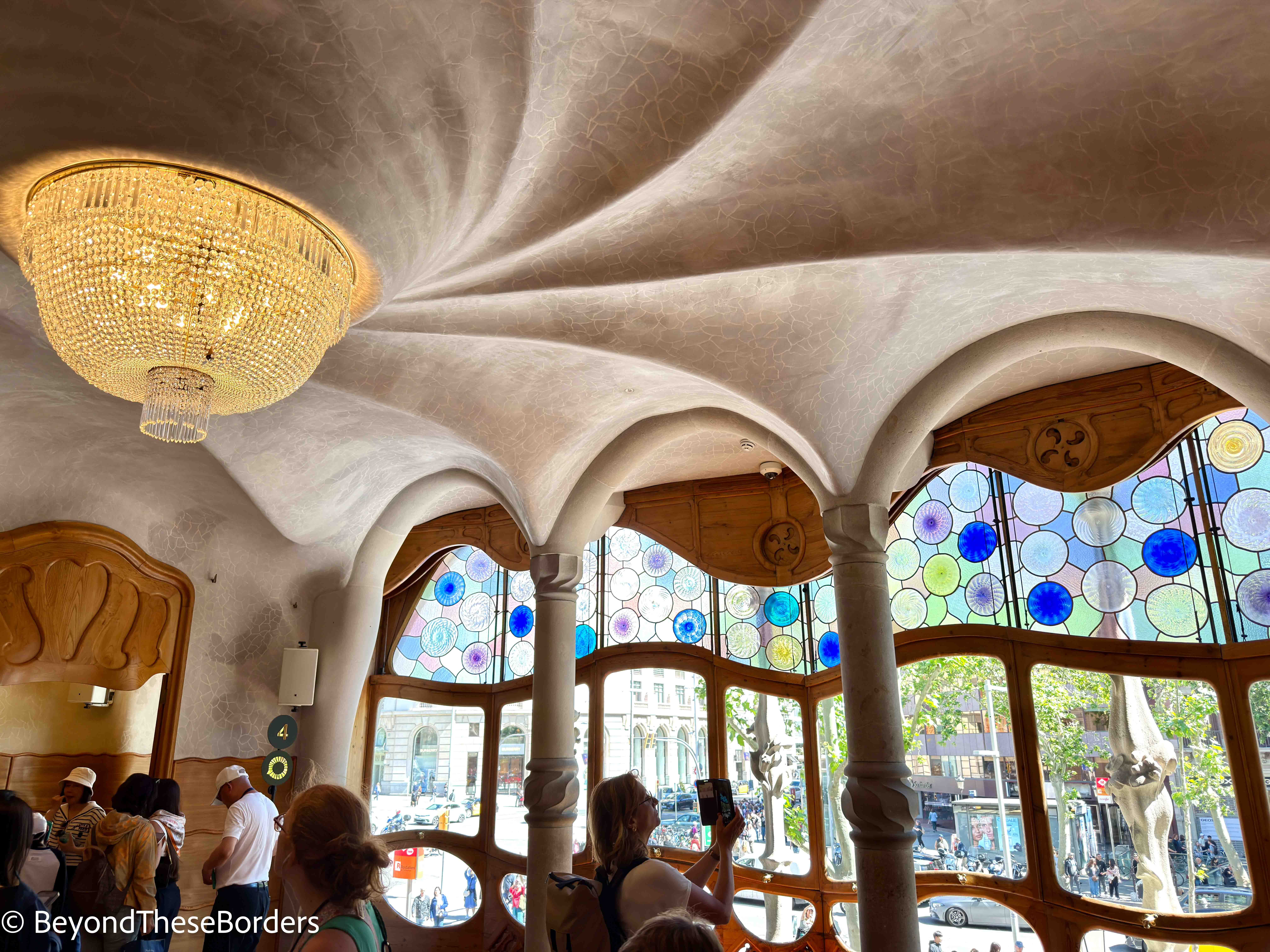
Up on the main floor, the walls are covered in a reptile skin pattern. Each door is a flow of wood, clear glass, and stained glass. The living room has giant windows, the top of which are covered with circles of various colors. The ceiling looks like waves that have been frozen and then twisted from the center to swirl under the chandelier.
A stairwell climbs up under the lightwell, which is an open space under a skylight that lets light fill the rooms below. The mix of distorted glass or fishing net railings and various blues in the wall tiles continue the sea-like design. The top floor is the attic. Its ceiling is a succession of white catenary arches which are said to look like the ribs of an animal.
Casa Milá
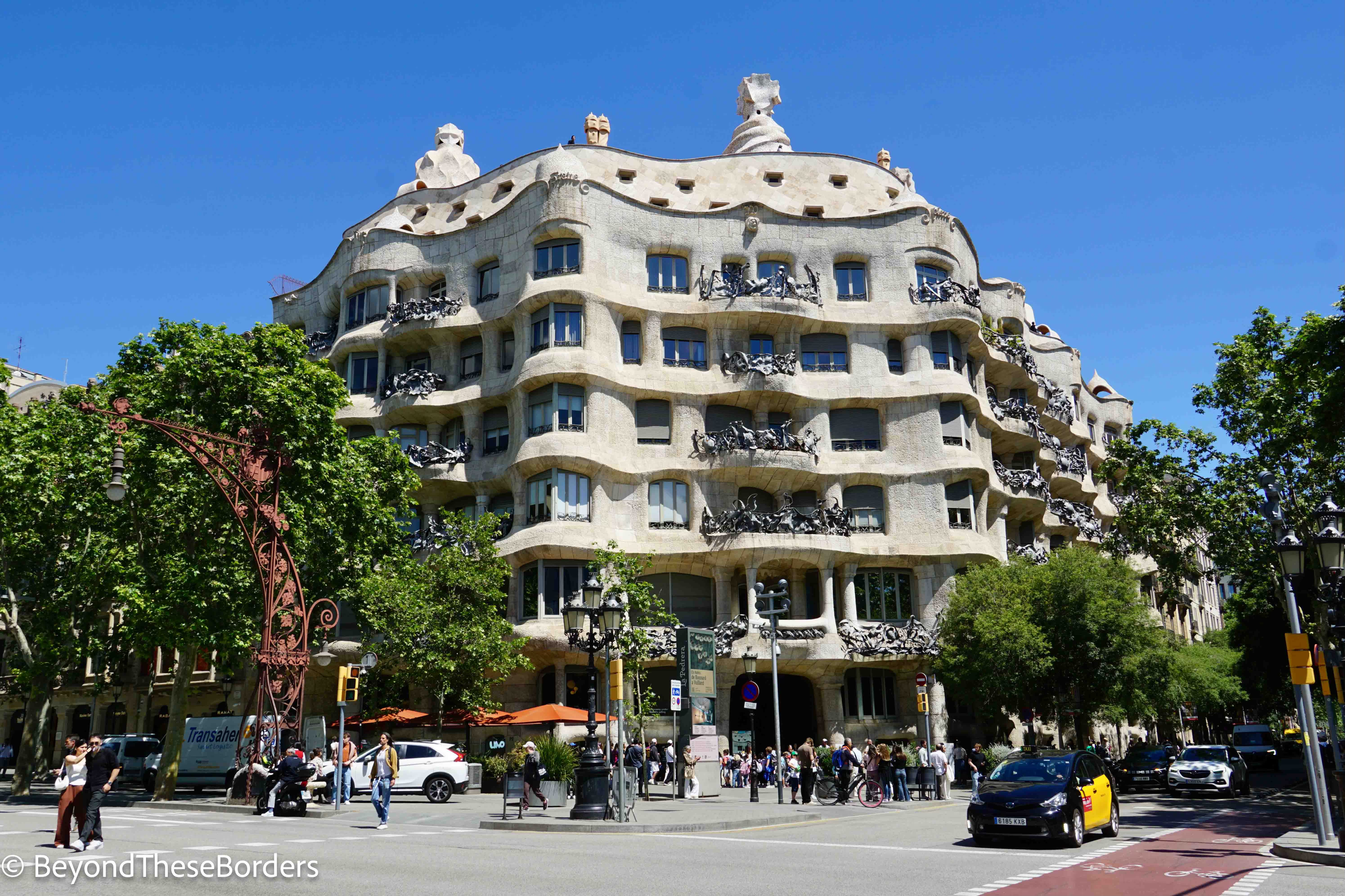
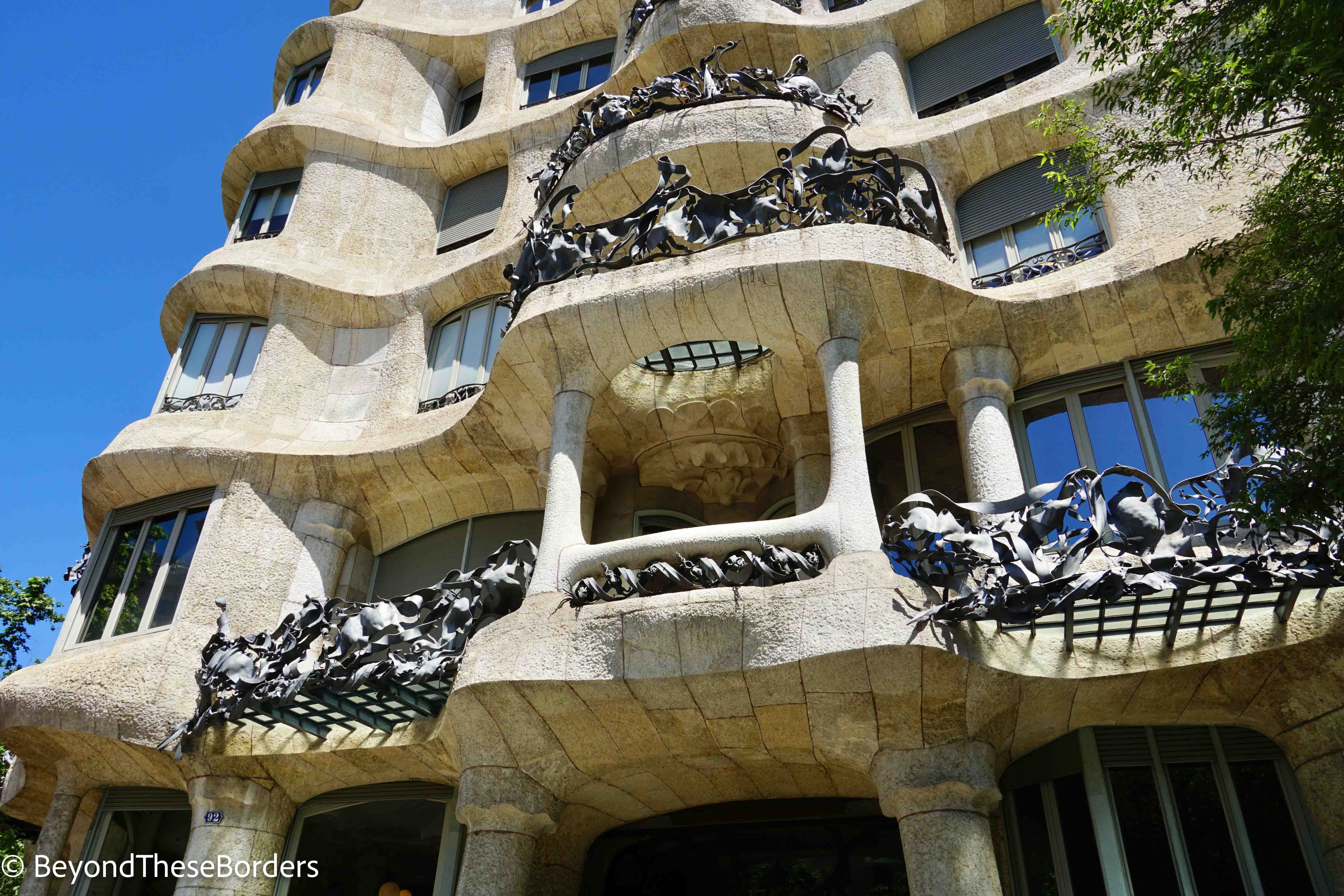
Antoni Gaudí designed Casa Milá from 1906-1912. This was just after Casa Batlló and located just a few blocks away. We only saw the outside of Casa Milá since we didn’t purchase an entrance ticket. Casa Milá also has waves in the exterior design though this building isn’t colorful. It appears more like a natural rock face. The balconies each have intricate wrought iron railings. The designs of these railings twist and almost appear to be growing metal plants.
Sagrada Família
Out of all of his works, the Sagrada Família is Gaudí’s most awe-inspiring. It has been under construction for over a century and still is not finished as of 2026.
In 1883 Gaudí was put in charge of the recently initiated project to build the basilica, and he completely changed the design to his own masterpiece. From 1915 until his death in 1926, Gaudí dedicated himself completely to the Sagrada Família. In 1925 Gaudí even moved onto the construction site, but sadly he died within a year when he was struck by a tram. Unrecognized, people thought he was a beggar and didn’t get him immediate care. He was laid to rest in the crypt of Sagrada Família and remains there to this day. During Gaudí’s life only the crypt, apse, and part of the Nativity facade were completed. The rest of the church construction has continued on under other architects trying to complete Gaudí’s vision.
Tickets
The Sagrada Família was the top place we wanted to visit in Barcelona. Therefore, as soon as we bought our cruise that ended in Barcelona we bought tickets for Sagrada Família. Two days before our planned visit, we received an email saying our ticket had been cancelled and refunded due to a private event. This was bewildering news! Tickets sell out about a month in advance, leaving us with little chance of getting tickets for the time we would be there.
I quickly started scouring the tours listed on Viator and Get Your Guide and managed to find one of the few tickets left for during our time in Barcelona. It was a much more expensive guided tour. We booked it being thankful we found something, plus it had free cancellation. Dave kept checking the official ticket site and occasionally found a ticket released but it would always be gone by the time he filled out the information. He was persistent though and managed to buy the cheaper regular entrance to the church during our stay. We were able to cancel our guided tour and went to Sagrada Família on our own like planned. It was a stressful situation, but it all turned out fine in the end.
A quick note: if you plan to visit the Sagrada Família and want to buy admission, the official site for tickets is the following: https://sagradafamilia.org/en/tickets When searching for tickets it is easy to end up on a 3rd party site that will charge much more for the same admission or even possibly end up on a site with fake tickets.
Exterior of Sagrada Família
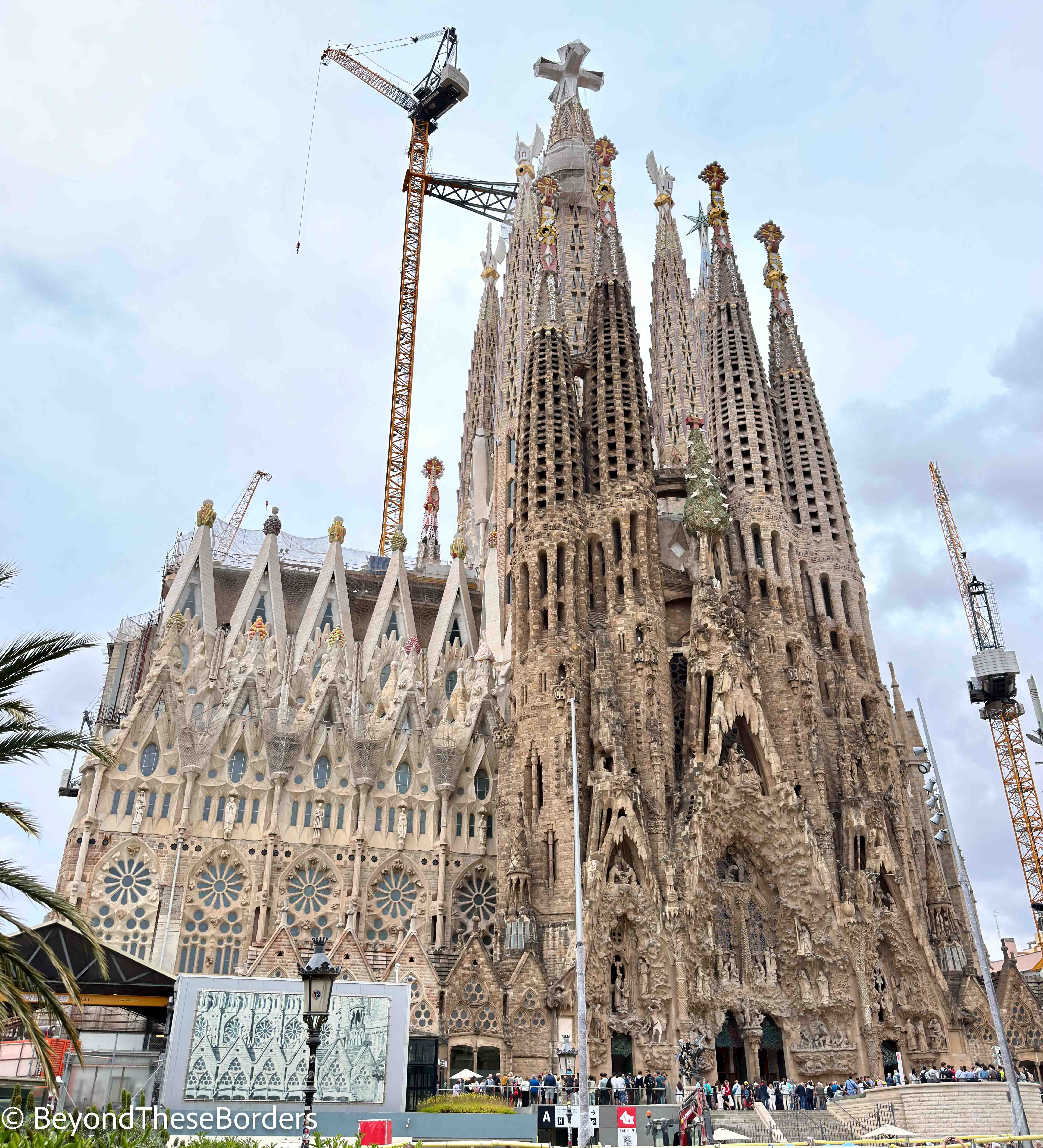
We arrived at the church about 90 minutes before our timed entry. We slowly wandered around the exterior of the still under construction church. Although there were tons of people everywhere and some construction walls and cranes in the way, we could still see most of the exterior. Half an hour before our timed entrance we were allowed to enter the gated area close to the church where we had less obstructions. Soon after, we entered the church grounds to get up close views of the facade and go inside.
Once completed, 18 towers will rise will up from the church. 12 of these represent the 12 apostles, 4 represent the Evangelists (Mathew, Mark, Luke, and John: the authors of the 4 gospels), 1 represents the Virgin Mary, and the tallest tower represents Jesus. With the completion of the tower for Jesus, the Sagrada Família is now the tallest church in the world. Only the 4 apostles towers that will rise from the Glory Facade remain to be constructed.
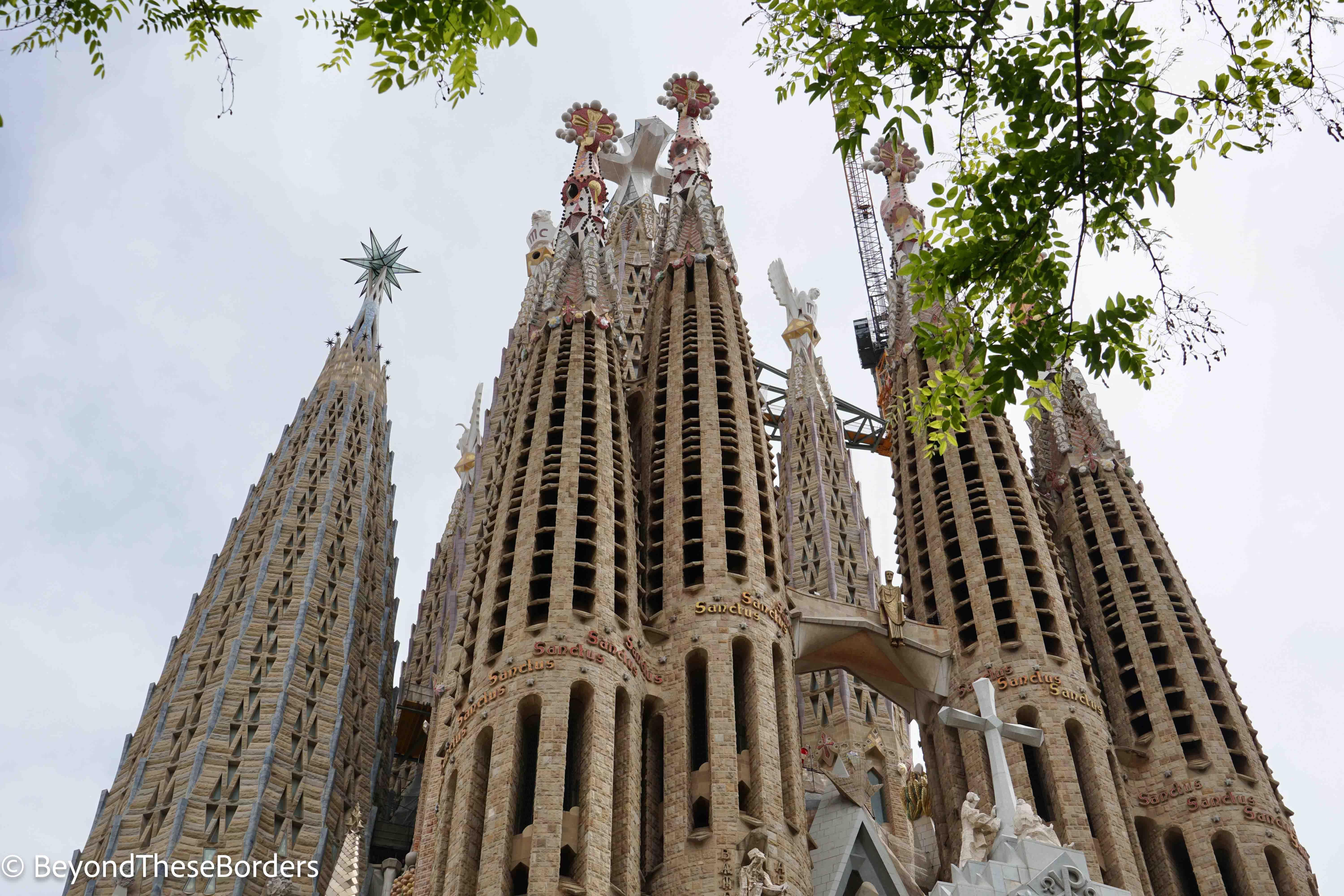
Sagrada Família has 3 exterior facades, each representing an important period for Jesus. They are 1: The Nativity facade on the east side, showing the birth and early life of Jesus. 2: The Passion facade on the west side, depicting the events leading to the crucification and death of Jesus. 3: The Glory facade on the south side, which hasn’t been constructed yet but will show the celestial glory of Jesus after his death.
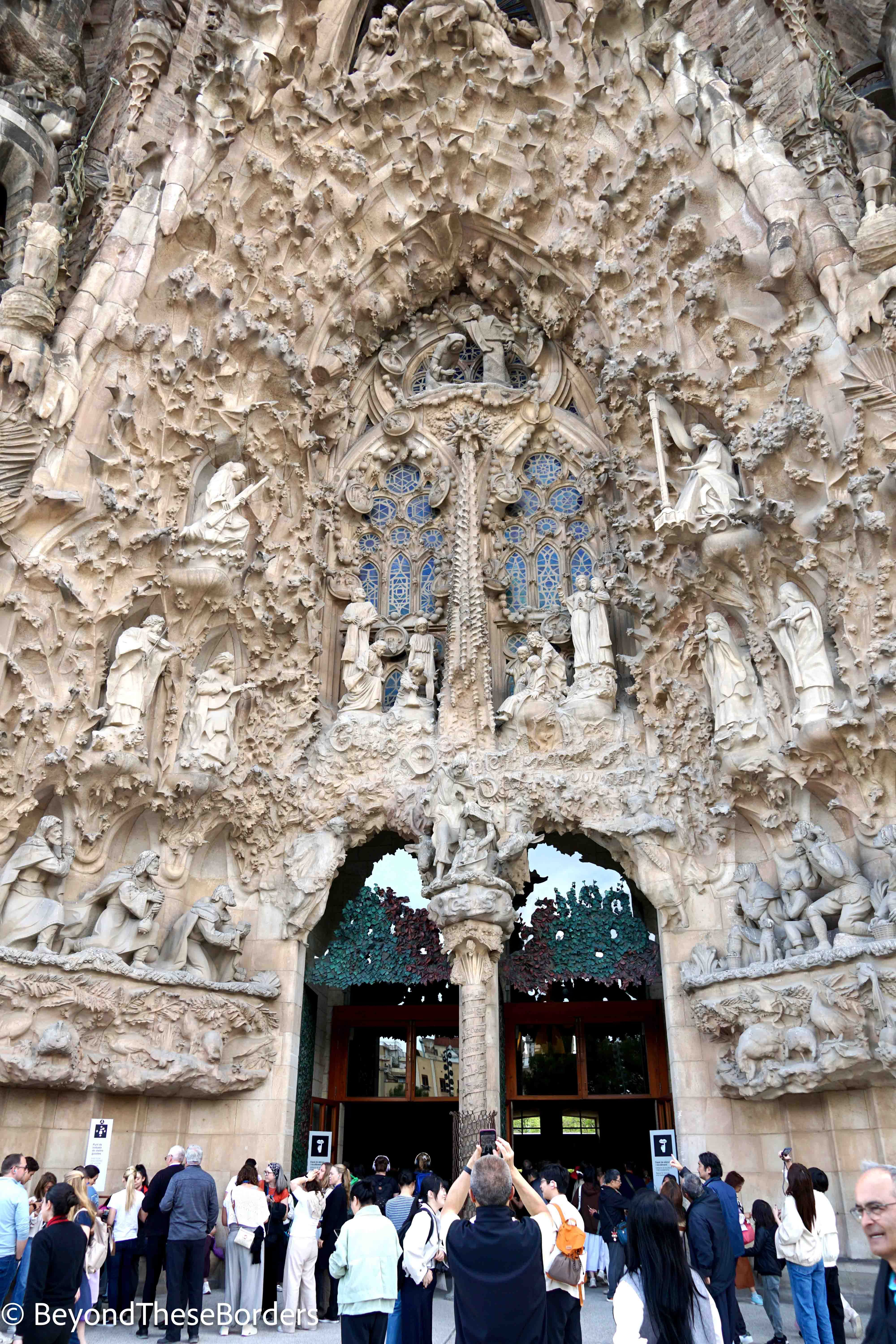
The Nativity facade and the Passion facade are both amazing. The two contrast dramatically in style. The Nativity facade has characters that are sculpted in realistic curved shapes. The whole facade is very ornamental with moldings that seem like plants growing to fill in all the space around the scenes. The top of the entrance door is covered in green and brownish red leaves of metal.
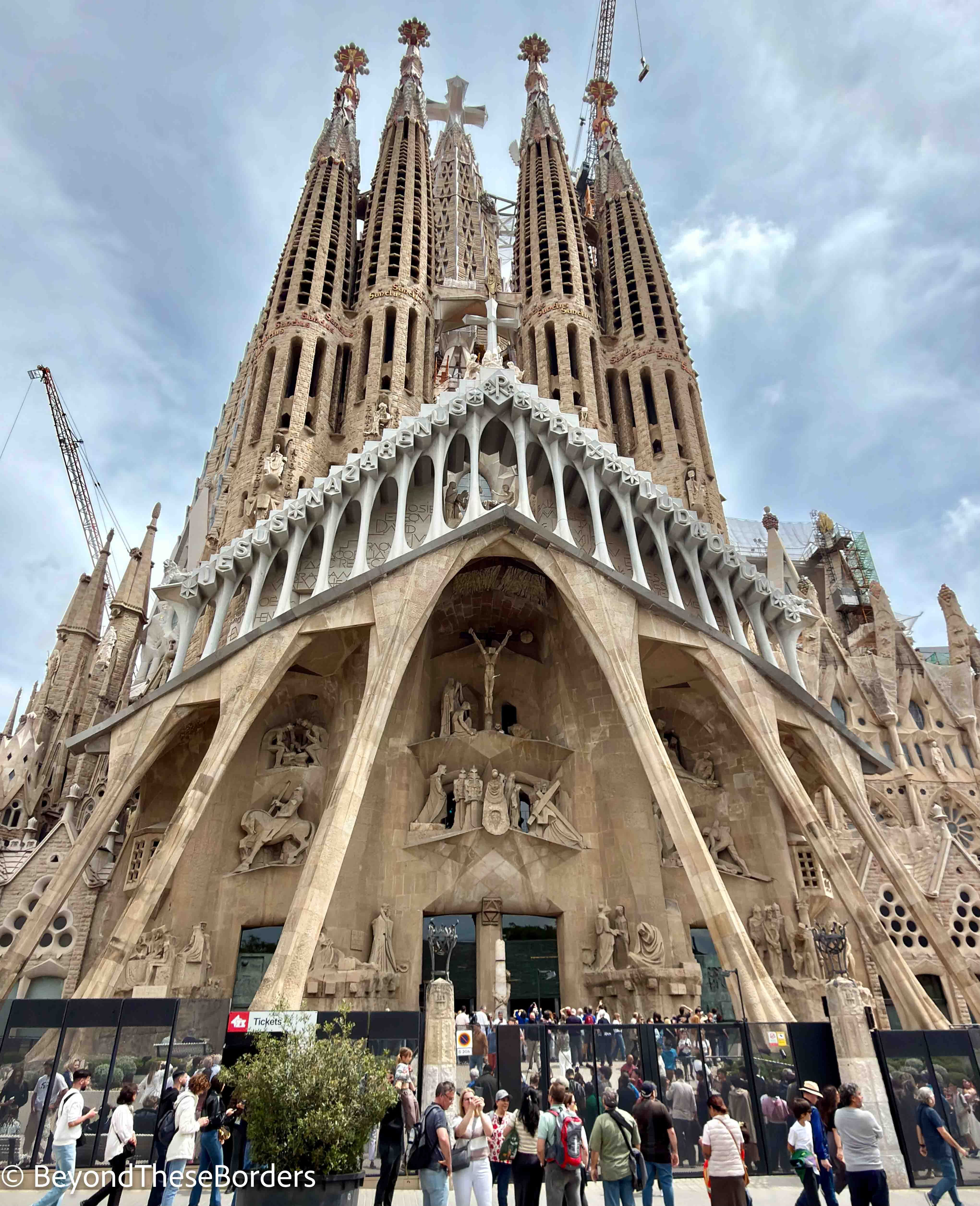
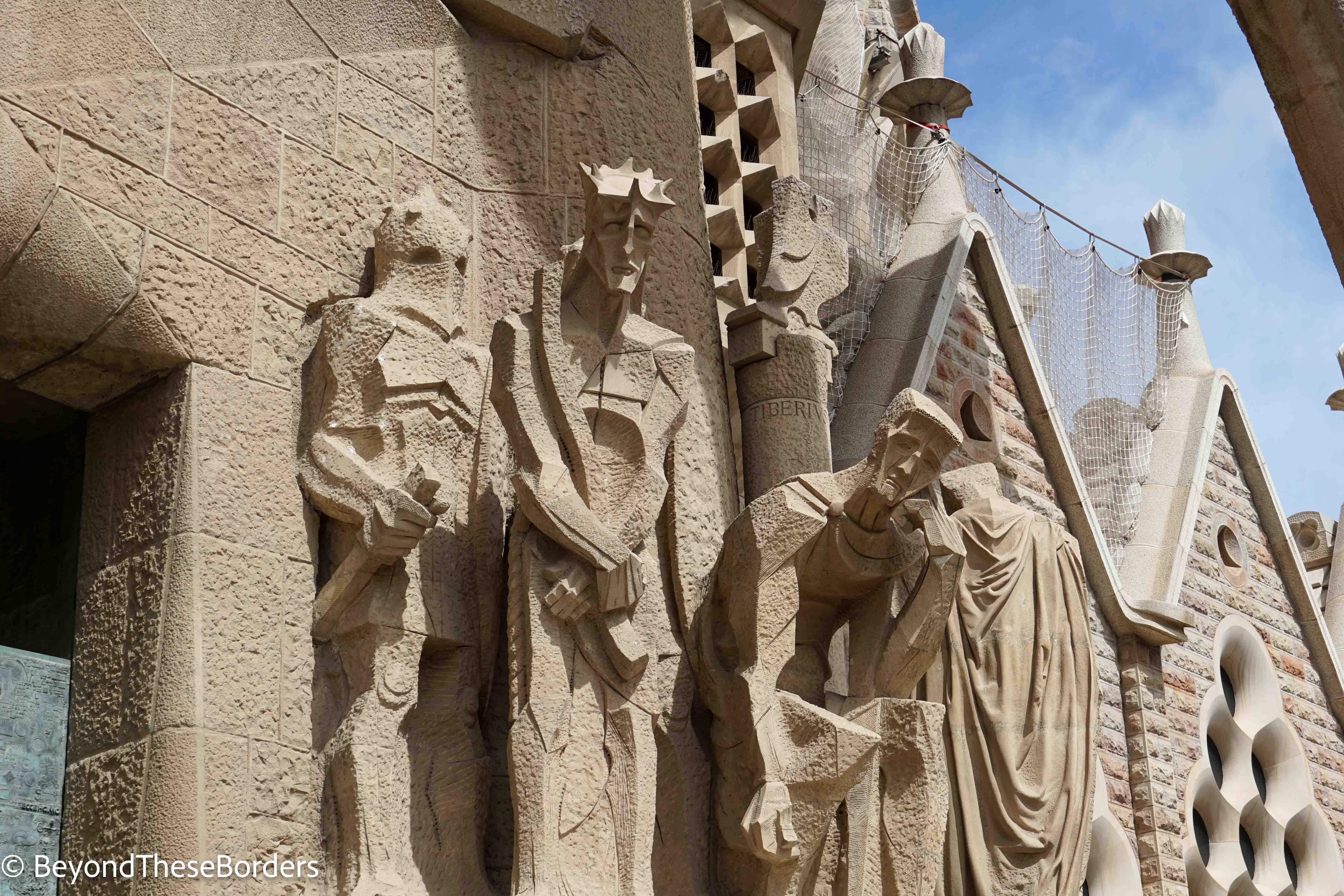
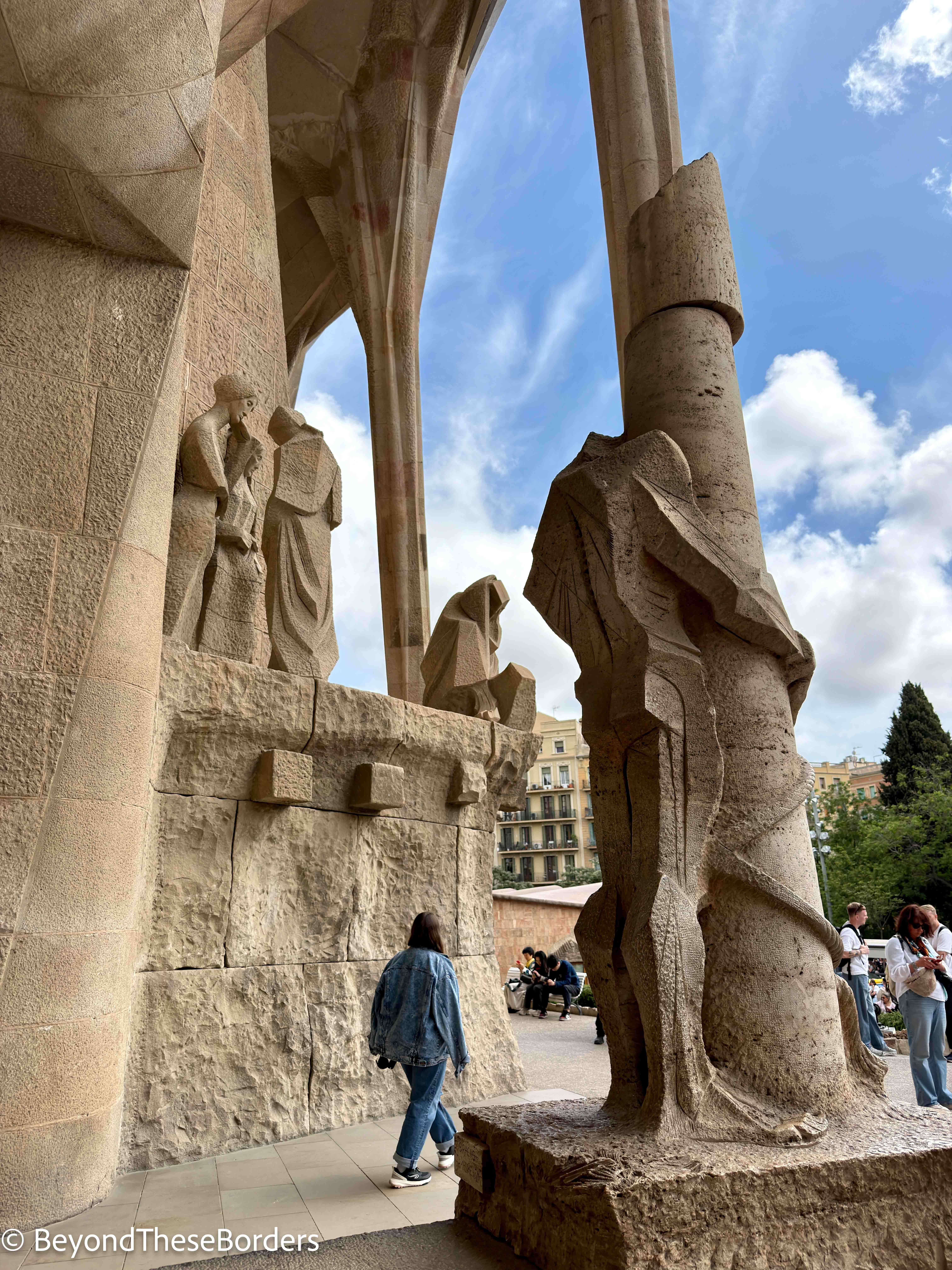
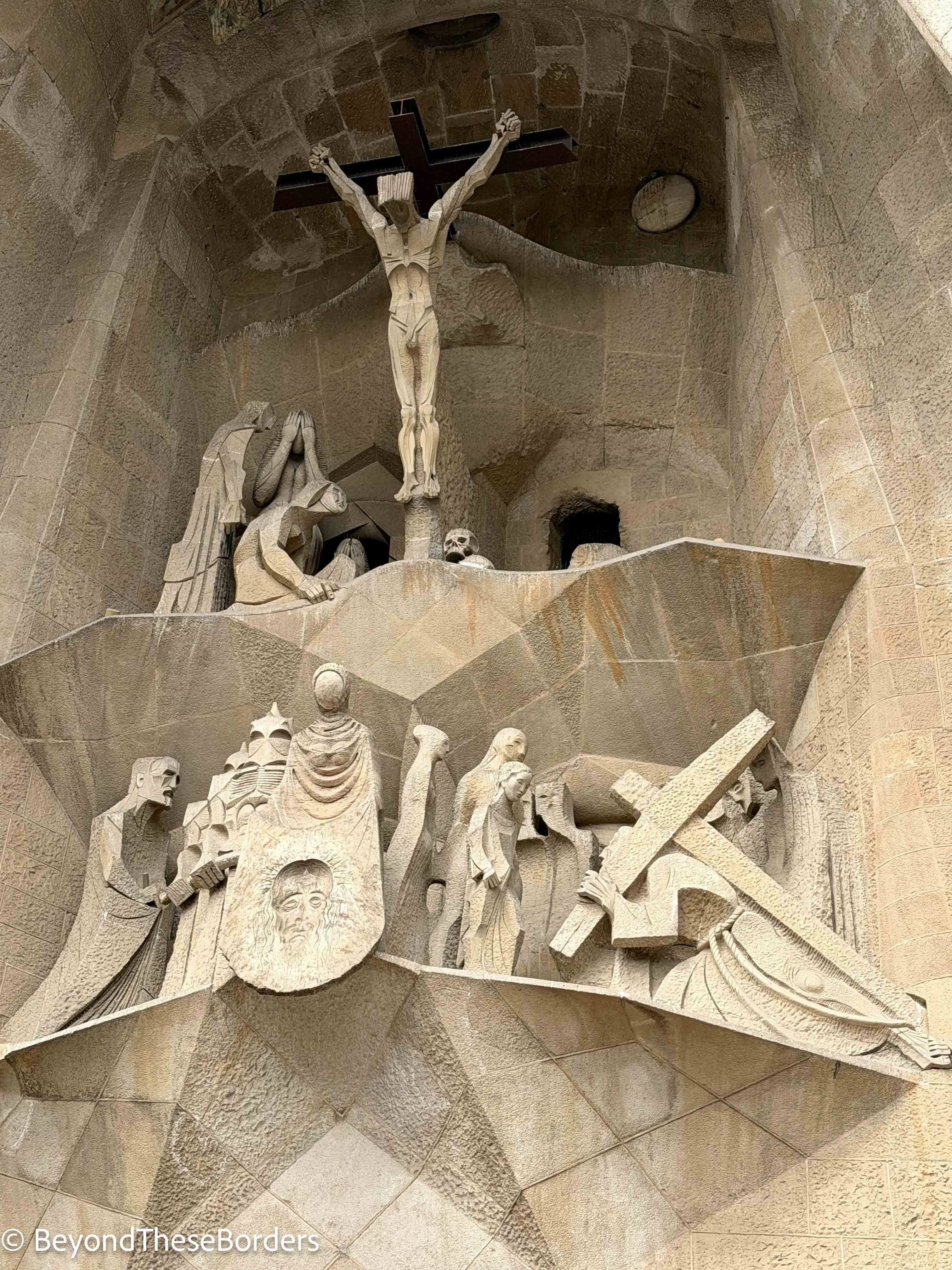
The Passion facade has striking, angular characters that create a tormented feeling. They stand out from the bare stone behind them. Everything on this side has harsh angles and straight lines creating a sense of unease. The narrow columns splay out from the church are supposed to resemble strained muscles and the white bone-like series of columns above the facade resembles a skeleton.
The scenes move chronologically from the bottom left to right then up following an “S” design. The scene directly above the door is of Jesus carrying the cross and above that he is shown emaciated on the cross. If you look at the top of the white bones I mentioned, a white cross rises up from the center and on top of that is a bronze depiction of Jesus showing his ascension into heaven.
Interior of Sagrada Família
The inside of the Sagrada Família is also like no other church I have seen. The columns rising up from the floor create the impression of a forest. They are trees growing into branches that support the intertwined vaults above. Gaudí used geometry seen in nature to support this giant building, eliminating the need for structures like buttresses to add support.
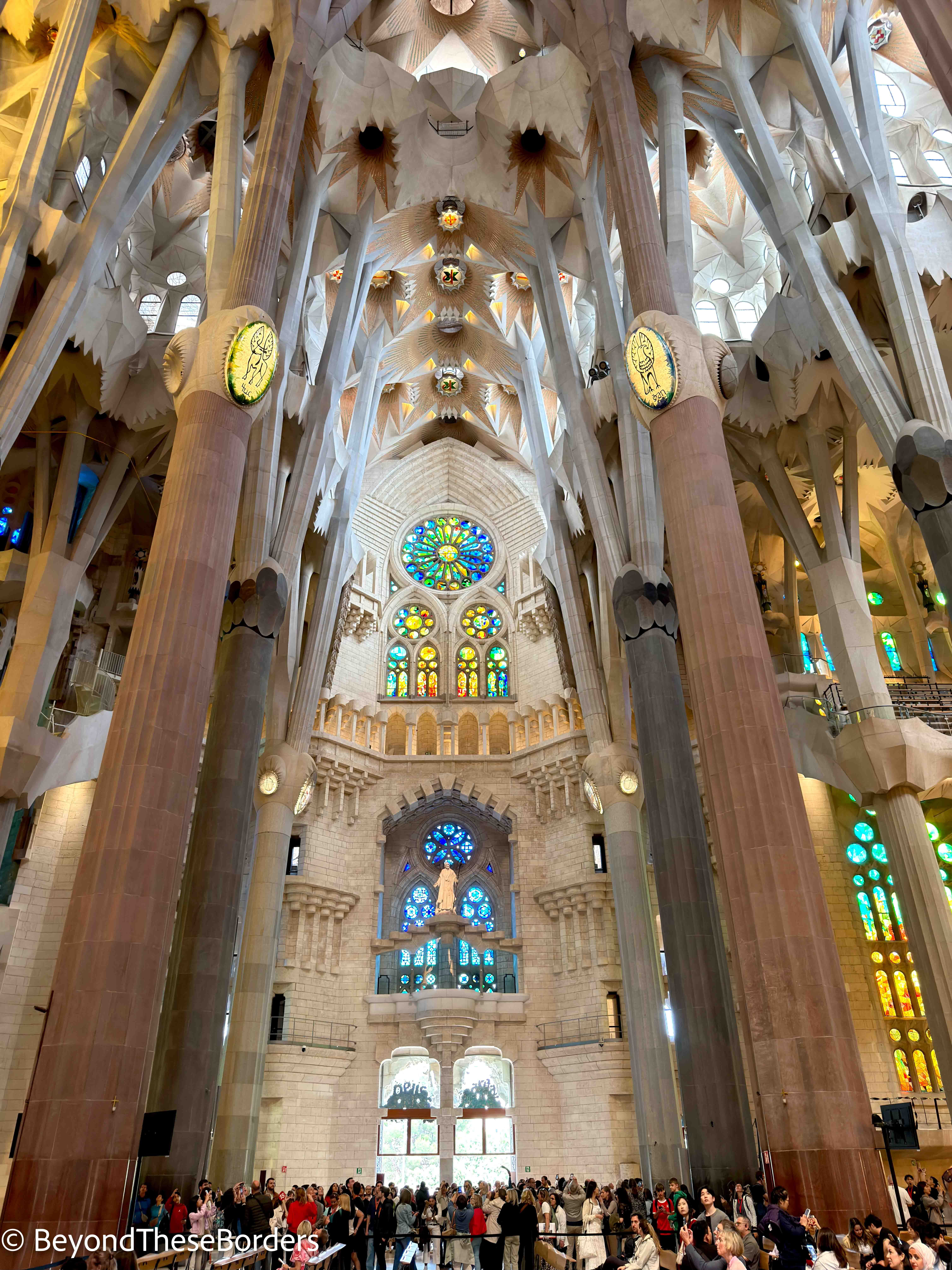
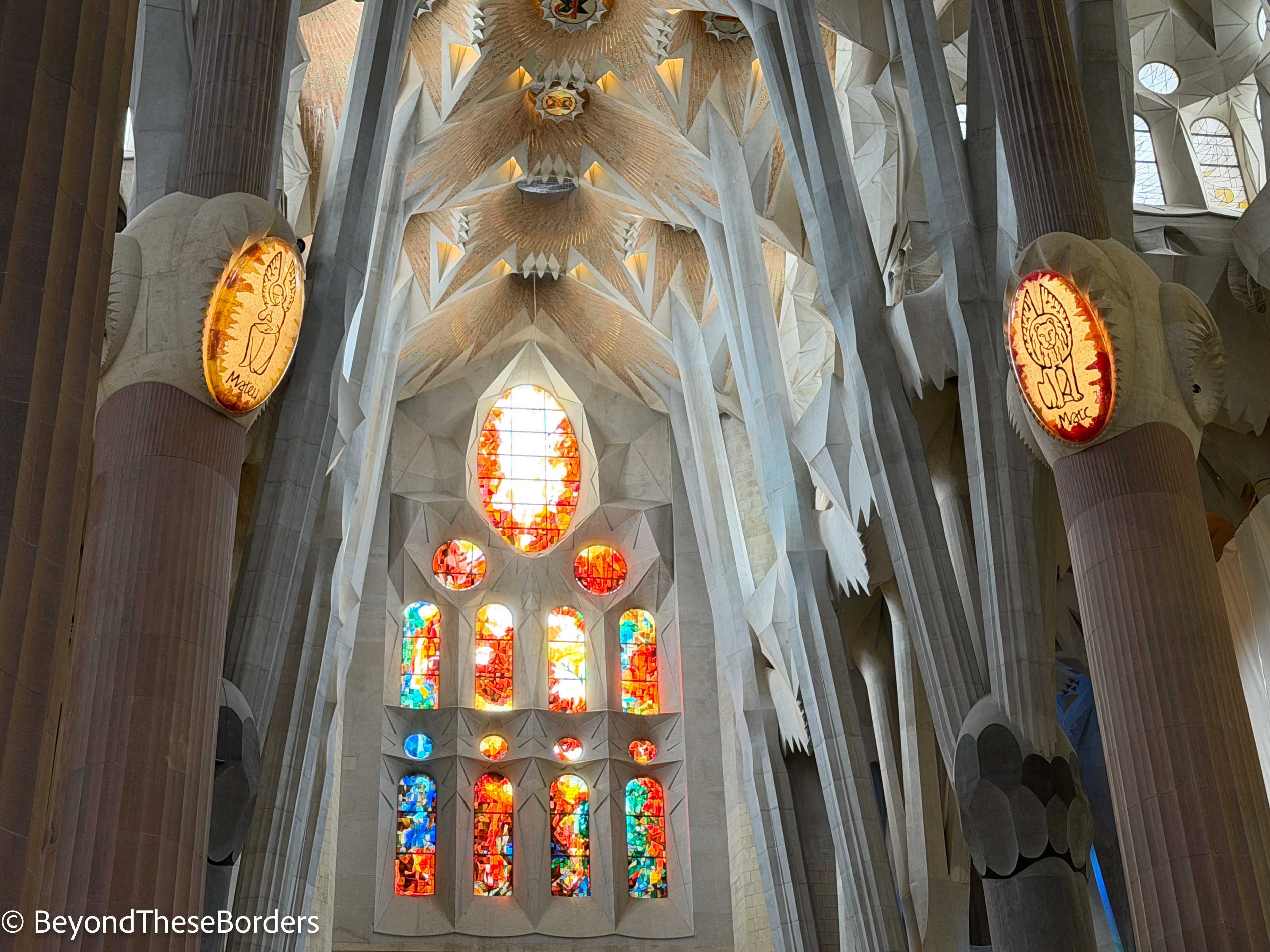
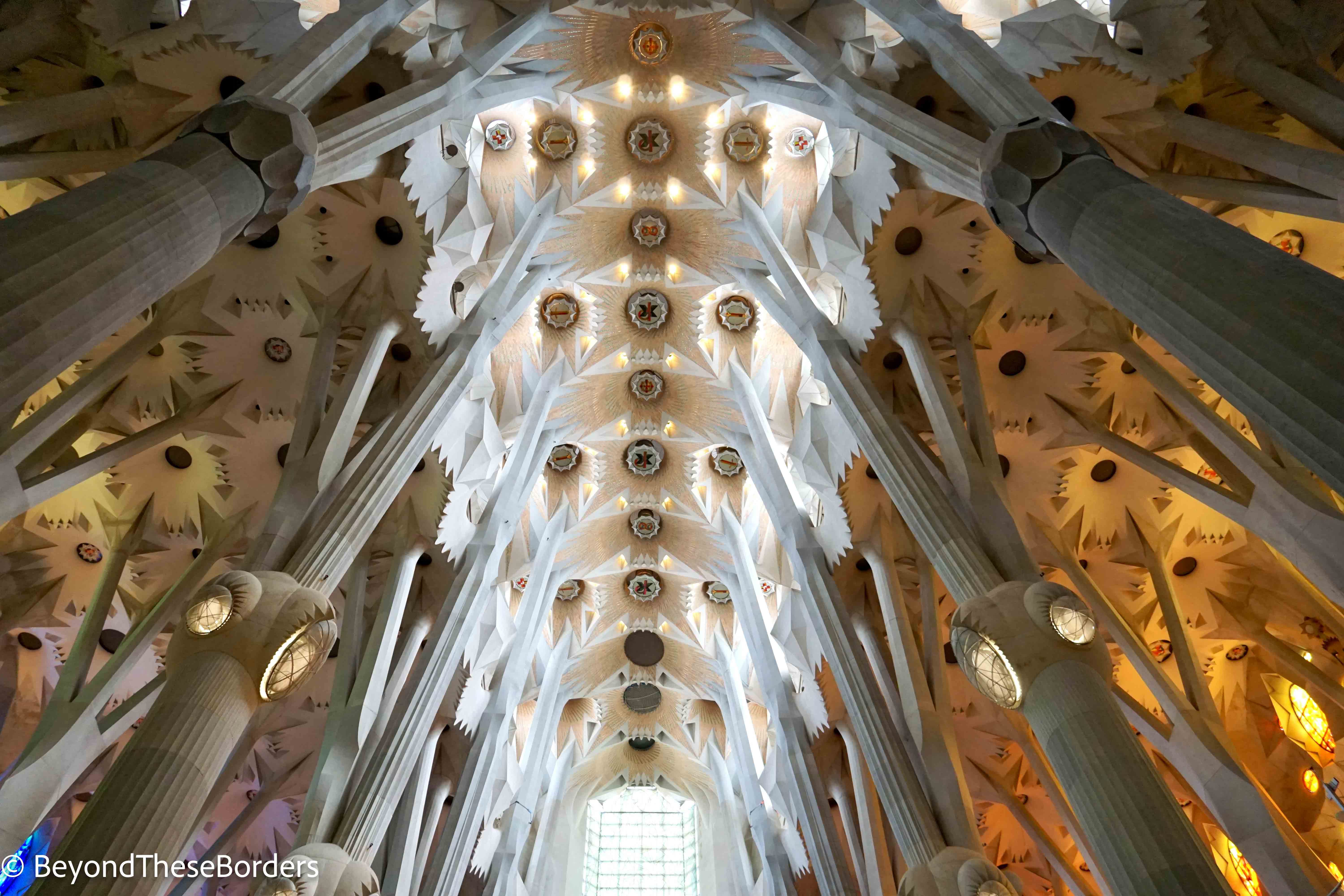
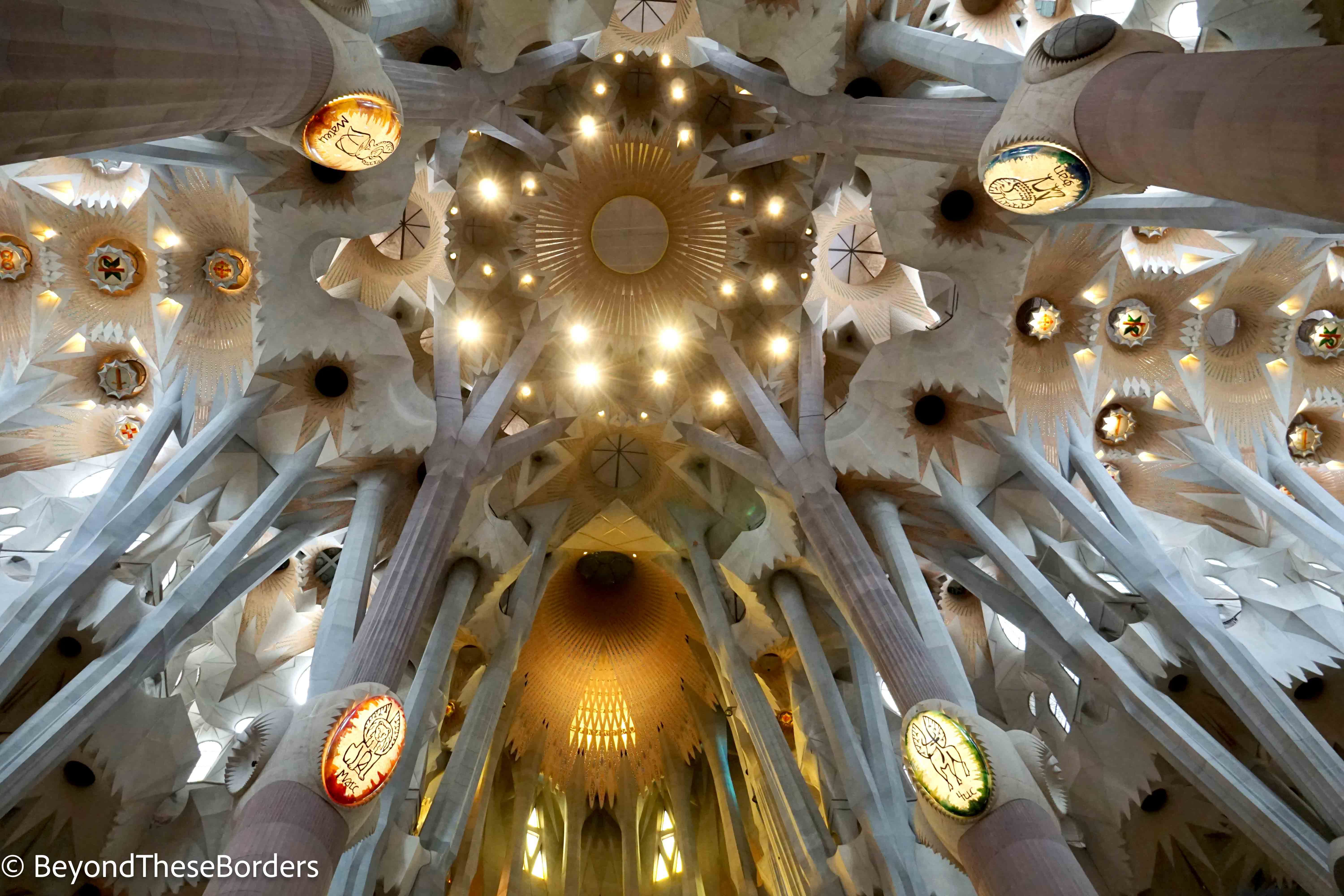
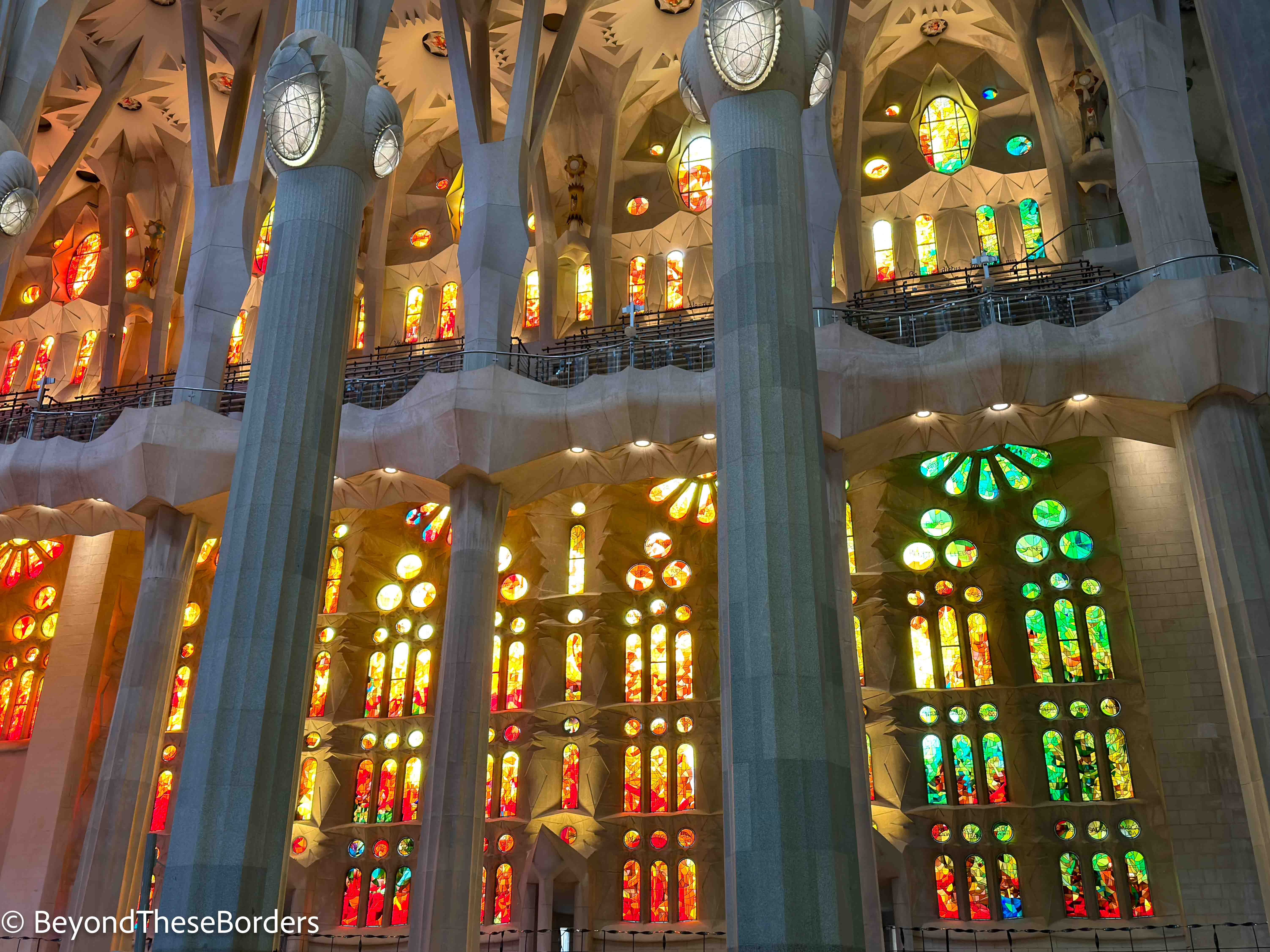
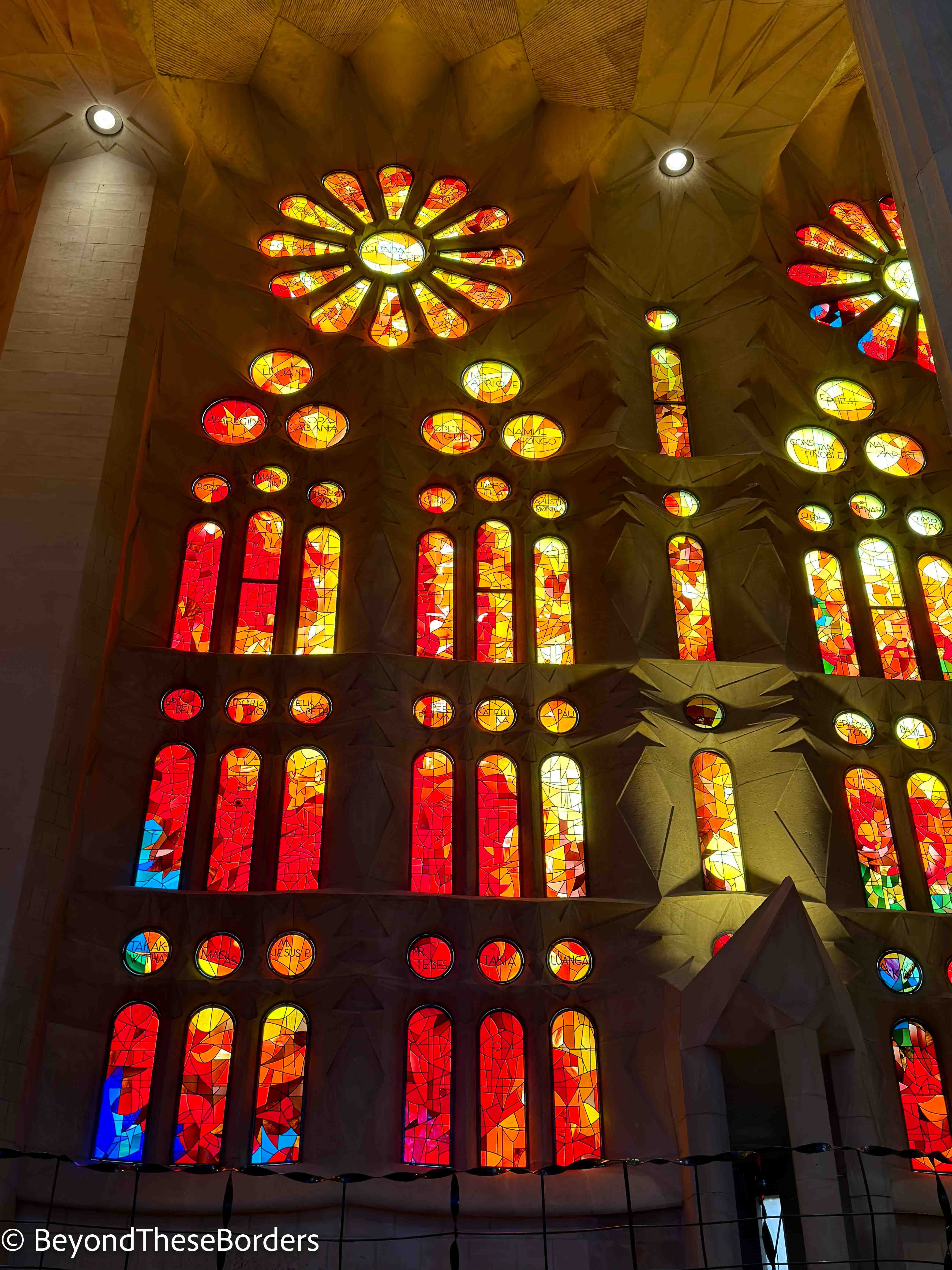
The church is filled with stained glass windows, sunlight carrying the colors inside. The windows on the nativity side are gentler colors mostly of blue and green. The windows on the passion side are mostly red, orange, and yellow. The upper windows are colorless helping to light up the high ceiling mosaic vaults.
Museu Nacional d’Art de Catalunya (National Art Museum of Catalonia) and the Palau Nacional (National Palace)
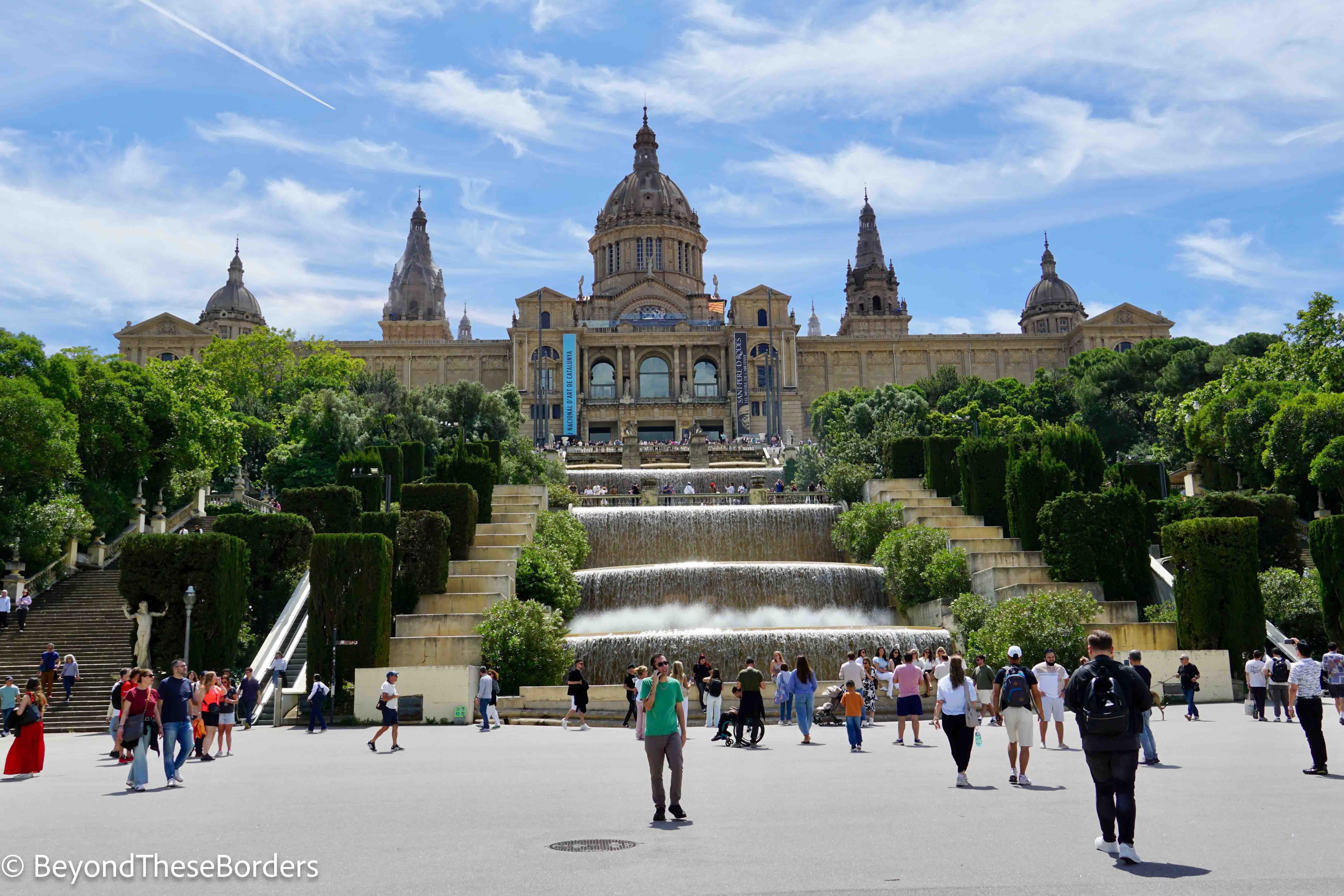
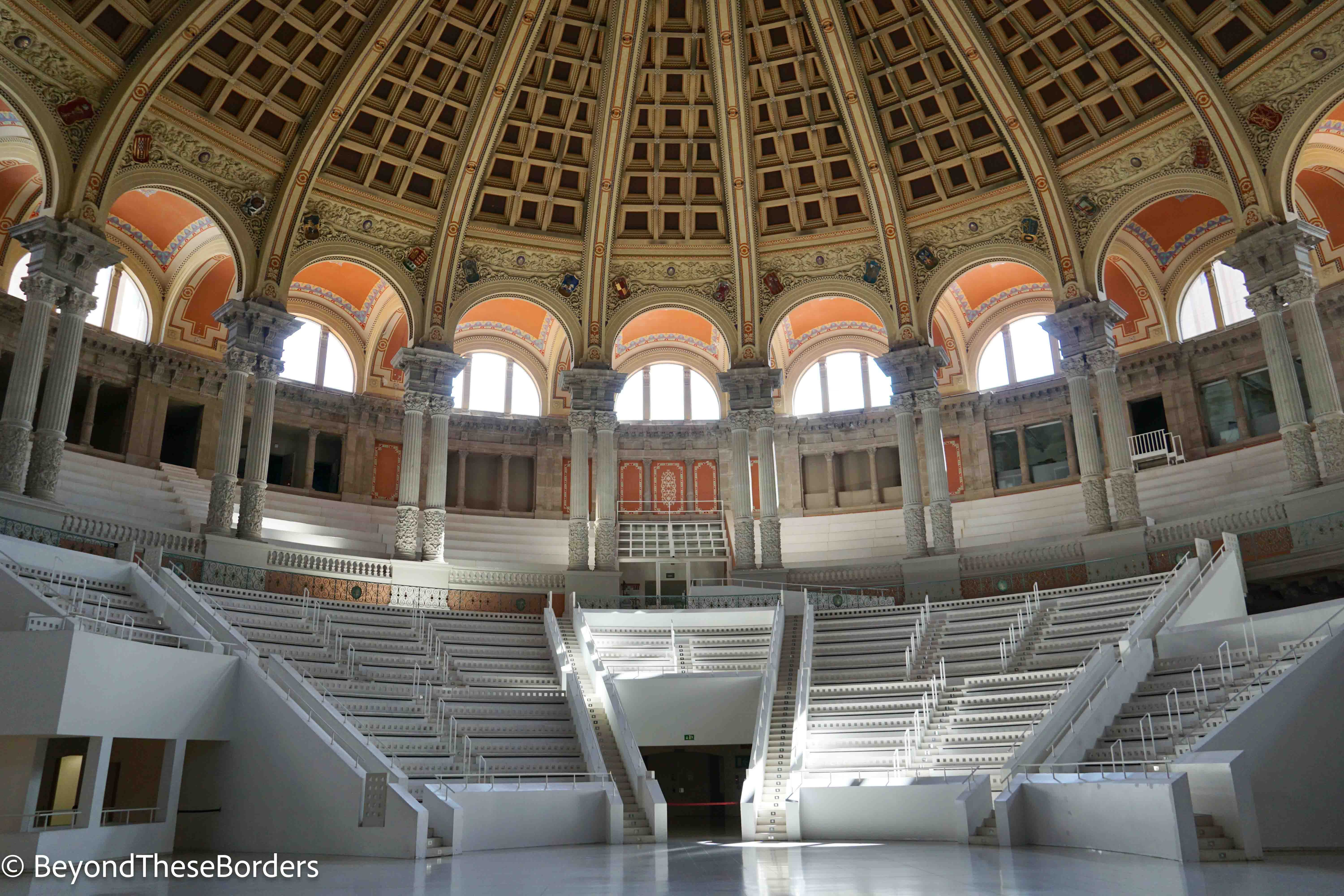
The final place we visited in Barcelona was the National palace and the art museum located within it. The National Palace was constructed for the 1929 World’s Fair in Barcelona to host the formal ceremonies. A series of waterfalls drop down directly in front of the building and a large fountain is beyond that.
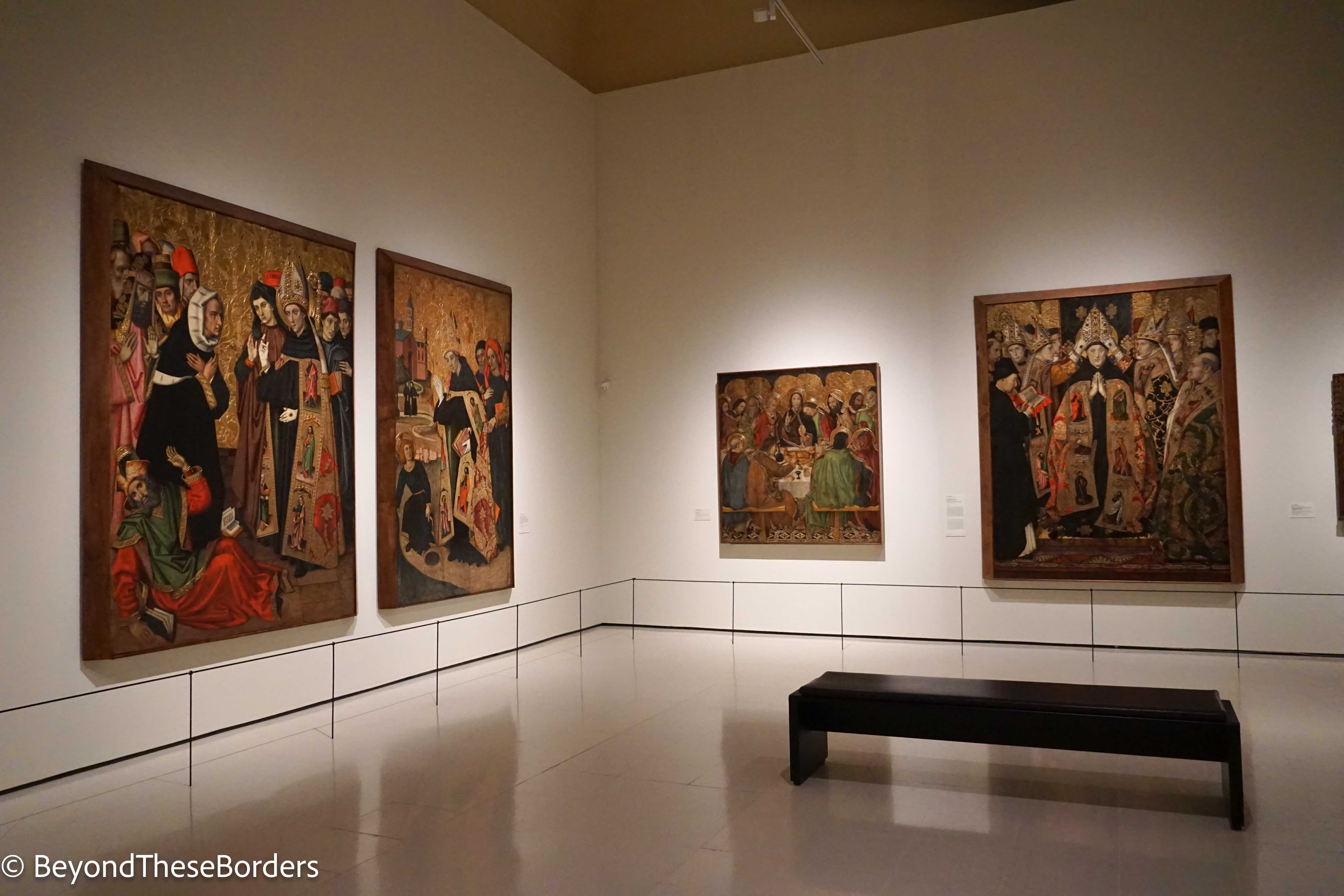
The National Art Museum of Catalonia has been located within the National Palace since 1934. Most of the building is consumed by the museum and these rooms aren’t that interesting architecturally. The museum includes sections for Romanesque; Gothic; Renaissance and Baroque; and Modern Art. We spent a couple hours here and saw less than half of the exhibitions. We were informed that our ticket allowed us to return once more within the next 30 days, but sadly this was our last day in Barcelona.
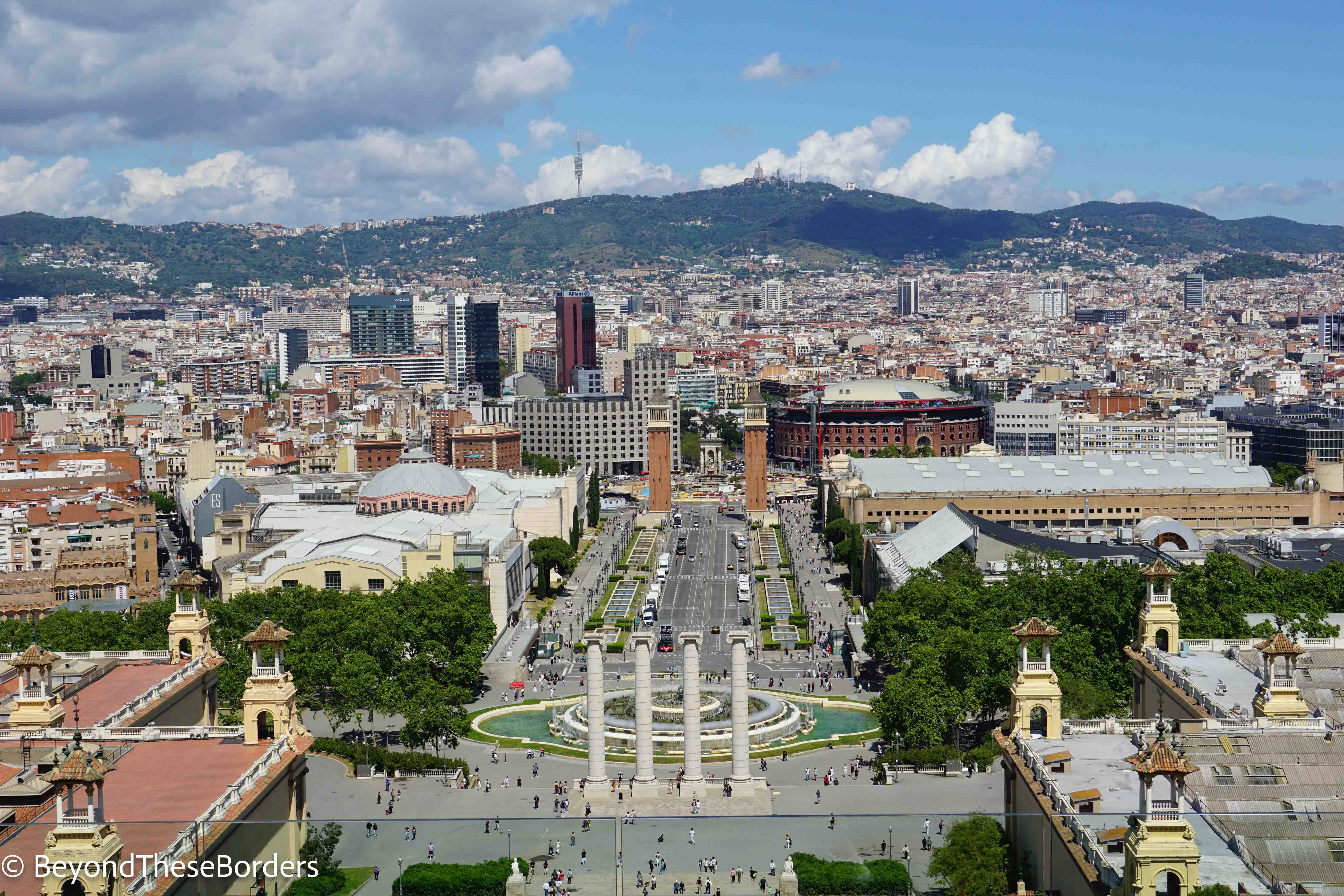
If you purchase a museum ticket, you will have access to the rest of the building. Or you can purchase a cheaper entrance to just walk around the parts of the building that don’t hold art exhibits. This is only a few areas, but the Great Hall and the Rooftop terrace are worth checking out.
Time to Leave Barcelona
That wraps up our time in Barcelona. The next morning we took a 3 hour bus ride up into the Pyrenees Mountains to the country of Andorra. If you are interested in more posts about Spain, here is one about our time in Andalucia a year ago: 5 Cities to Visit in Andalucia, Spain.