

Andorra la Vella is the capital city of a tiny country of about 90 thousand inhabitants located in the Pyrenees Mountains squished between Spain and France. It is known as a shopping destination, for good skiing in the winter, and for having one of the largest spas in Europe. We were interested in checking out the spa but shopping and skiing aren’t our interests so we weren’t sure how much we would enjoy the city. However, we loved the mountains, the small city feel, the street art, and learning about the history of Andorra.
Since we were in Barcelona and found that a bus can transport us to Andorra la Vella in just 3 hours, we decided it was a great time to check out this tiny country. We had originally planned to stay just 4 nights, but after arriving and enjoying the relaxed feeling of being in a small city surrounded by towering mountains and the fresh air we decided to extend our stay for a total of 6 nights.
This post covers the highlights of what we experienced. We staying in Andorra la Vella but visited the towns of Escaldes and Santa Coloma as well. The information is organized by location.
Andorra la Vella
The country of Andorra is divided into 7 administrative communities known as parishes. One of these parishes is “Andorra la Vella” and the capital city by the same name is located in the north-east of this parish. The city has lots of shopping, fun street art, a small historic center, and trails from town up into the hills.
Shopping in Andorra la Vella
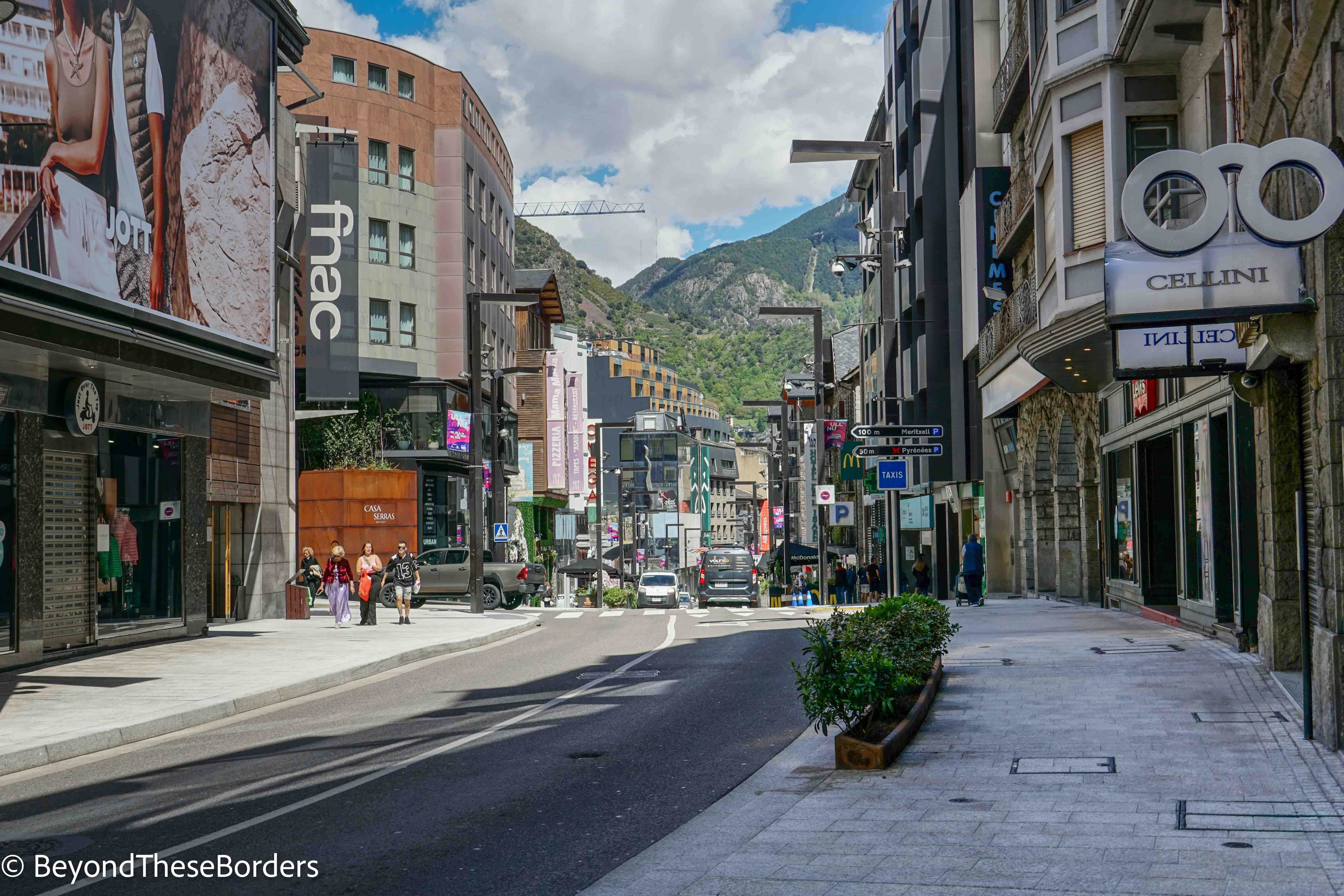
The first thing we noticed upon arrival was the shopping. Andorra brings lots of tourists in from nearby Spain and France to shop because of its low taxes. The streets are lined with fancy stores one after another. There are clothing stores, makeup stores, perfumeries, jewelry shops, watches, etc. We aren’t big shoppers, so this part of the city was wasted on us.
Artwork in Andorra la Vella
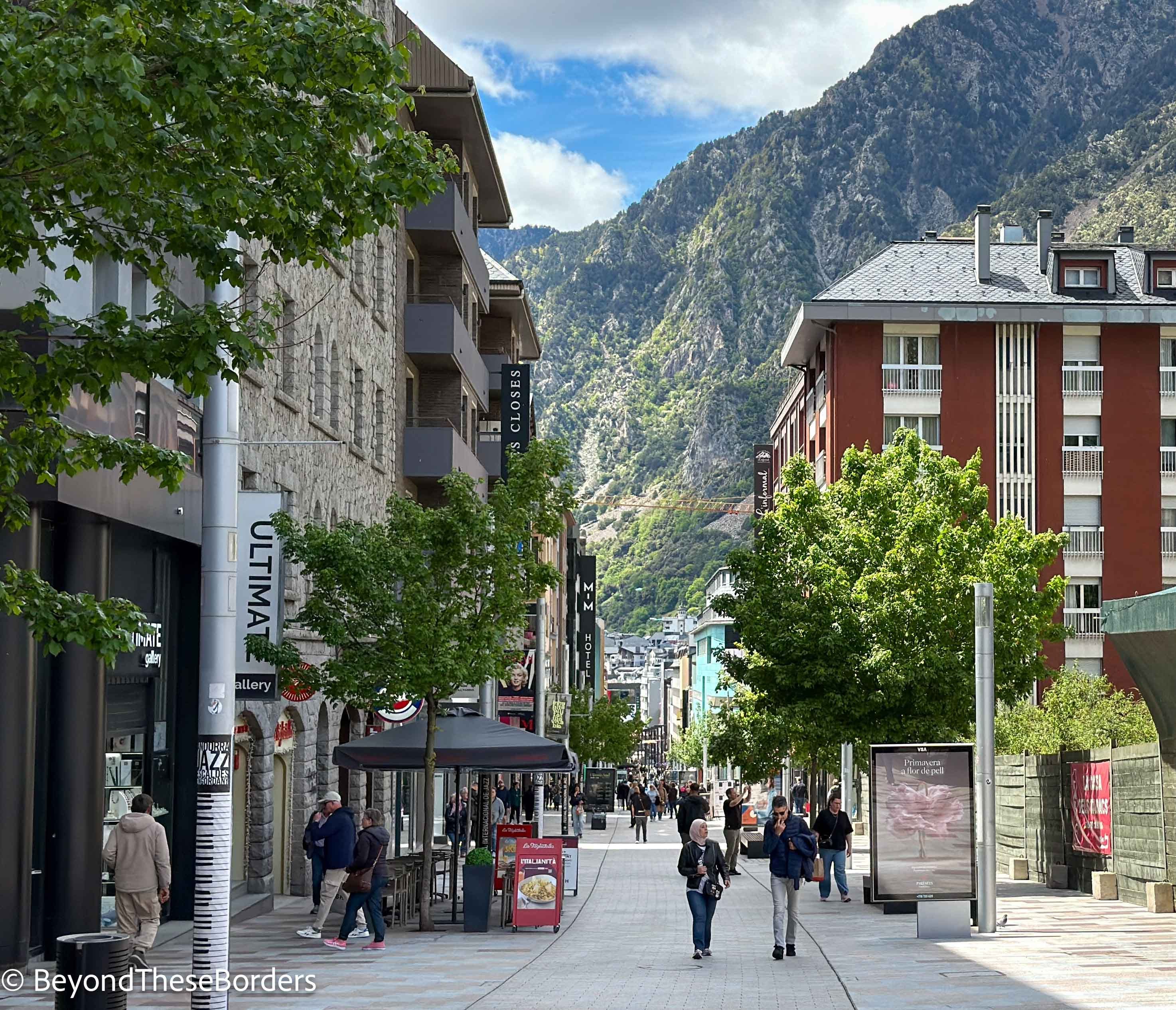
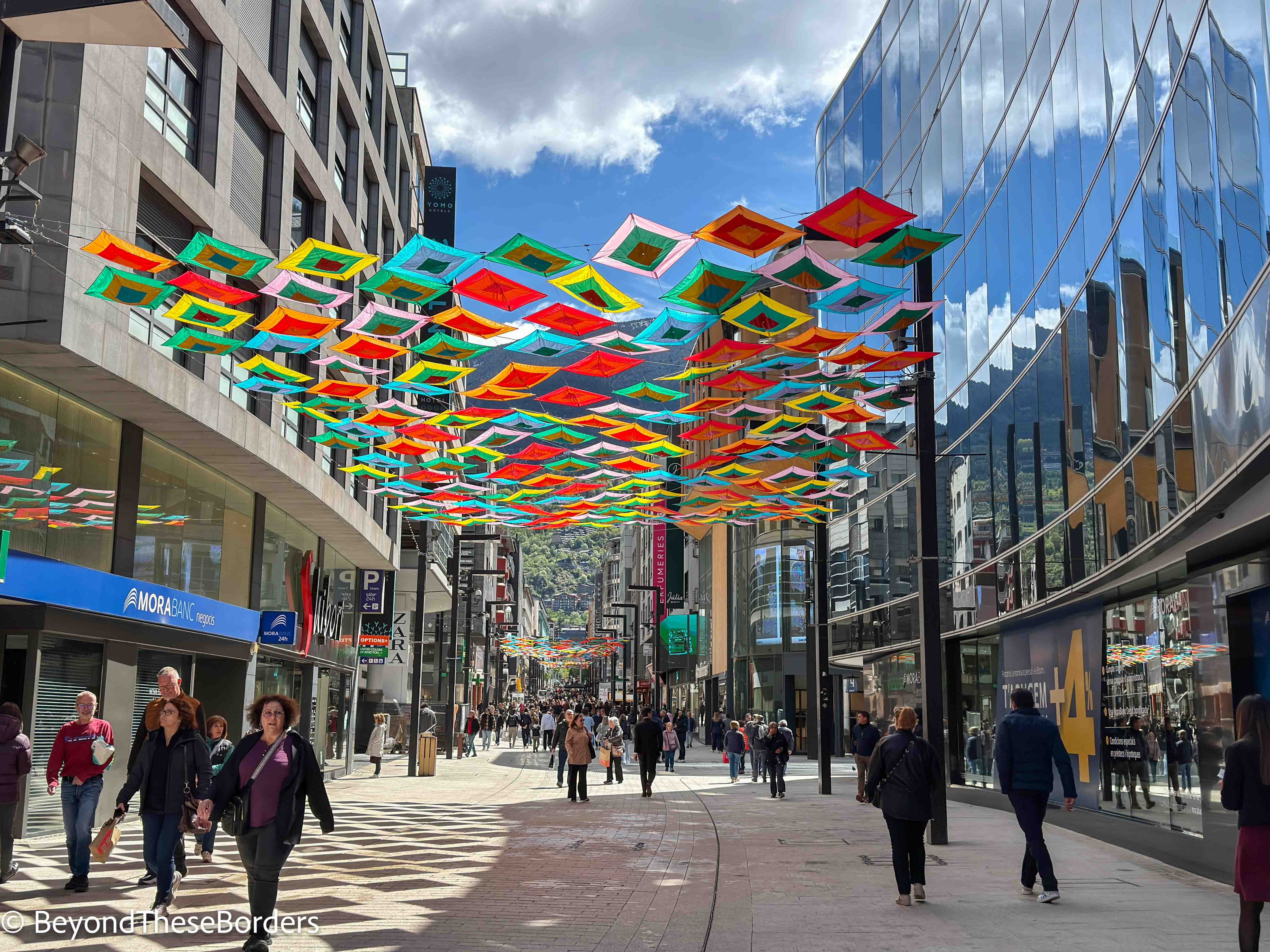
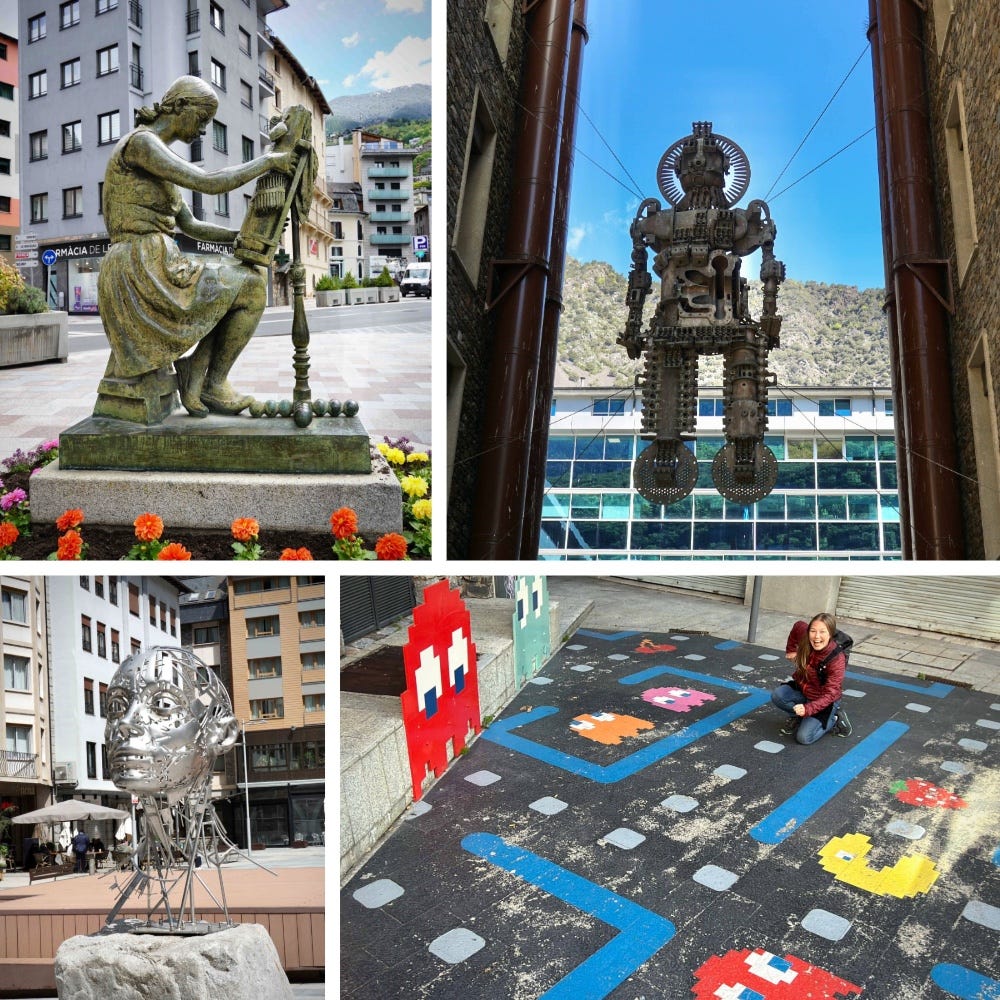
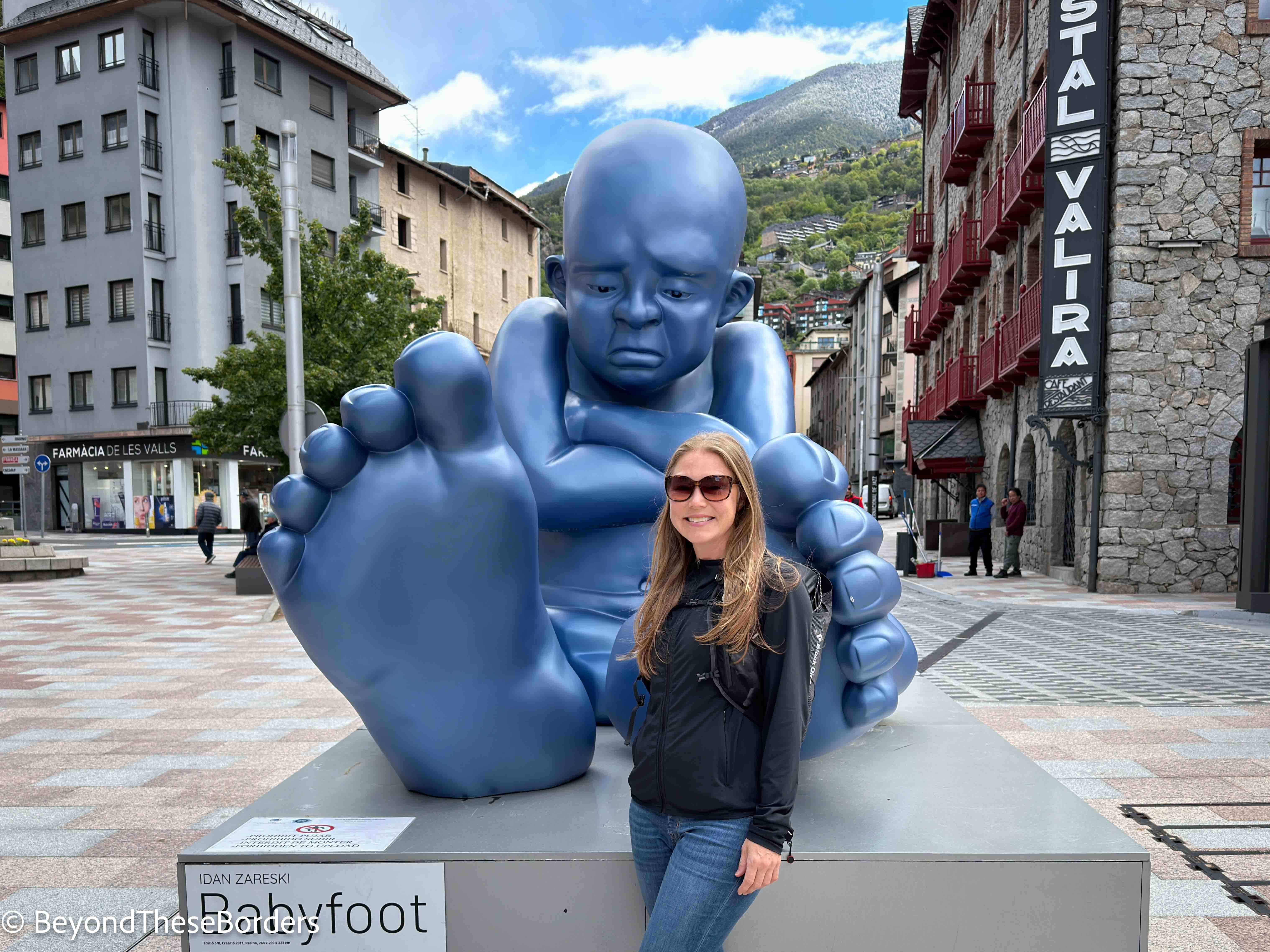
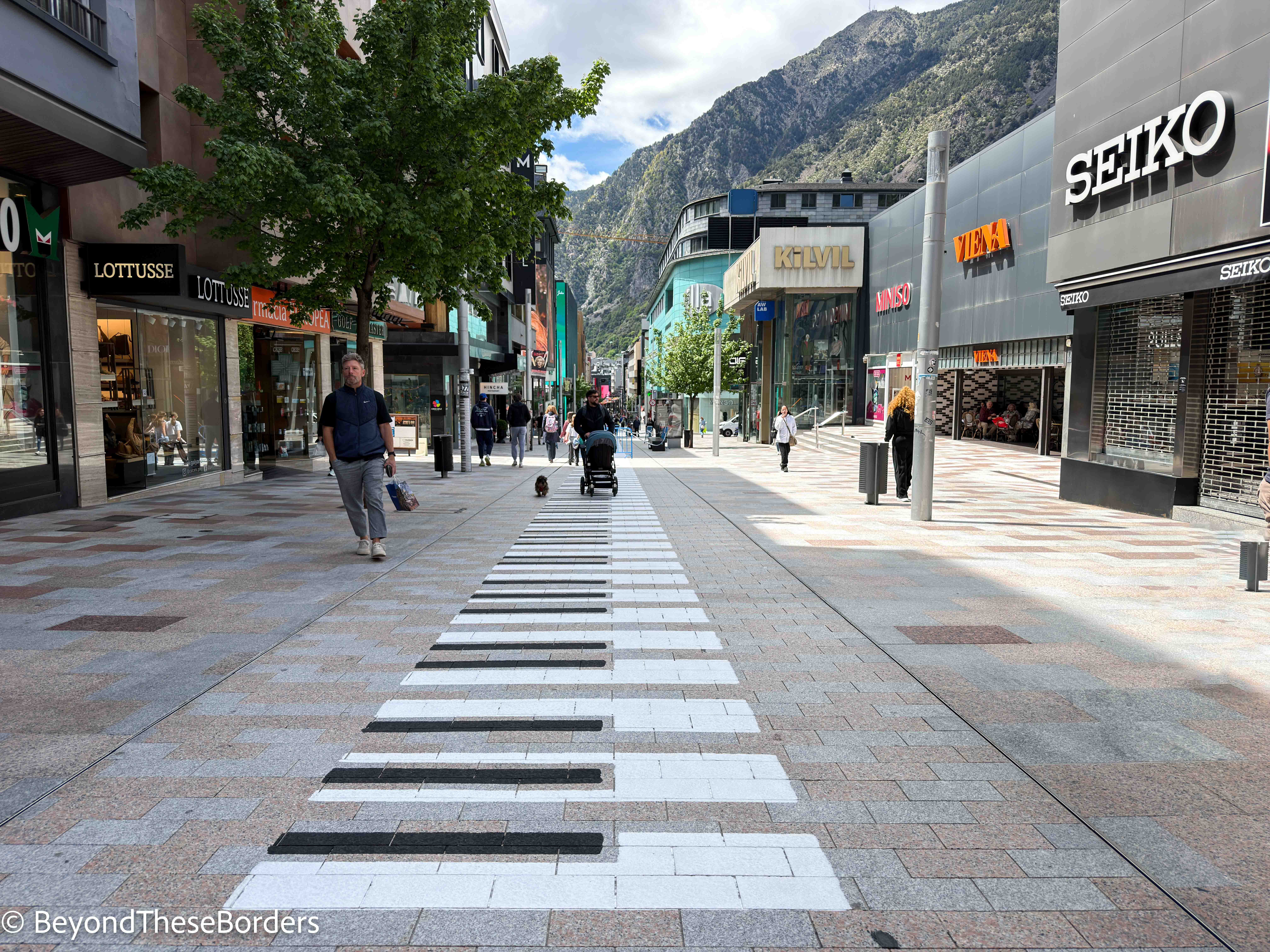
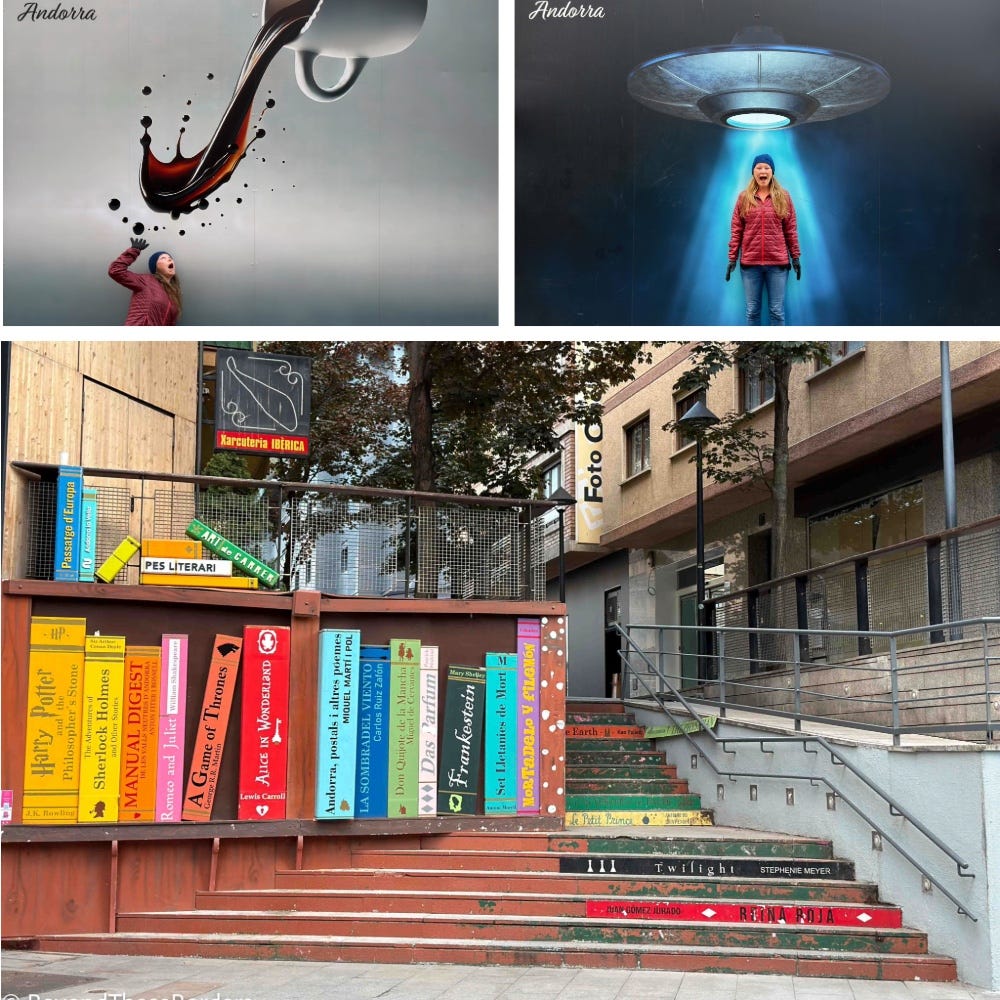
Andorra la Vella actually has a lot of artwork scattered around the city. It shows up as colorful flags or pinwheels over the streets; sculptures located in parks, roundabouts, and courtyards; and murals on business walls. There was a fun Pac-Man screen painted on a city corner and the walls to a construction zone had cool panels to take photos with. I really enjoyed the endless piano painted along the long pedestrian shopping street and the bookcase stairway on a quiet back street.
The Nobility of Time sculpture by Dalí
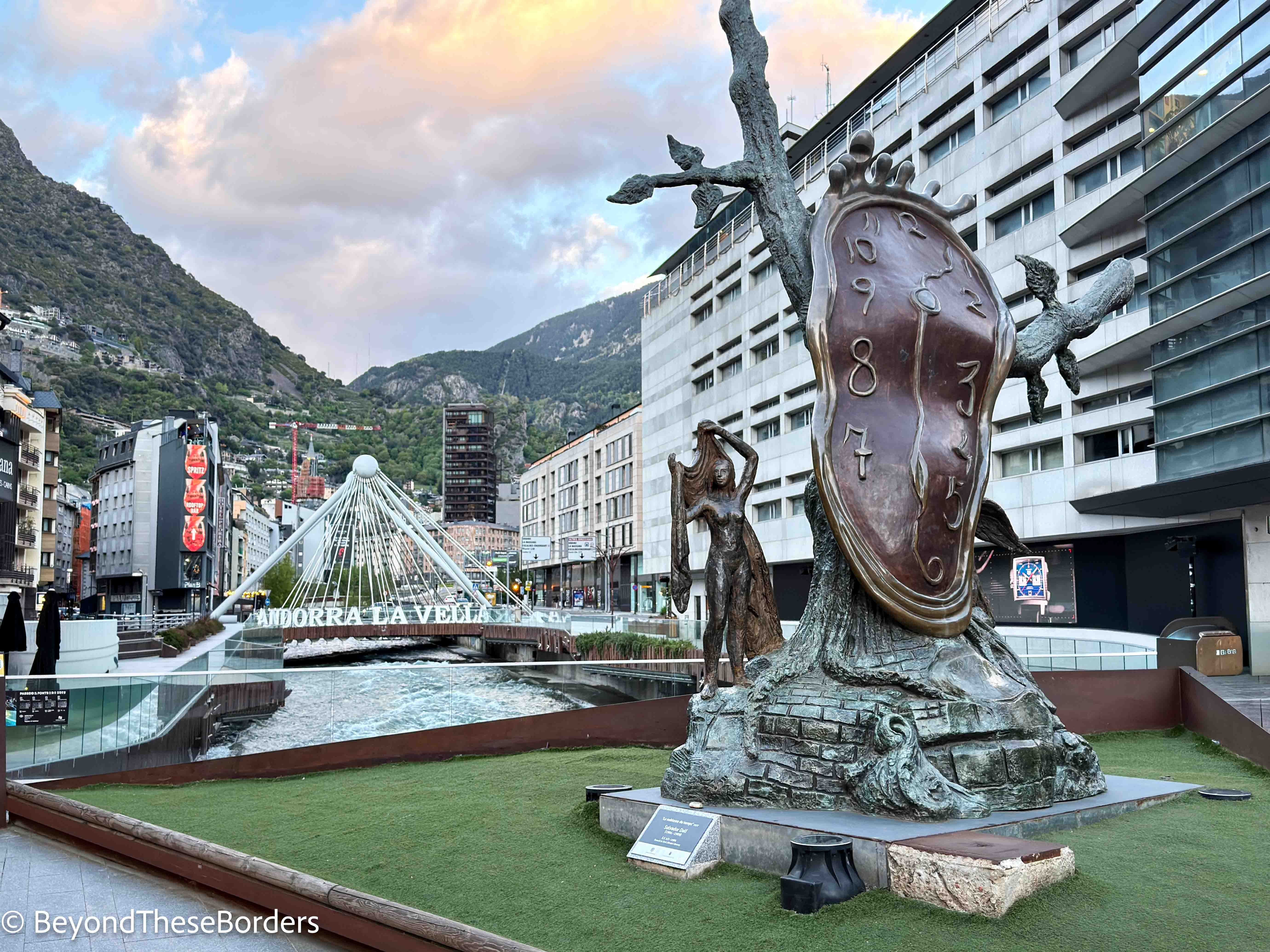
The most famous of the art pieces in Andorra la Vella is the Salvador Dalí sculpture “The Nobility of Time”. The sculpture is of a melting clock on a tree trunk and symbolizes the passing of time. I read that the crown on the clock represents how time dominates over humanity. The view of the sculpture is iconic with the Pont de Paris bridge behind it, and the mountains rising up behind the city. During our visit, a short water and light show was presented on Friday and Saturday evenings. The bridge lights up, water streams from the fountains along the river, and lasers move to the music with the best views from the glass railing behind the sculpture looking towards the bridge.
7 Poets
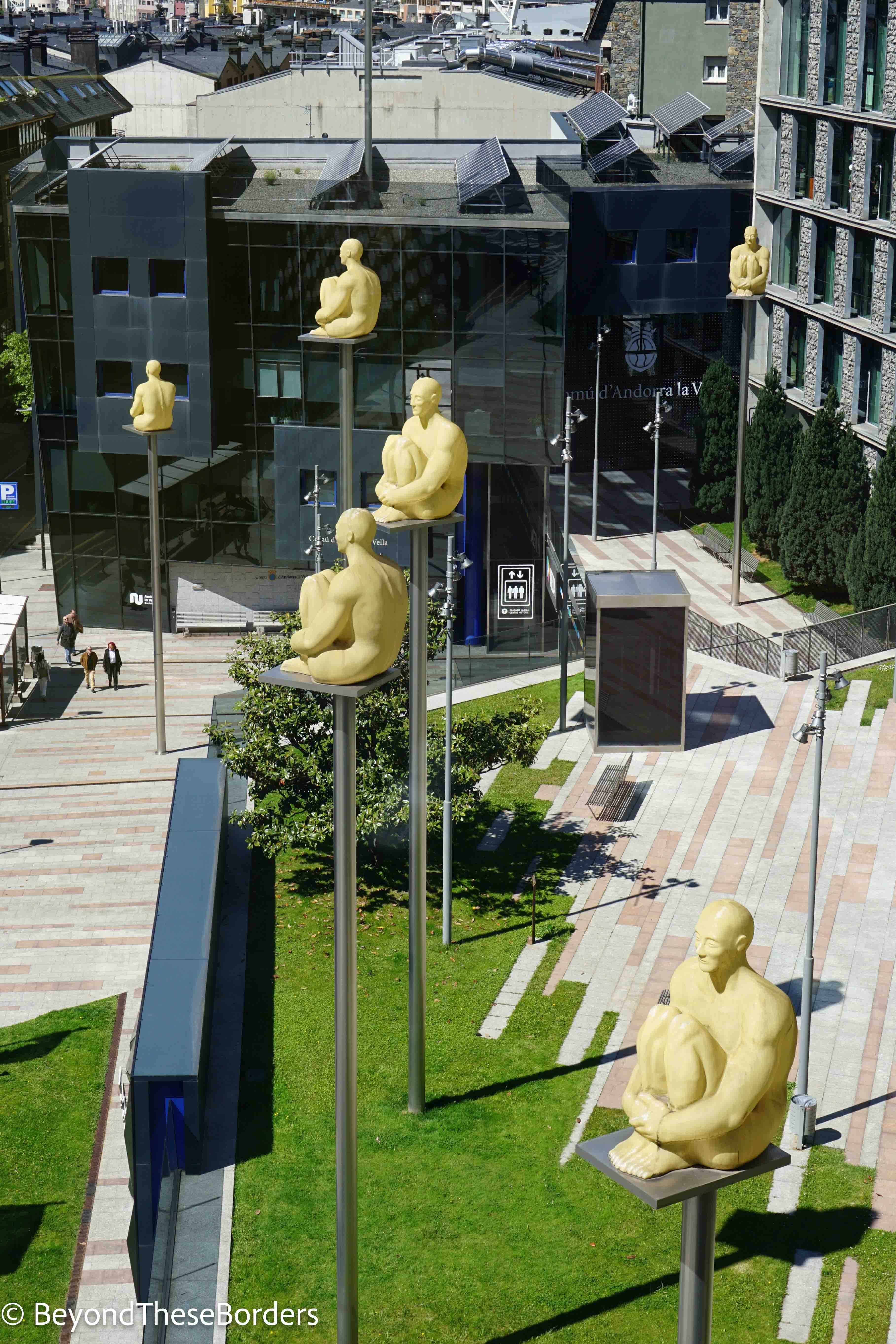
The 7 Poets is another important art piece in the city. They are 7 golden colored sculptures of men upon tall columns. Each of Andorra’s parishes is represented by one of these sculptures. From what I read, at night the sculptures are illuminated with changing colors.
Historic Center of Andorra la Vella
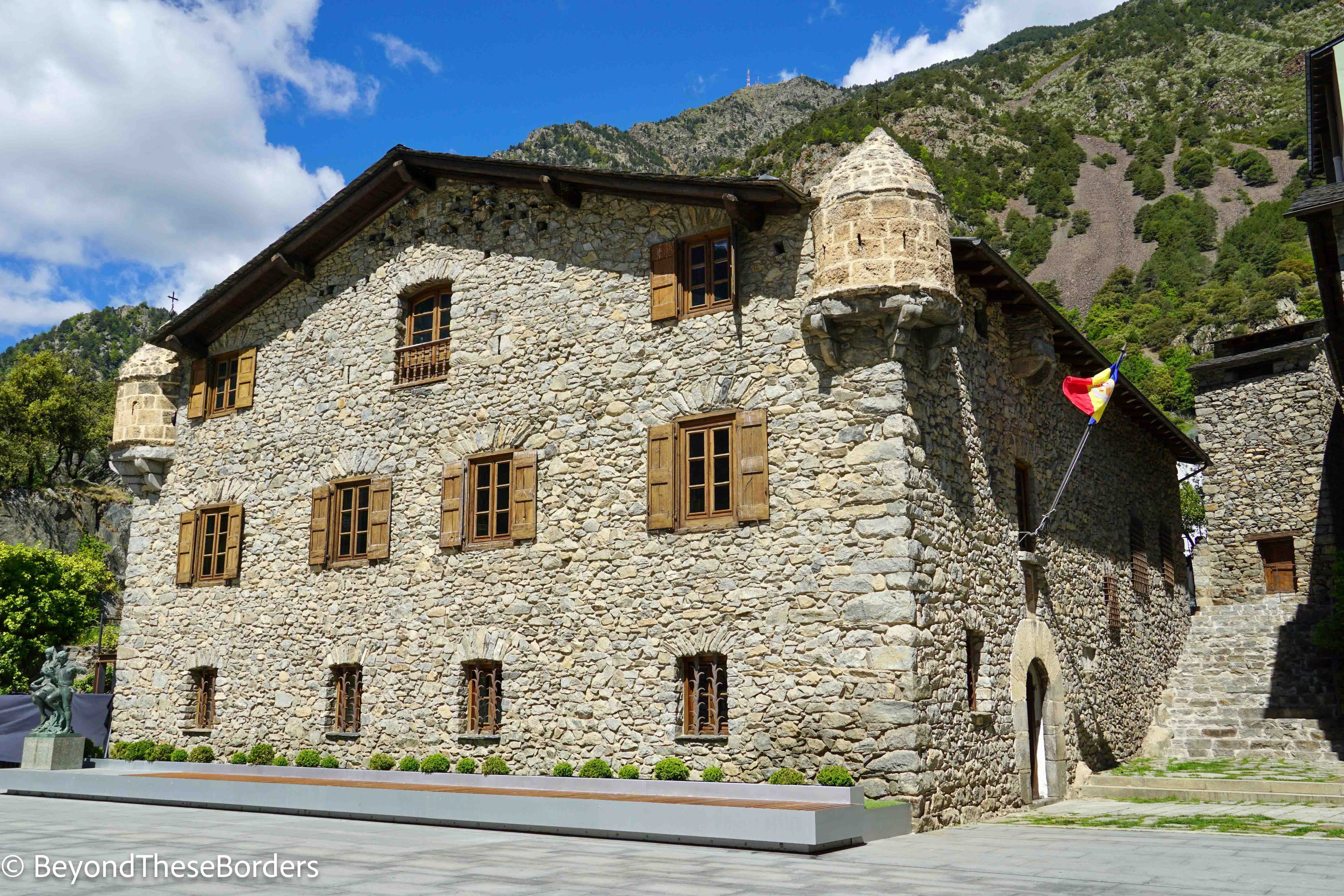
The small preserved historic center dates back to the 11th century. The area became the administrative and commercial center of the city between the 16-19th centuries. Many of the buildings and a few water fountains in the area are made of stone. There are two main buildings to check out in the historic center, Casa de la Vall and St Esteve d’Andorra Church. Some restaurants are scattered throughout these few blocks and we enjoyed a beer at the Barri Antic Hostel just outside of Casa de la Vall.
Casa de la Vall
The government of Andorra is a parliamentary co-principality. Back in the 12th century, feuds over the land occurred between the Bishop of Urgell and the Count of Foix. In the late 13th century it was established that the land would be a shared dominion between the feuding lords. In 1589, the Count of Foix was crowned king of France and the co-sovereignty was passed to the French monarchy and later the President of the French Republic. Therefore, today the heads of state are the co-princes: the Bishop of Urgell (in Spain) and the President of the French Republic. The government is also made up of 28 councillors who are elected and conduct the majority of governance.
In 1702, a 16th century family home became the headquarters of the council and courts. It was called the Casa de la Vall and was the seat of the General Council from 1702-2011. We purchased admission to this building, however we could only see the main floor as the top floor was being restored.
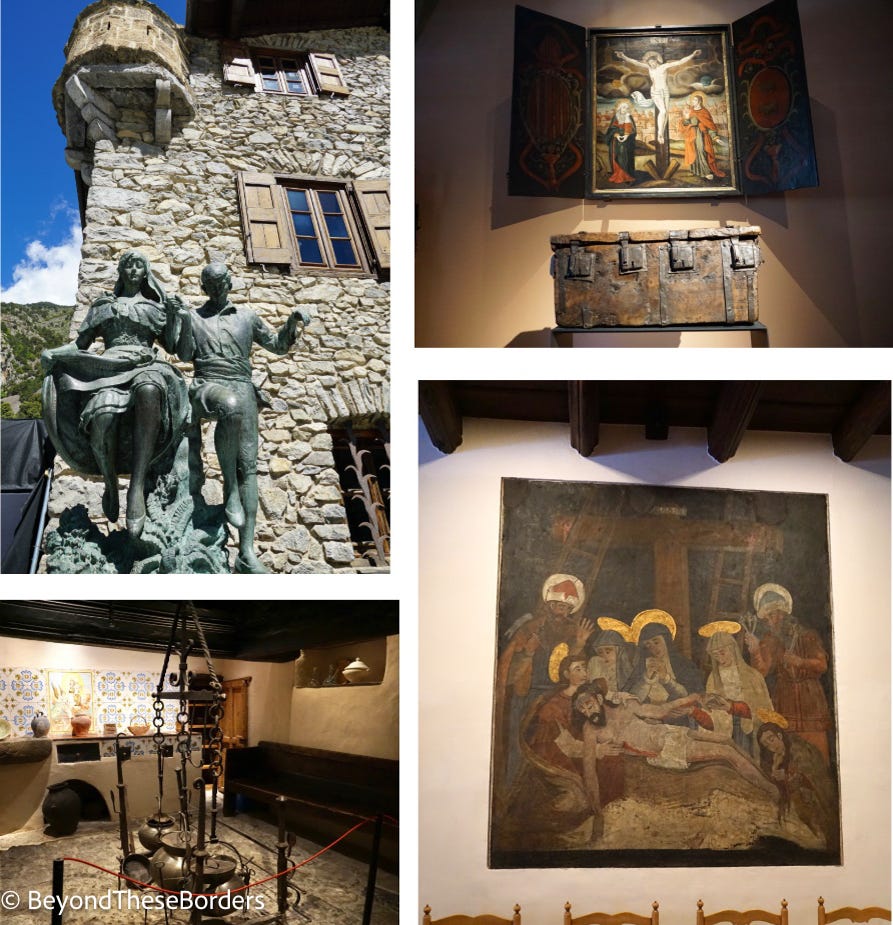
An iconic item in Casa de la Vall is the Chest of 6 Keys. Back before the council had a fixed headquarters, they would meet on the church porch, the cemetery, or the town square. During this time, any important documents were kept in a chest with 6 locks, one for each parish at the time (the 7the parish wasn’t added until 1978). A cabinet was created when they moved into Casa de la Vall and it now needs all 7 keys to unlock it.
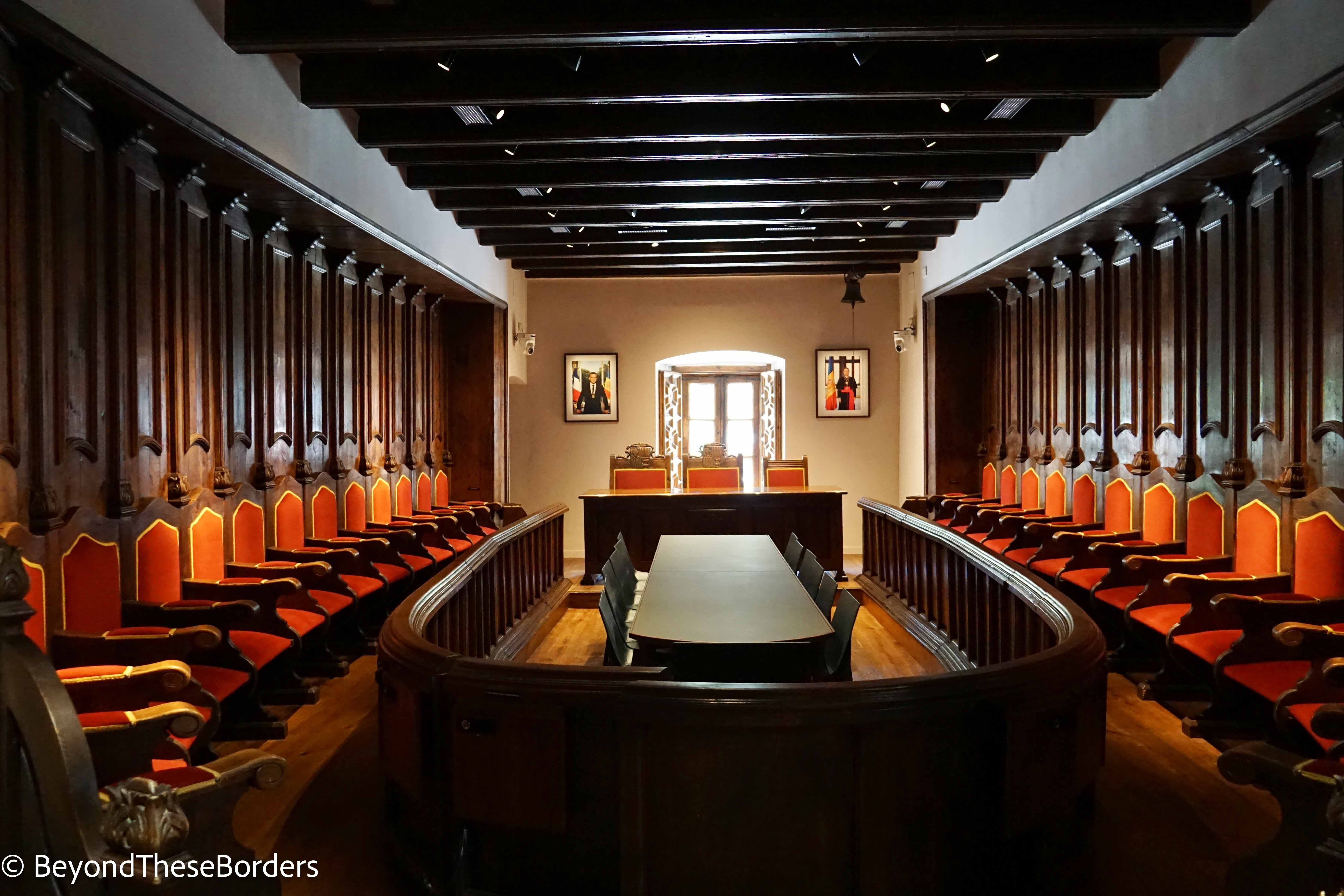
We also got to see the Chamber where the councillors would meet. At the back of the room there are two photos hanging on the wall, with pictures of the co-princes: The Bishop of Urgell and the President of the Republic of France.
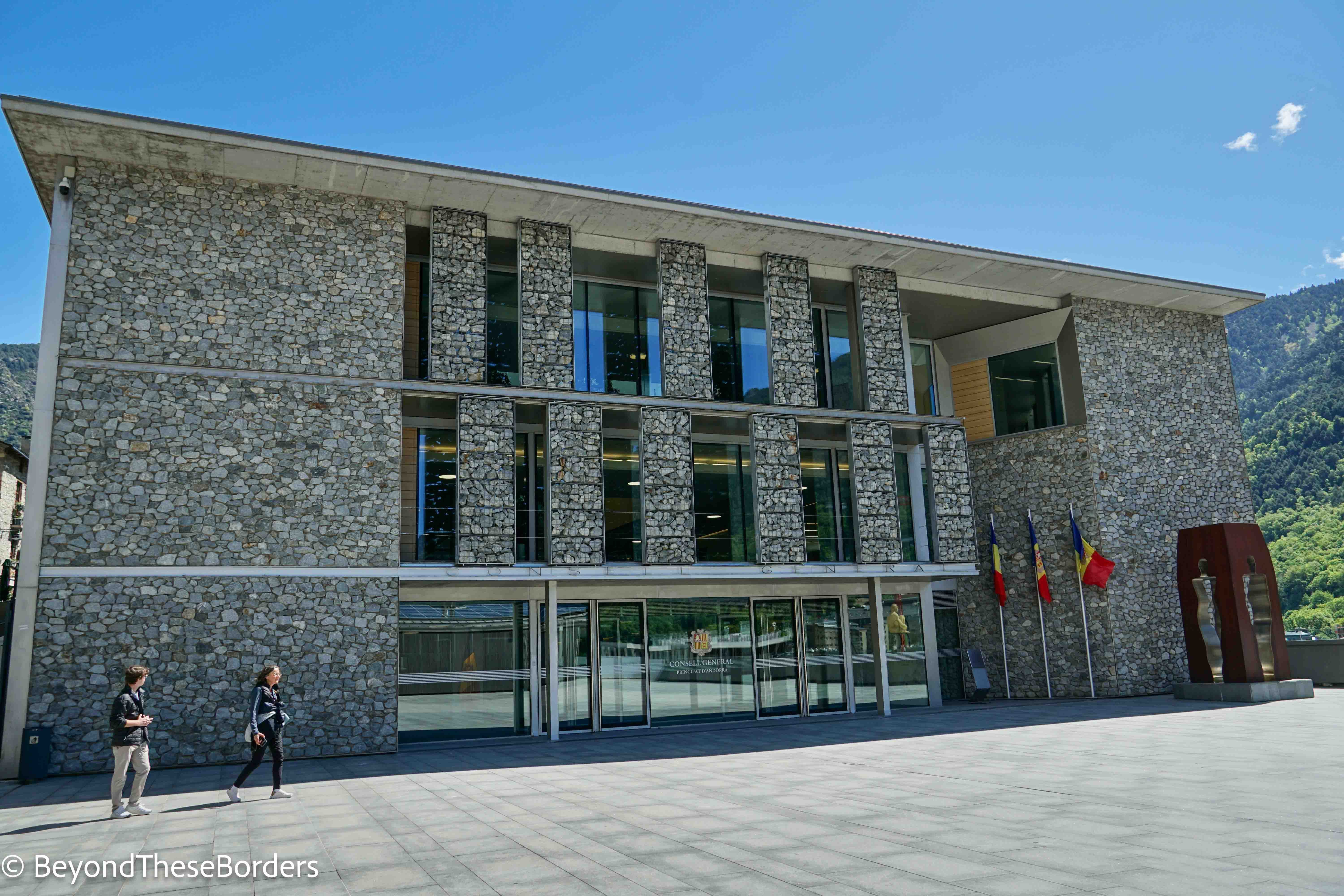
Just outside of Casa de la Vall, on the same square is the New Parliament of Andorra. It has accommodated the General Council of Andorra since 2011. Most sessions now take place here, but some traditional sessions are still held in Casa de la Vall.
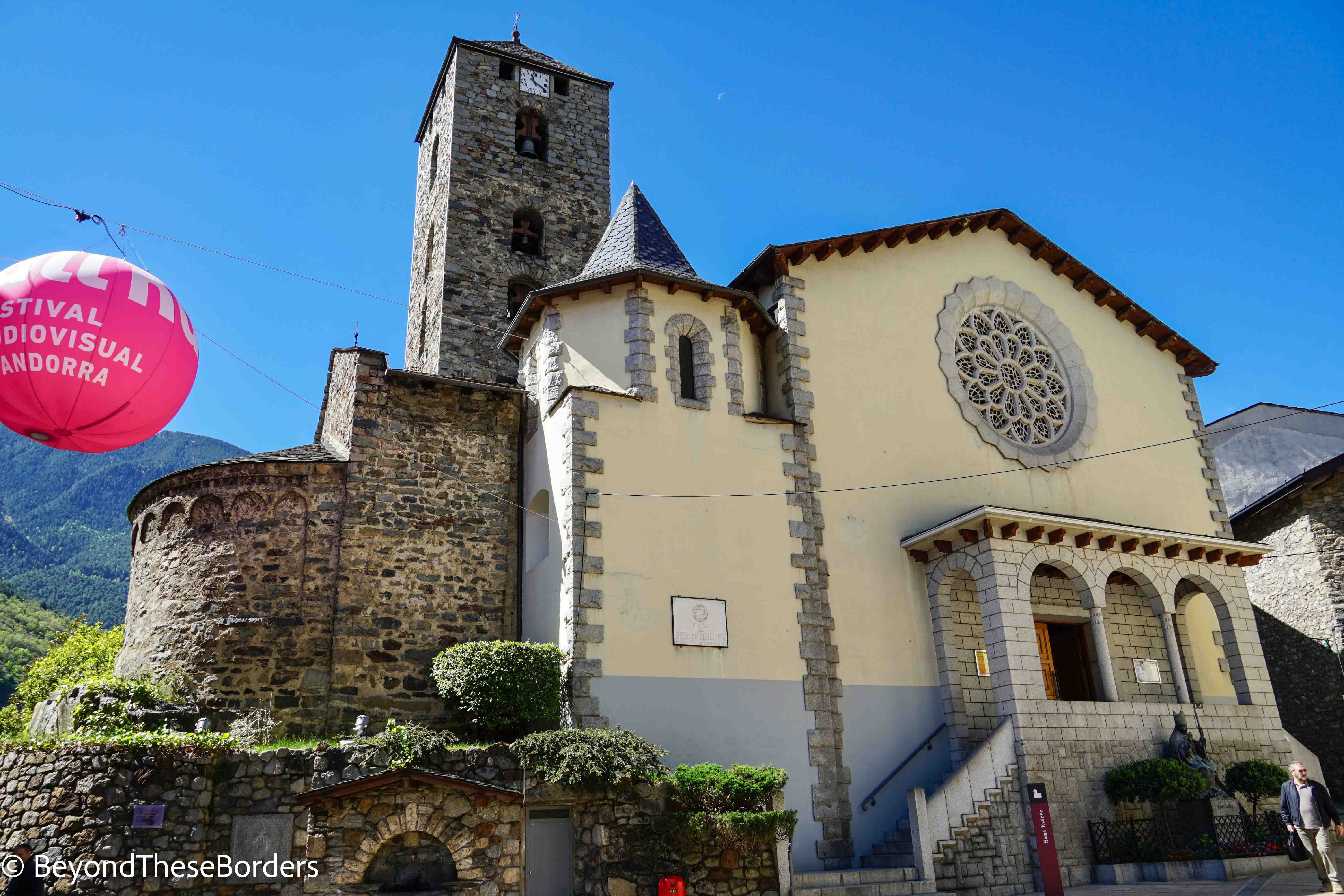
St. Esteve d’Andorra Church
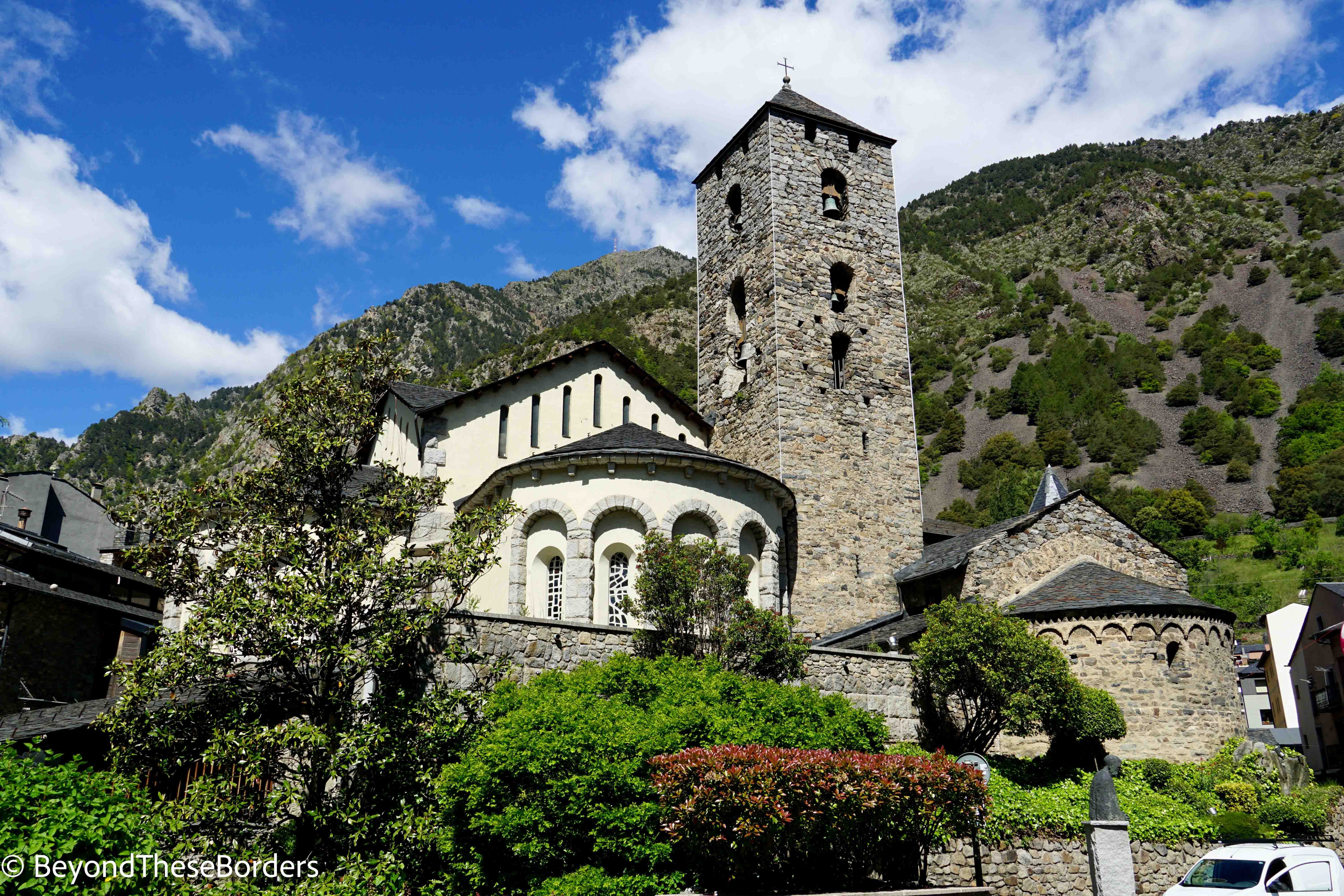
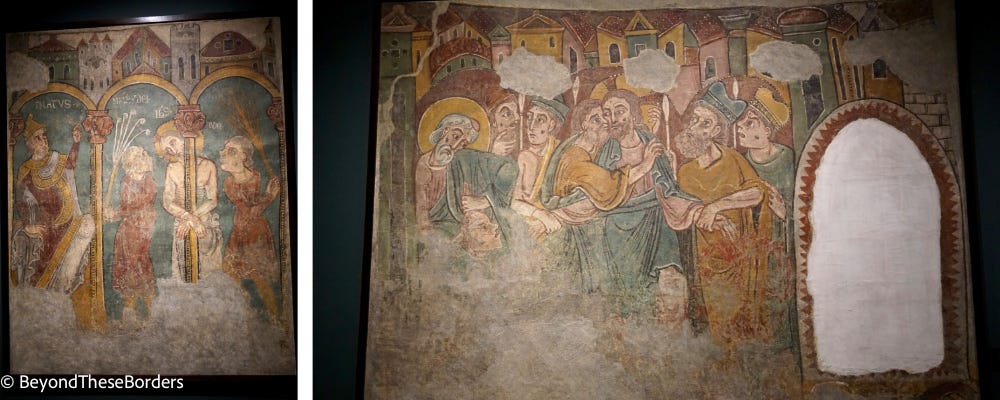
St. Esteve d’Andorra Church was a romanesque church that has undergone major reconstructions in the 20th century. It does still retain its Romanesque apse and bell tower as well as a baroque altarpiece. The paintings inside were torn down and dispersed in the early 20th century, but two original pieces from the apse have been returned to Andorra and can be seen in the museum located in Santa Coloma (which I will discuss towards the end of this post).
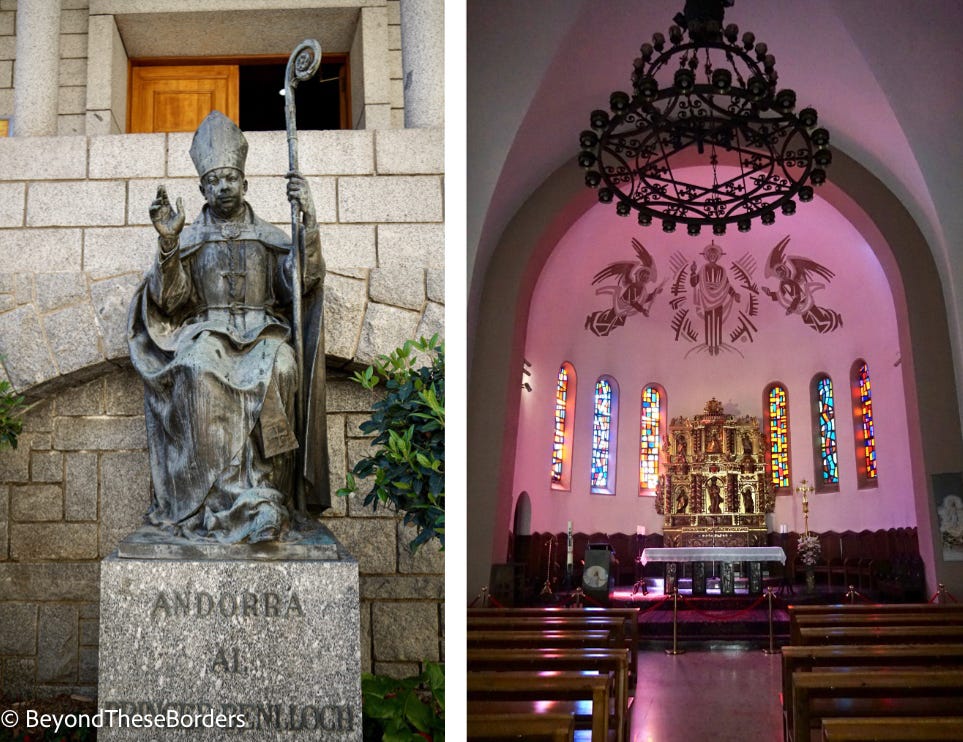
In front of the church is a statue of Pope Juan Benlloch I Vivó. He was actually the Bishop of Urgell from 1906-1919, and thus a co-prince of Andorra prior to being named pope.
Ball del Contrapás Fountain
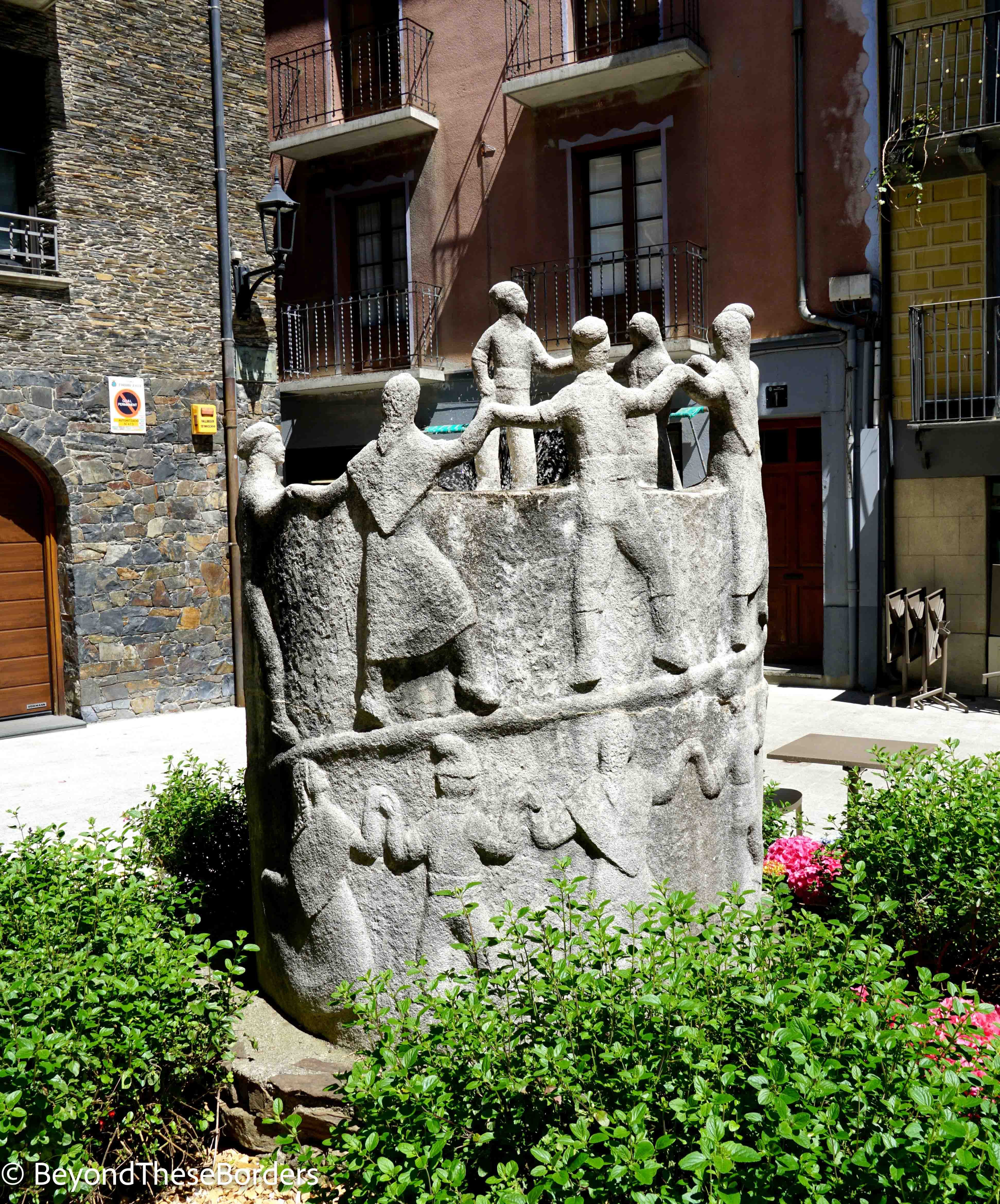
A stone fountain in the historic center that shows people holding hands dancing in a circle was created by the Andorran sculptor Sergi Mas. It represents the “Ball del Contrapás”, the typical dance of the parish of Andorra la Vella which is only danced for the local festival. This is the same dance that is portrayed with the statues outside Casa de la Vall.
Parks in Andorra la Vella
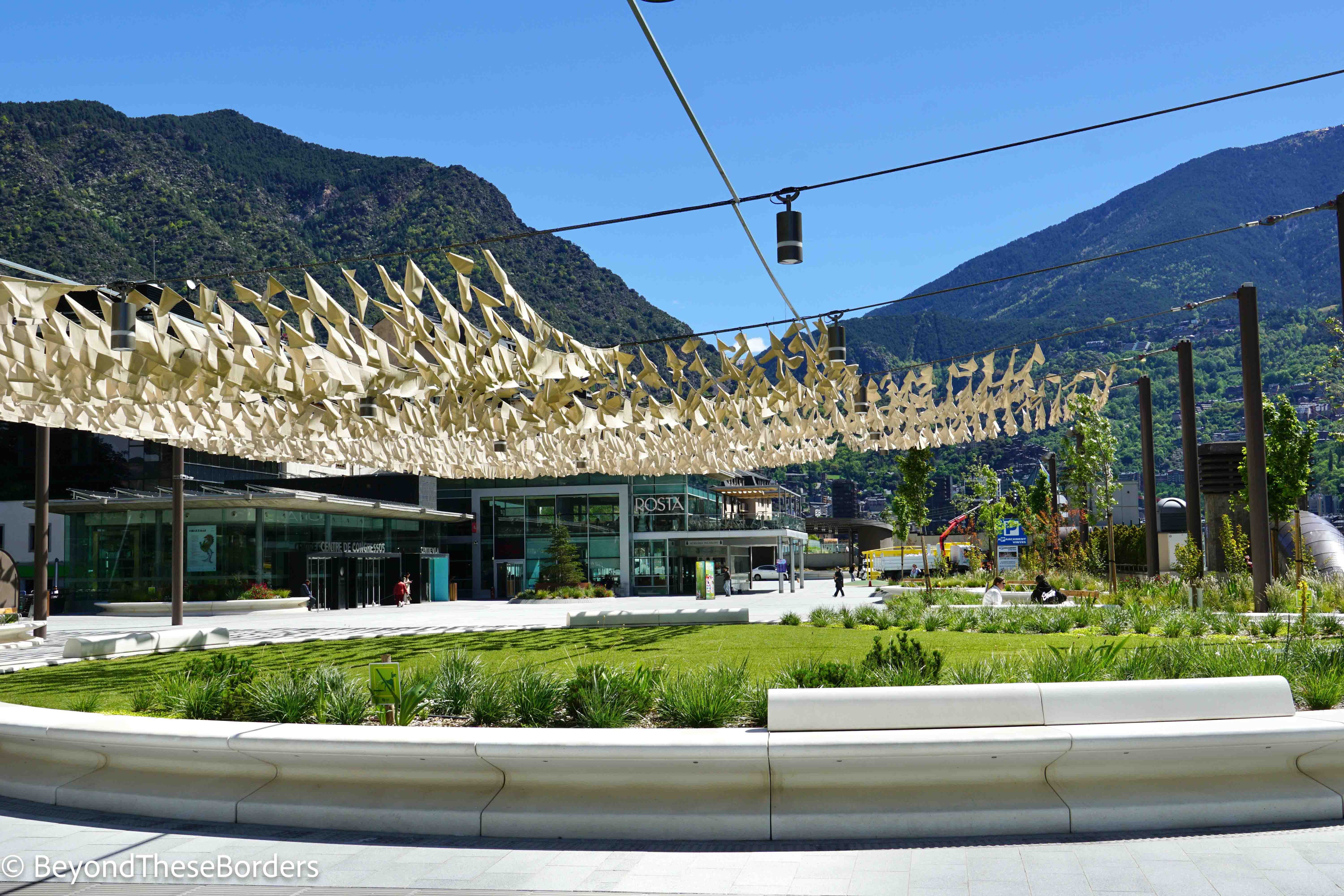
Outside of the historic center, most of the city is filled with modern buildings and streets for cars. Thankfully there are a number of small parks for locals and some interesting use of their steep landscape. While wandering around, we found some platforms built out from higher areas of town over the lower streets. The platforms have walkways, flowers, even trees, along with spaces to sit and see the mountains around the city.
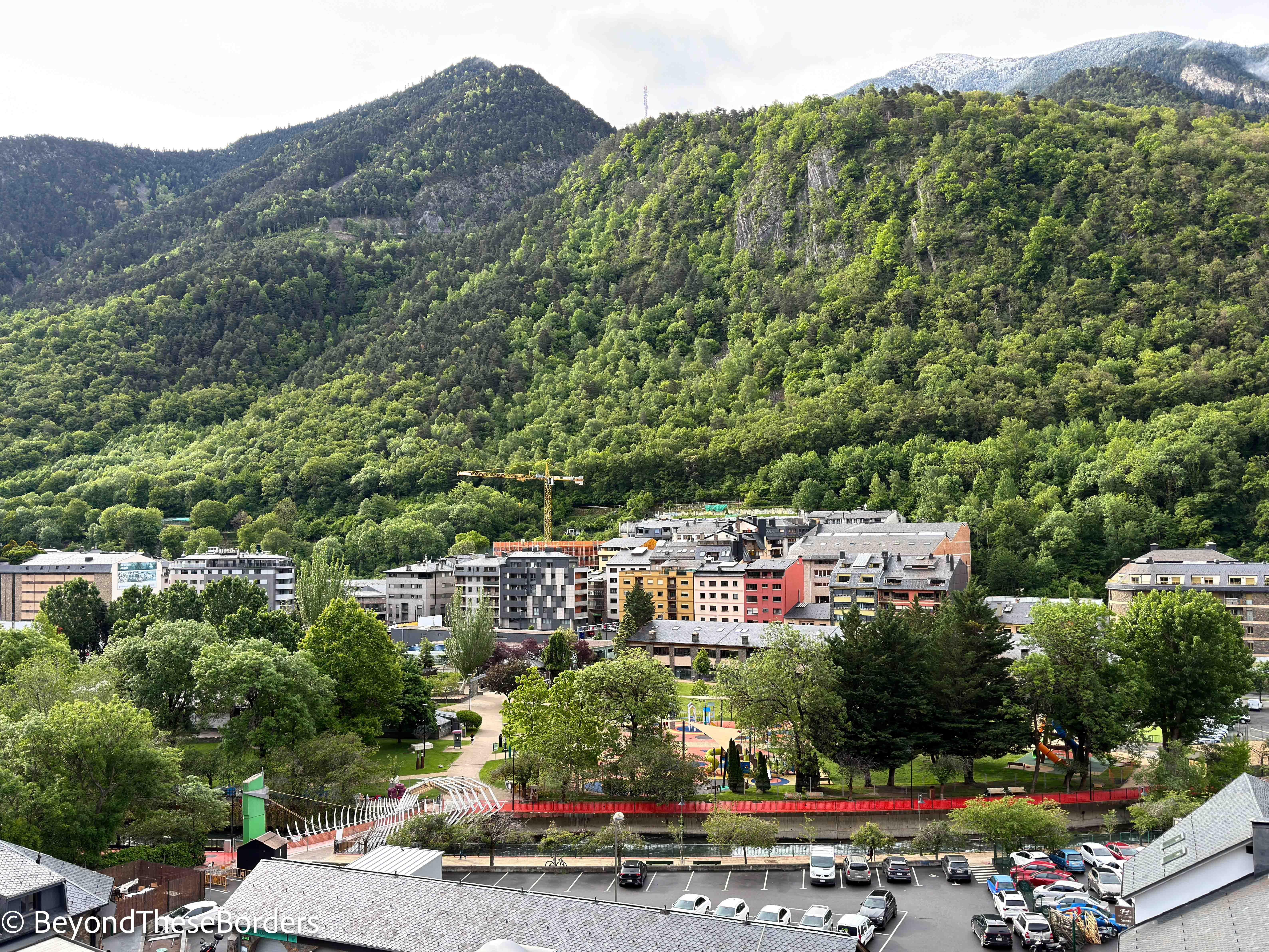
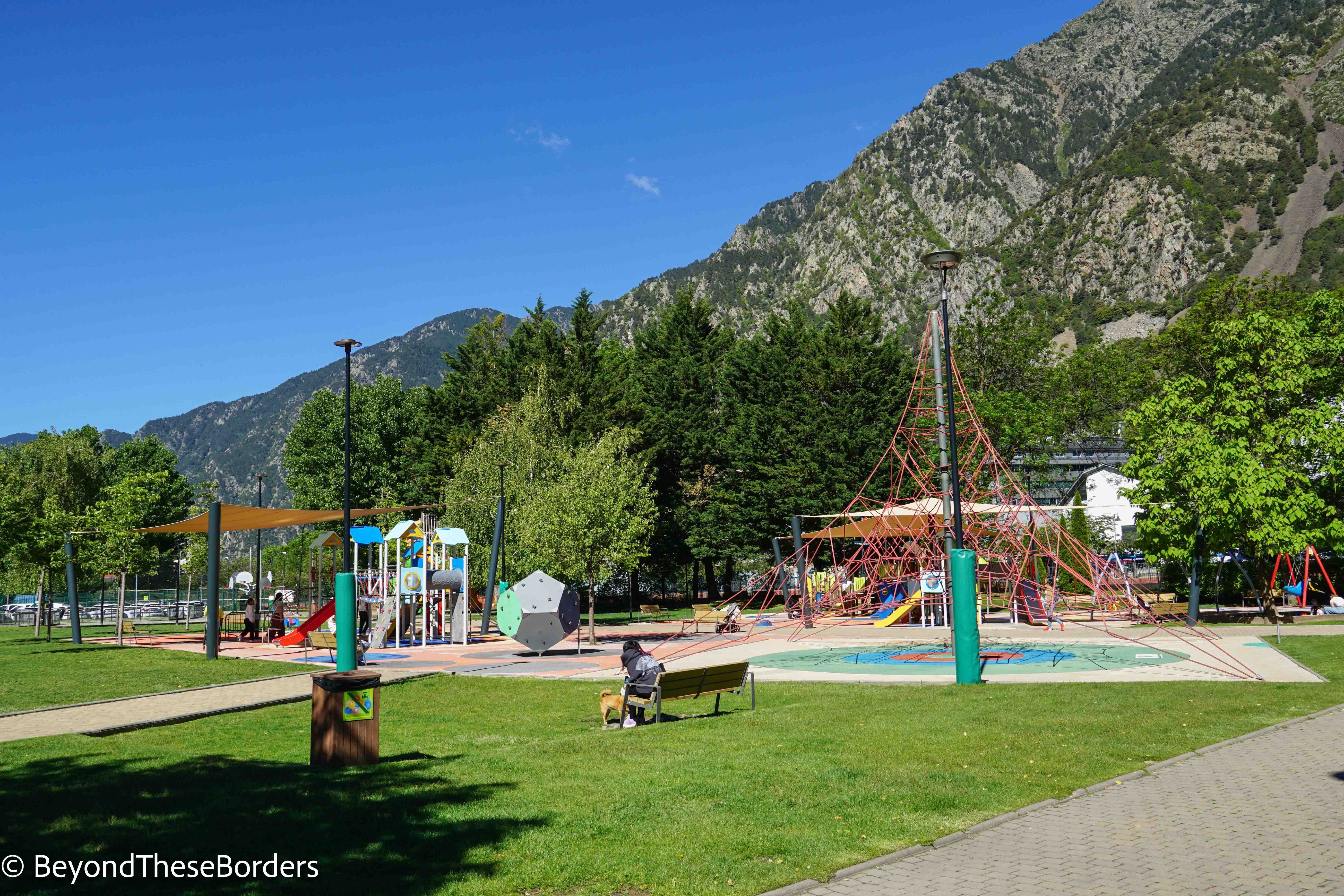
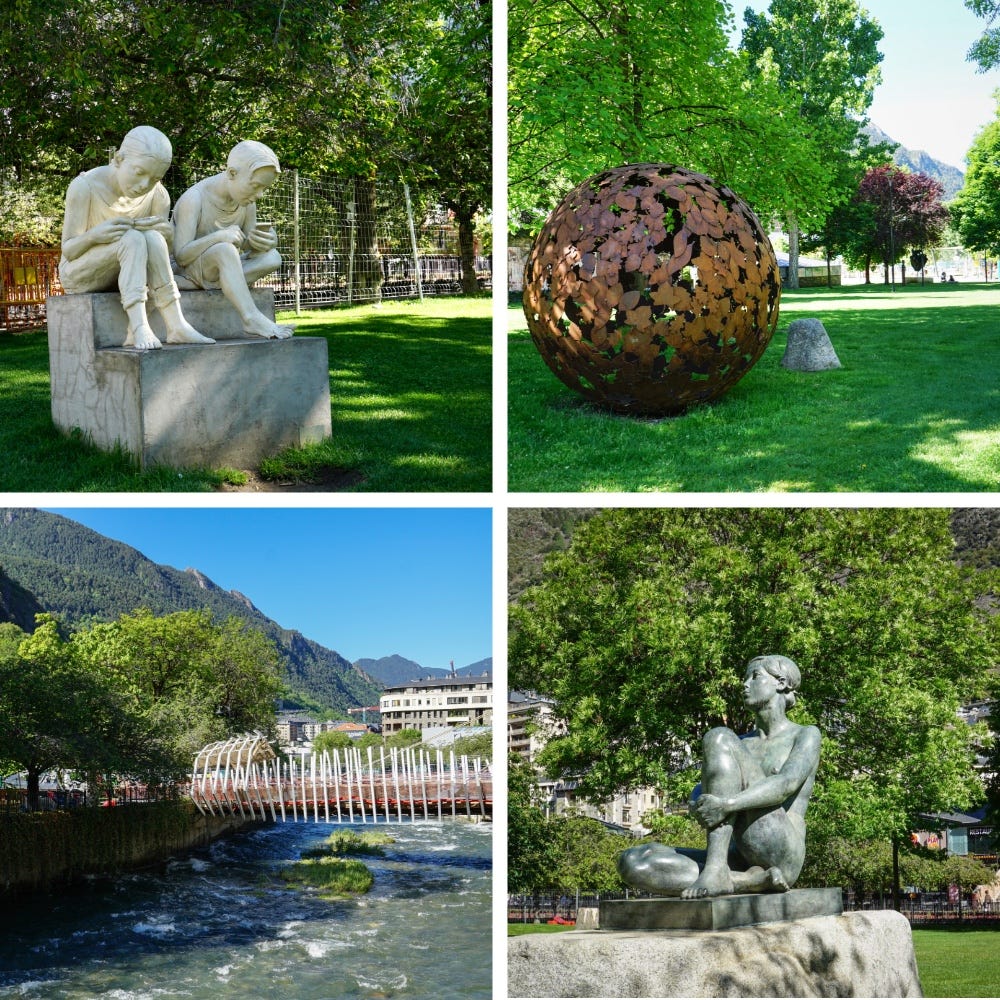
We also saw a few small parks, a soccer field, and a skateboard park around town. The largest park in the city is called Central Park. Central Park isn’t that big, but it did have a large playground, some grassy fields, a few sculptures, and was filled with friendly ducks and even a family of baby ducklings who would waddle past your feet. It is a lovely place to sit and take in the mountains surrounding the city.
The bridge leading over the river to the park is lined with thin white ribs, almost like a whale skeleton. A nice walking path runs along this river by the park and continues out of the city to towns further south.
Rec del Solà d’Andorra Trail
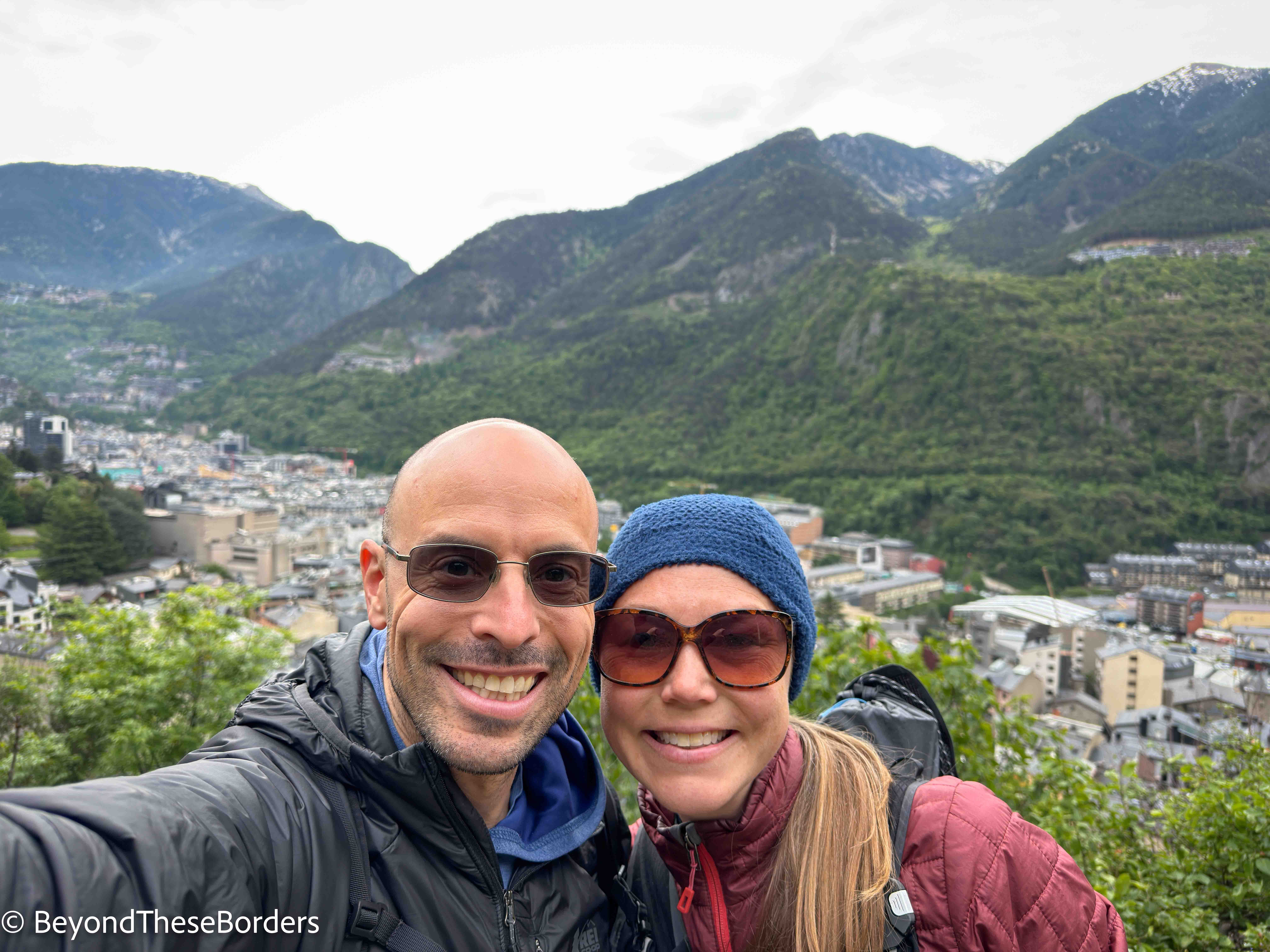
Being located in the Pyrenees, I’m sure there are lots of great hiking trails throughout Andorra. However, still struggling with knee pain from last year, I wasn’t in any condition to really hike. However, we did walk up to the Rec del Solà trail on the edge of Andorra la Vella. Since it is mostly flat I figured I could manage it. We set out around 10 am, waiting for the mountain air to warm up a little bit. My iPhone weather app claimed it was 37°F as we headed to the trail, though it felt a bit warmer to us.
The hardest part is reaching the actual trail. There are multiple access points that lead uphill to the trail from the city, so you can walk varying lengths. We headed up from the historic center, finding a few flights of stairs that connected to a steep, switchback trail. Finally we arrived at the flat stone cobbled walkway that follows an irrigation channel. This cobbled walkway is the Rec del Solà.
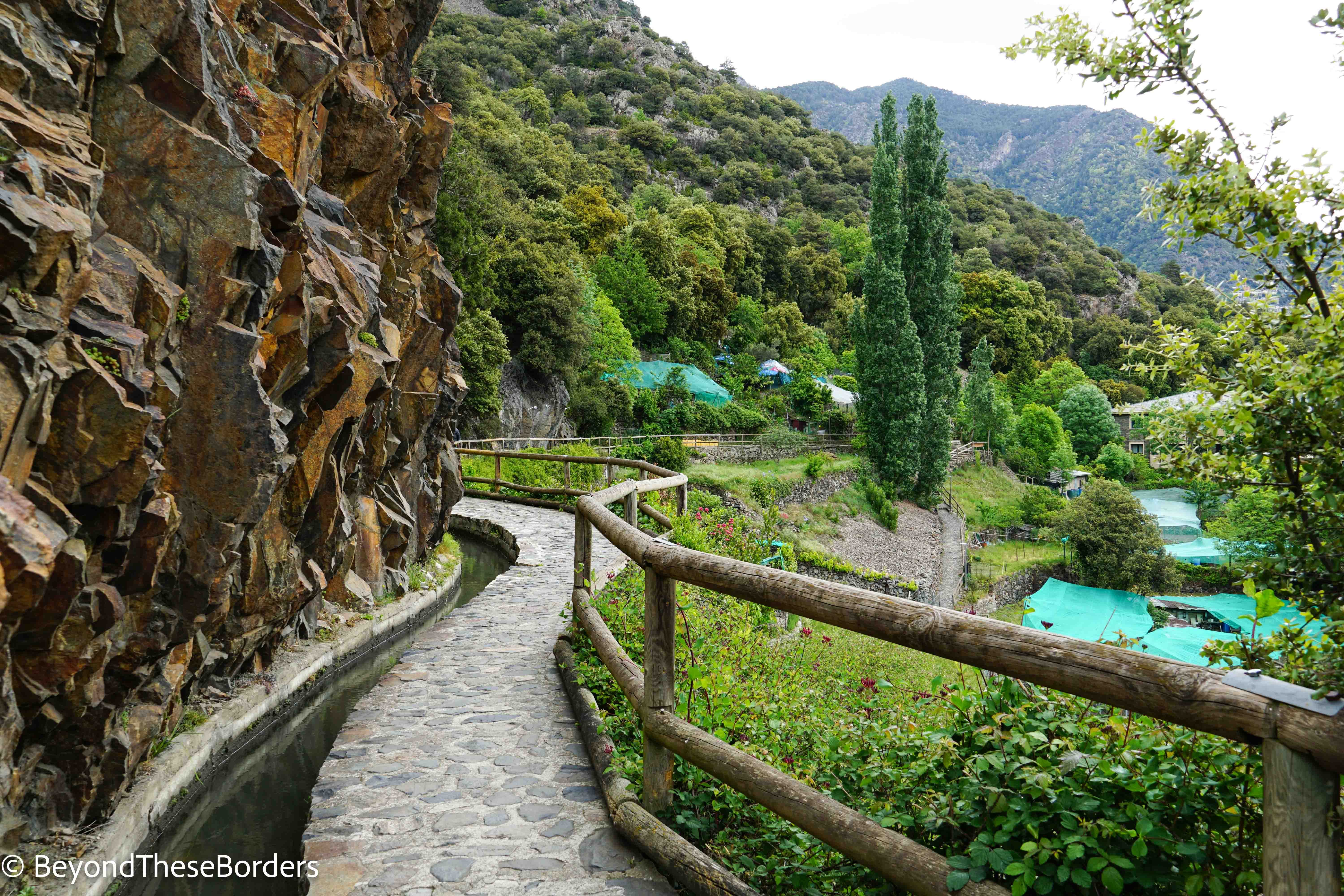
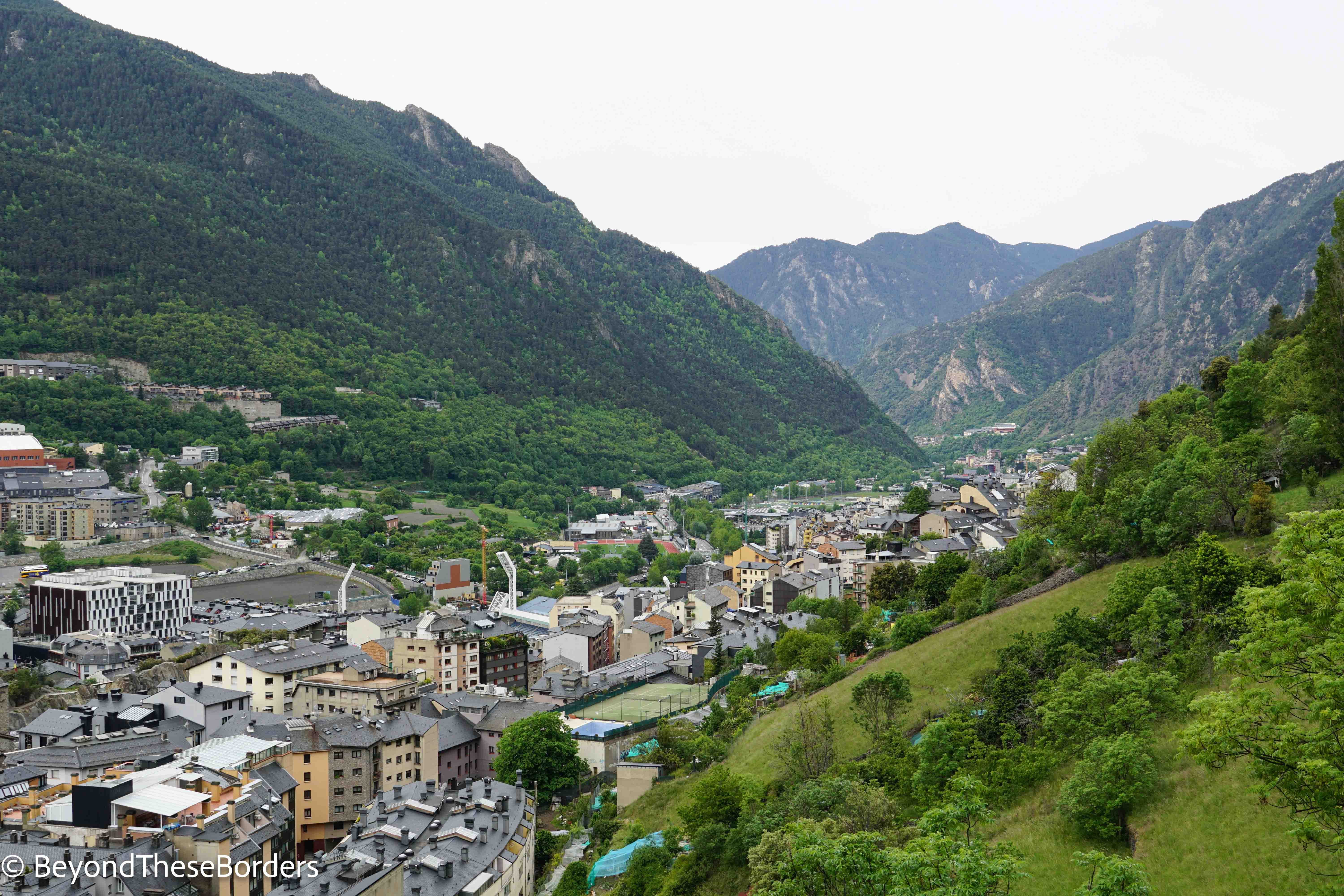
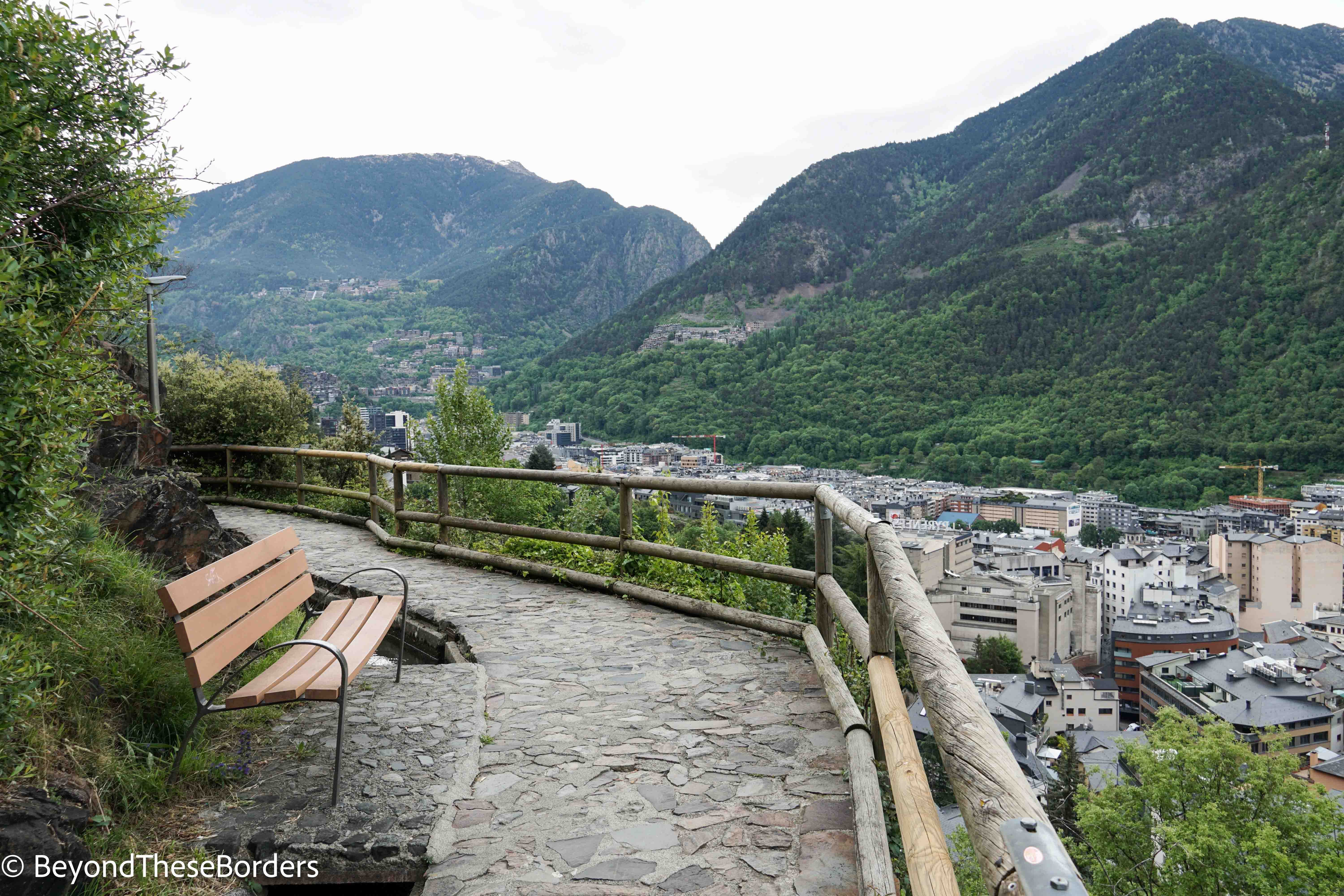
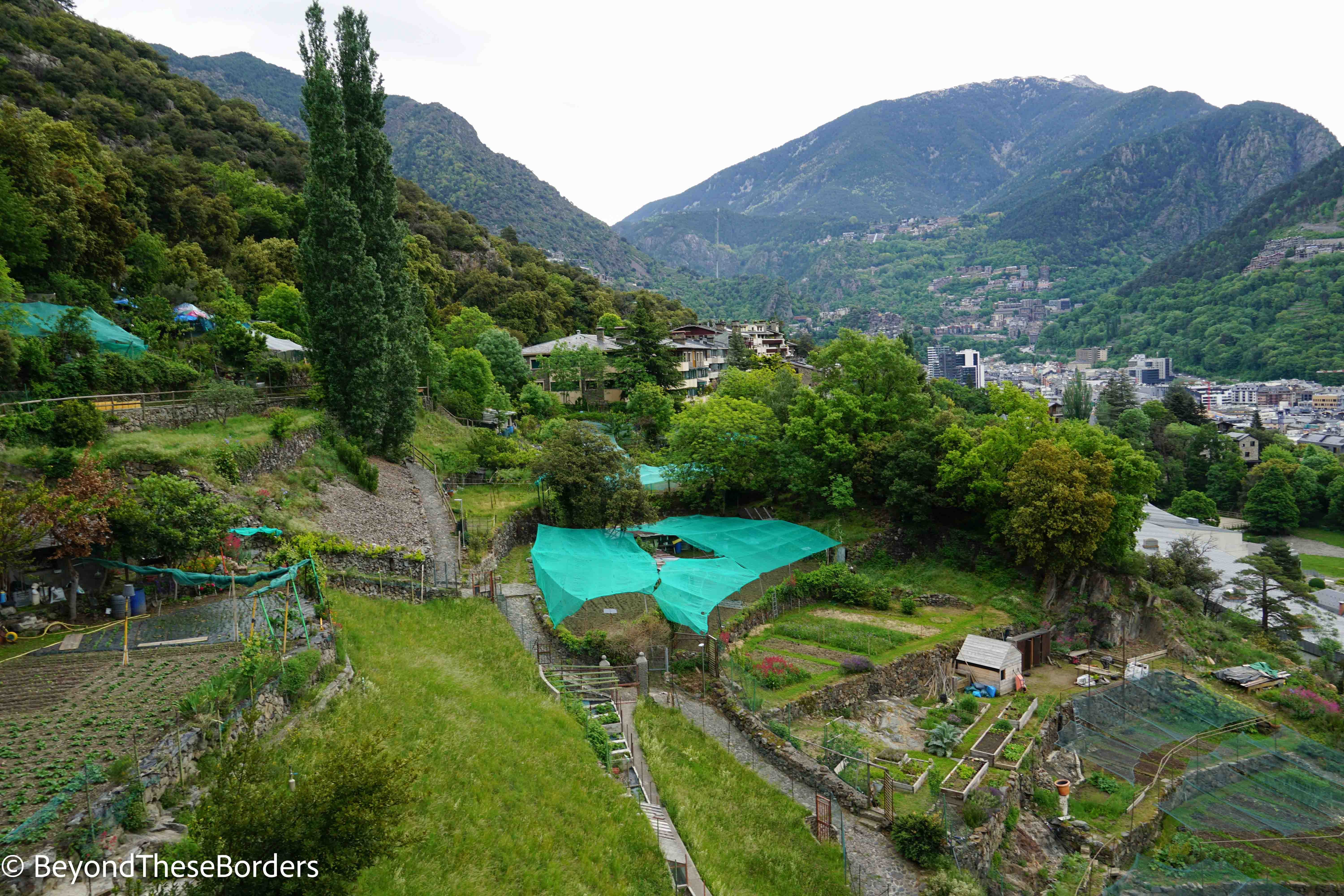
Along the Rec del Solà, a fence protects you from drop offs and periodically there are benches to sit down and take in the views. Some areas are surrounded by trees, some have great views, and some areas are snaking behind homes and small terraced gardens. The twittering sound of birds surrounds you and it would be so peaceful except for the echoing sound of jackhammering coming from the construction in town. Despite not being able to escape the noise of the city, we really enjoyed our brisk late-morning walk.
I read about the history of the walkway when we got back. In the 17th and 18th centuries there was an increased need for agricultural land due to the increasing population. Therefore they started turning the sunny slopes into terraced farmland. The irrigation canal was constructed in 1893 to supply water for the farming. The name Rec del Solà comes from the pre-Roman word “recu” essentially meaning an open canal and the latin word “solanu” meaning “the sunny part”.
Another small trail called the Rec de I’Obac is on the south side of the city. We didn’t walk this trail but the photos look nice as well. There seem to be multiple trails that can lead you from town into the mountains, to a lake, etc. If we pass through Andorra again in the future, hopefully we will be able to explore more hiking.
Les Escaldes, Andorra
Escaldes is a city that collides into the city of Andorra la Vella so you don’t realize they are two separate entities. As I mentioned earlier, Andorra is divided into 7 parishes (or regions). Escaldes is actually in the Escaldes - Engordany parish of Andorra. The name Escaldes comes from all the hot springs in the area. Thus it isn’t surprising that this is where Caldea, the largest spa in Andorra, resides. We spent a day relaxing at Caldea spa. Another day we enjoyed wandering around the area, finding a cool church and a couple old stone bridges.
Caldea Spa
Unfortunately much of the spa was under construction, so I can’t share what a normal experience here would be like. From looking at the website ond photos online, it really looks cool. We were told that construction would end and the entire spa would be open by sometime in July 2026.
We purchased the only ticket currently available which was for 3 hours. If the entire place had been open, I would probably want more than 3 hours because we easily filled that time with the minor portion we had access to. We only had access to a small indoor pool with a great view, the main indoor pool, an outdoor pool that was connected to the main indoor pool, and one outdoor hot tub. There was also an area with a dry sauna, cold shower, cold room, and wet sauna/hammam.
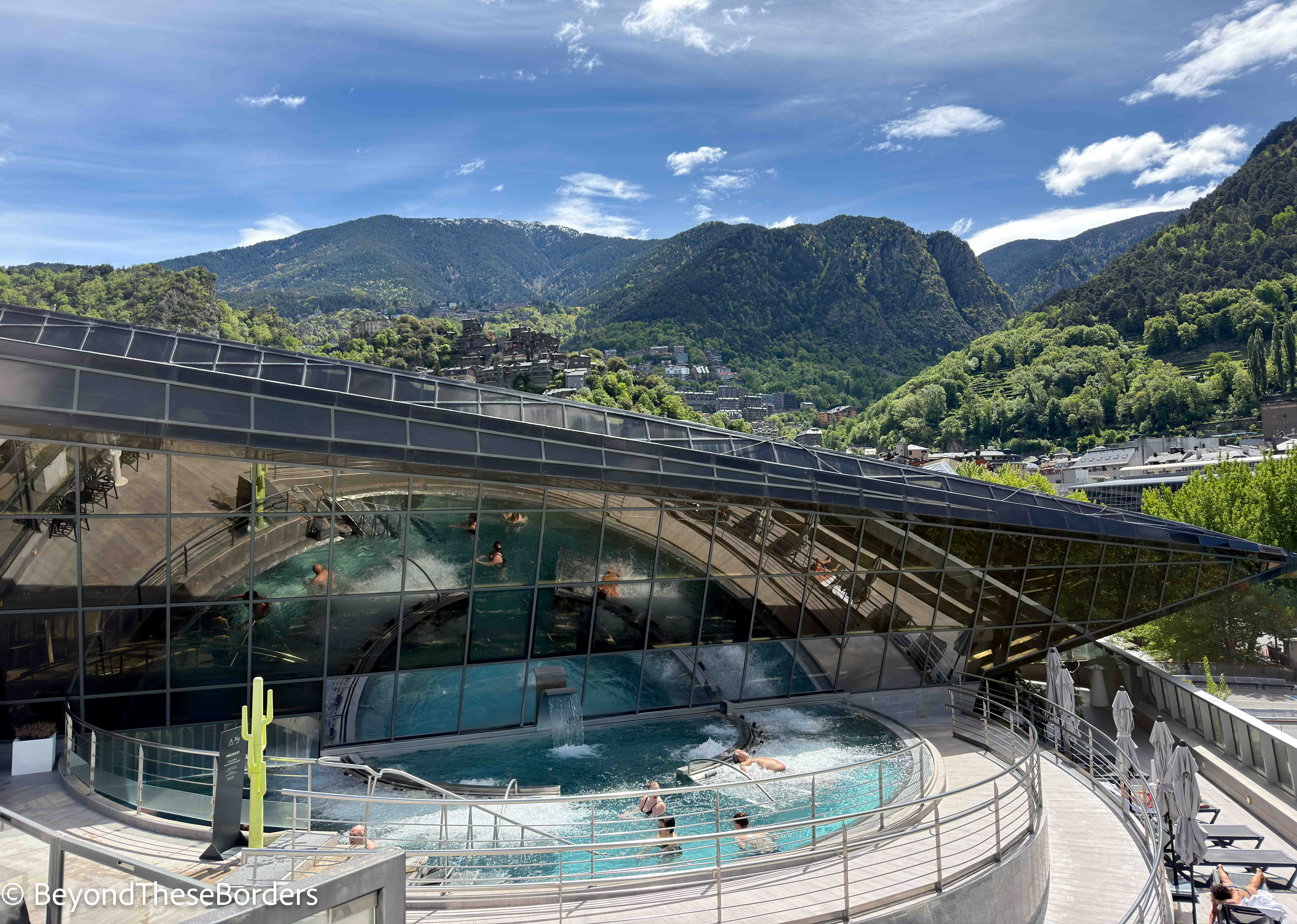
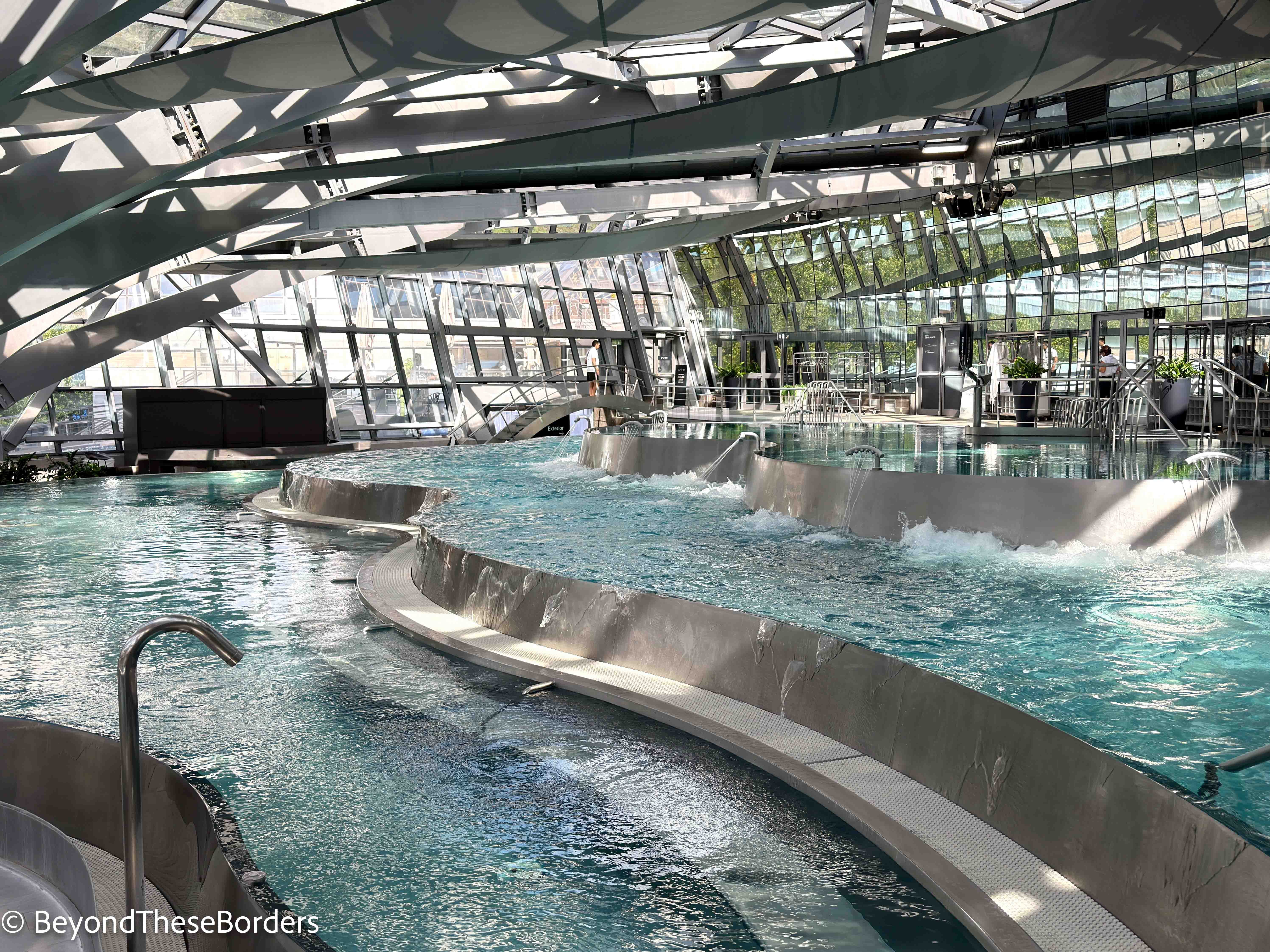
Despite our disappointment that we couldn’t experience the rest of the spa, we still really enjoyed our spa day. The main indoor pool is 3 levels, with water flowing over the edges, and a few overhead high pressure water massagers. To reach the outdoor pool you didn’t even need to leave the water as there was a passageway. The air was brisk, being only about 45°F on our visit, but the water was lovely. Nice views of the green mountains lay beyond us from the warm pool. The best view however was from the small indoor pool which had glass windows perfectly directing your eyes to a number of mountains. All of these pools were warm, but not hot as I had kind of imagined, more like a nice swimming pool temperature.
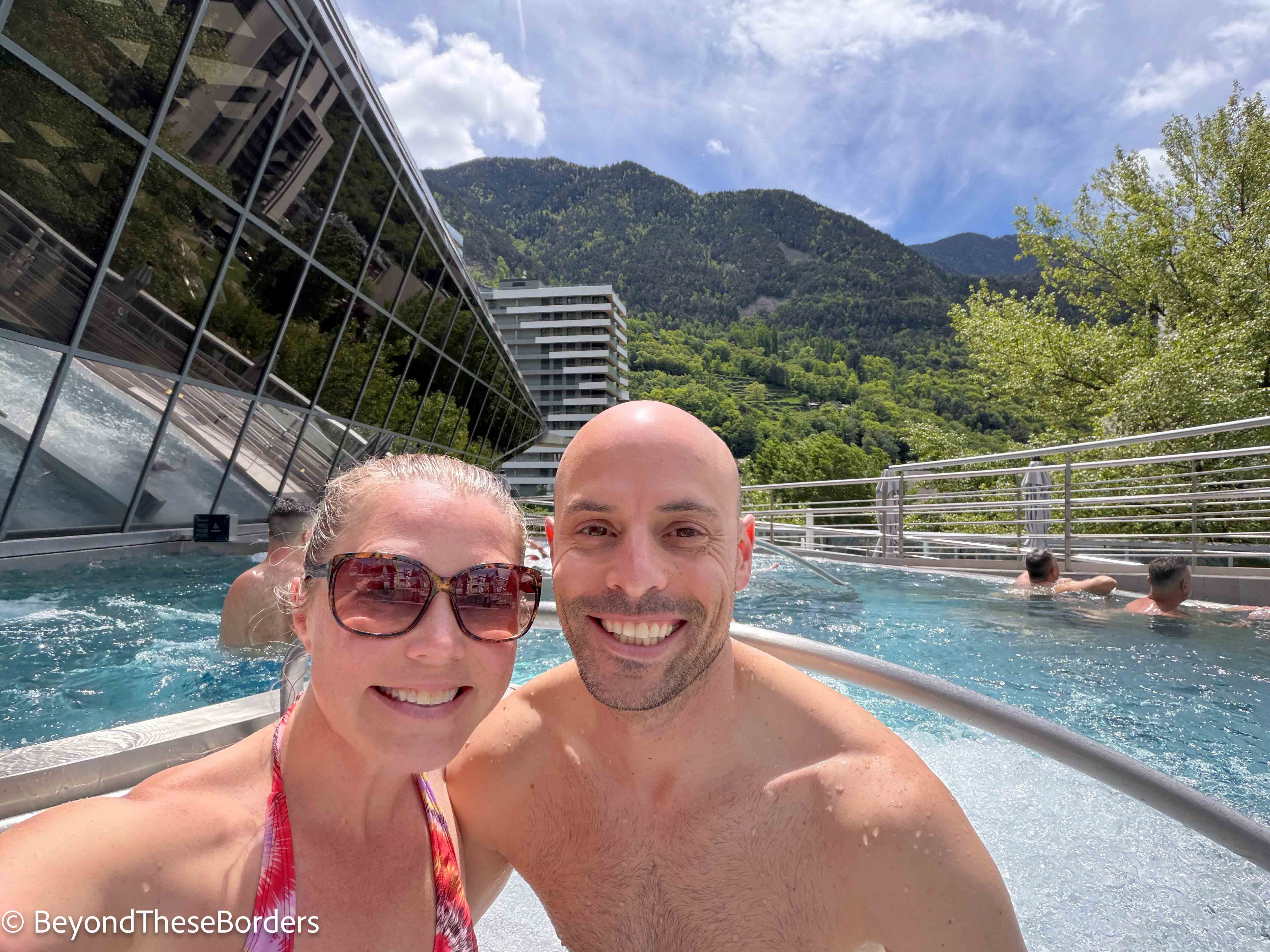
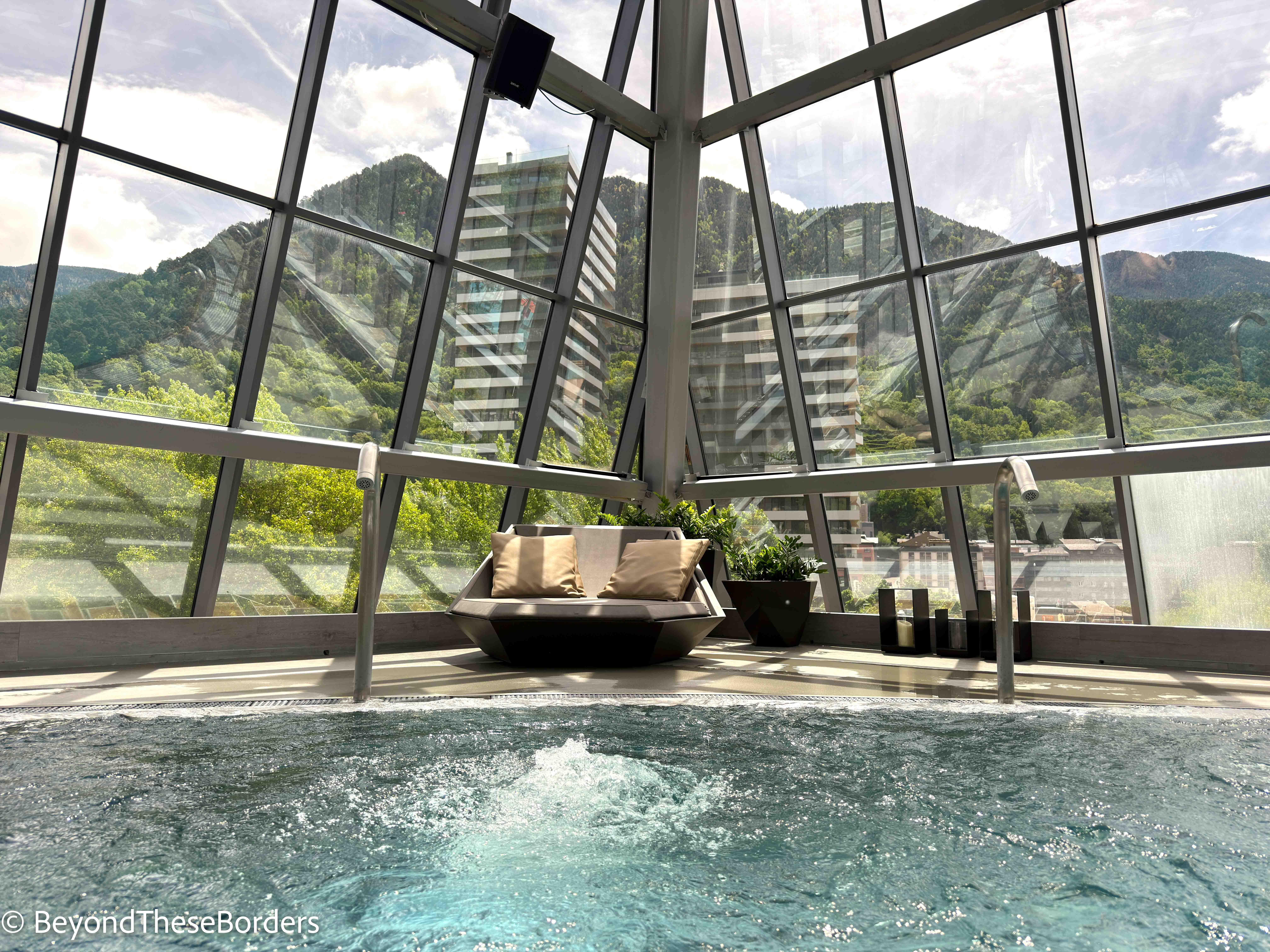
The outdoor hot tub would have nice views except the glass around it wasn’t quite see-through. The water was only about 95°F. Therefore it is a lovely place to hang out, staying warm even in the cool weather, but it isn’t hot enough to be a really therapeutic hot tub in my opinion.
The sauna area provided some diversity and we went through it twice. It starts with a dry sauna, then you go through 4 showers (the first 3 are warm to hot water and the final one is very cold water). The next room is a cold room with a wall of icicles and an optional misting of cold water. The final room is the hammam/wet sauna, which was so hot and steamy you could hardly see across the small room.
Saint Peter the Martyr Church
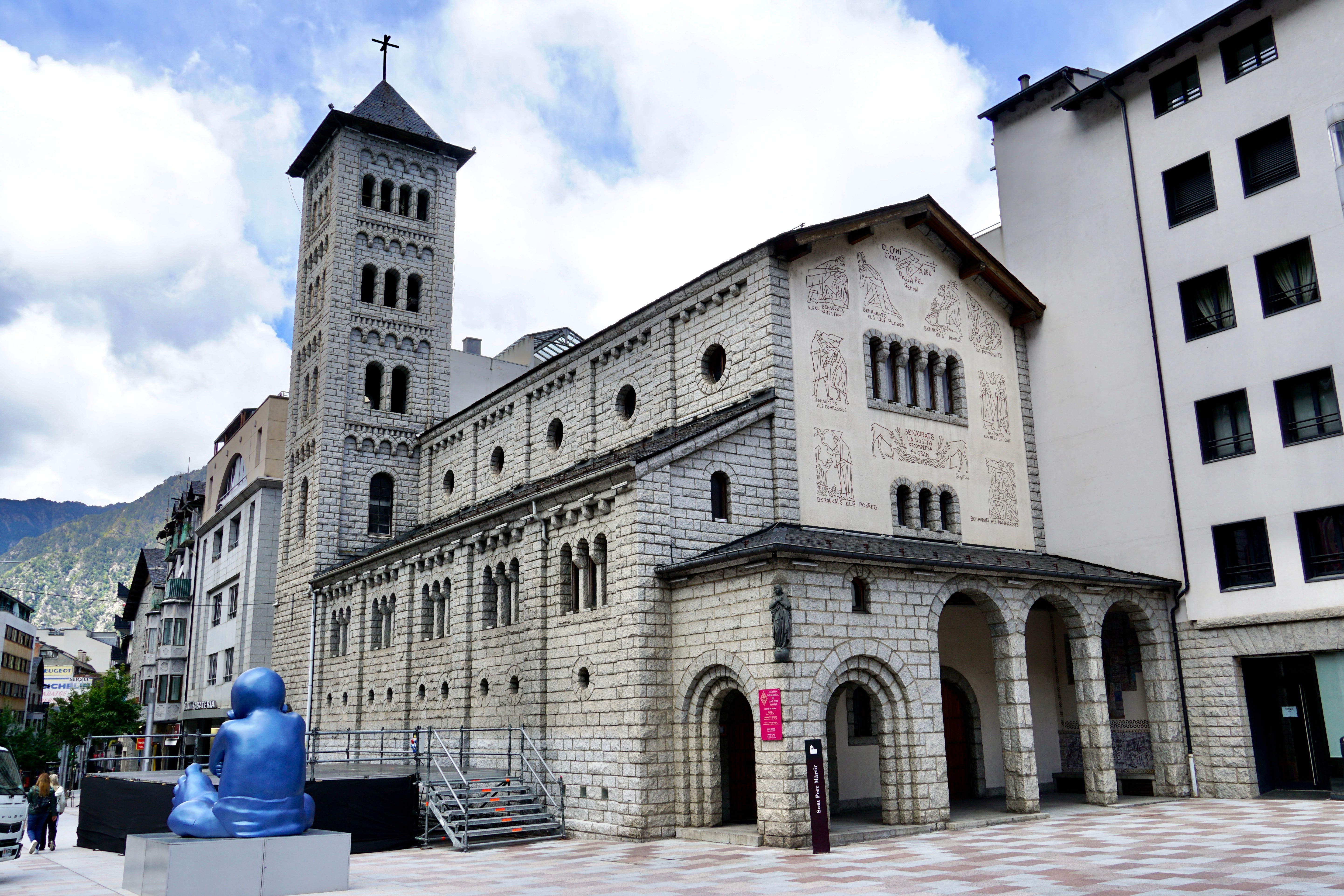
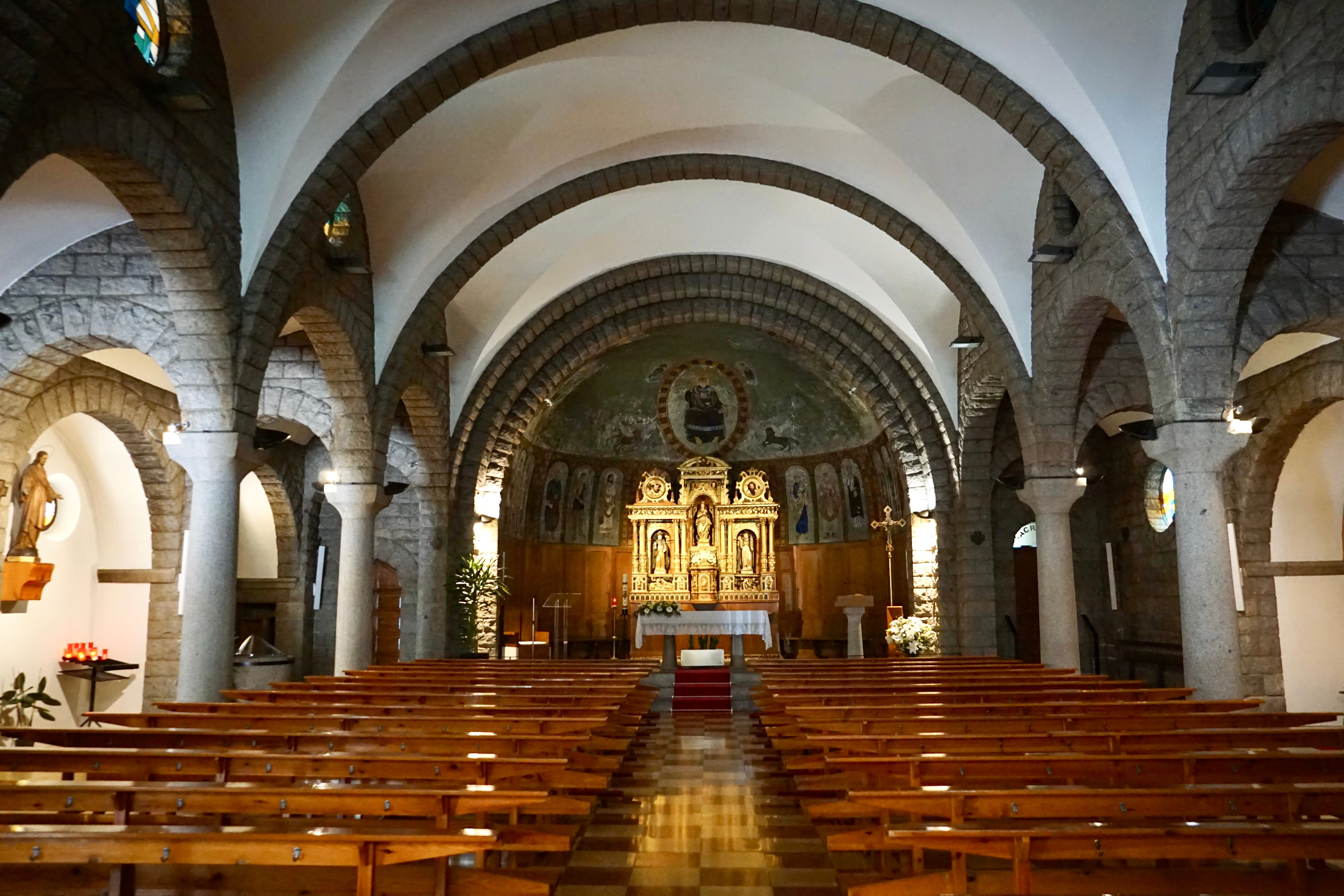
At the end of the pedestrian shopping street that connects Andorra la Vella to Escaldes is the beautiful Saint Peter the Martyr Church that was only built between 1952-1956. The exterior of the church and the paintings inside are inspired by the Romanesque style. I loved all the stone arches inside and the paintings within the apse. It felt like it was a really old church instead of a mid 20th century one.
Engordany Bridge and Tosca Bridge
A bit further east from Saint Peter the Martyr Church are a couple old stone bridges. The Engordany Bridge was built in 1785 over the Valira d’Orient River.
The walkway along the river is the site of the Caldes Art Project. The art installation is comprised of colorful pipes and faucets over one side of the river. A bit further east along this walkway is an interesting portion of this art piece. Pipes, faucets and bathtubs are stacked above each other creating a water fountain.
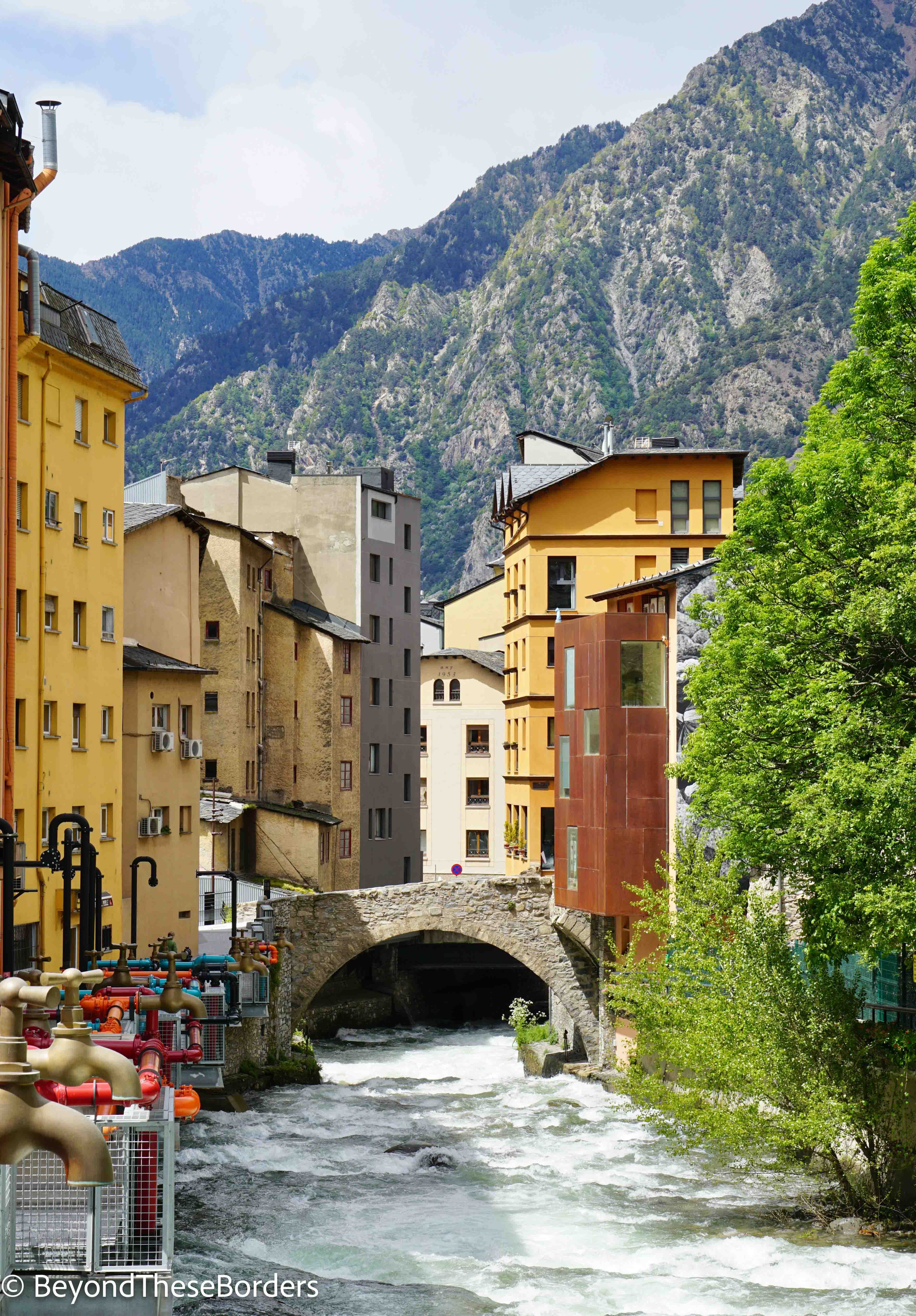
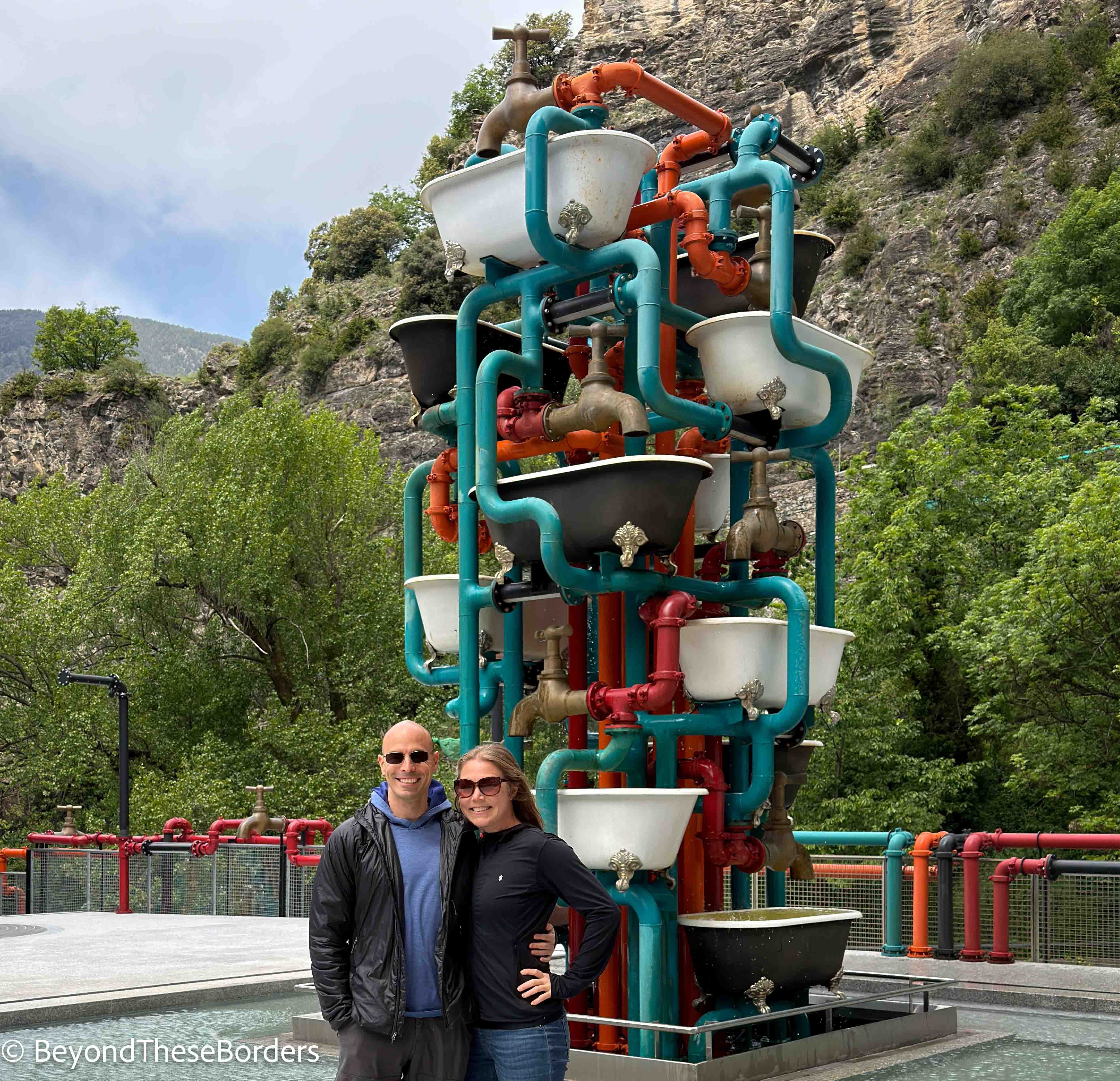
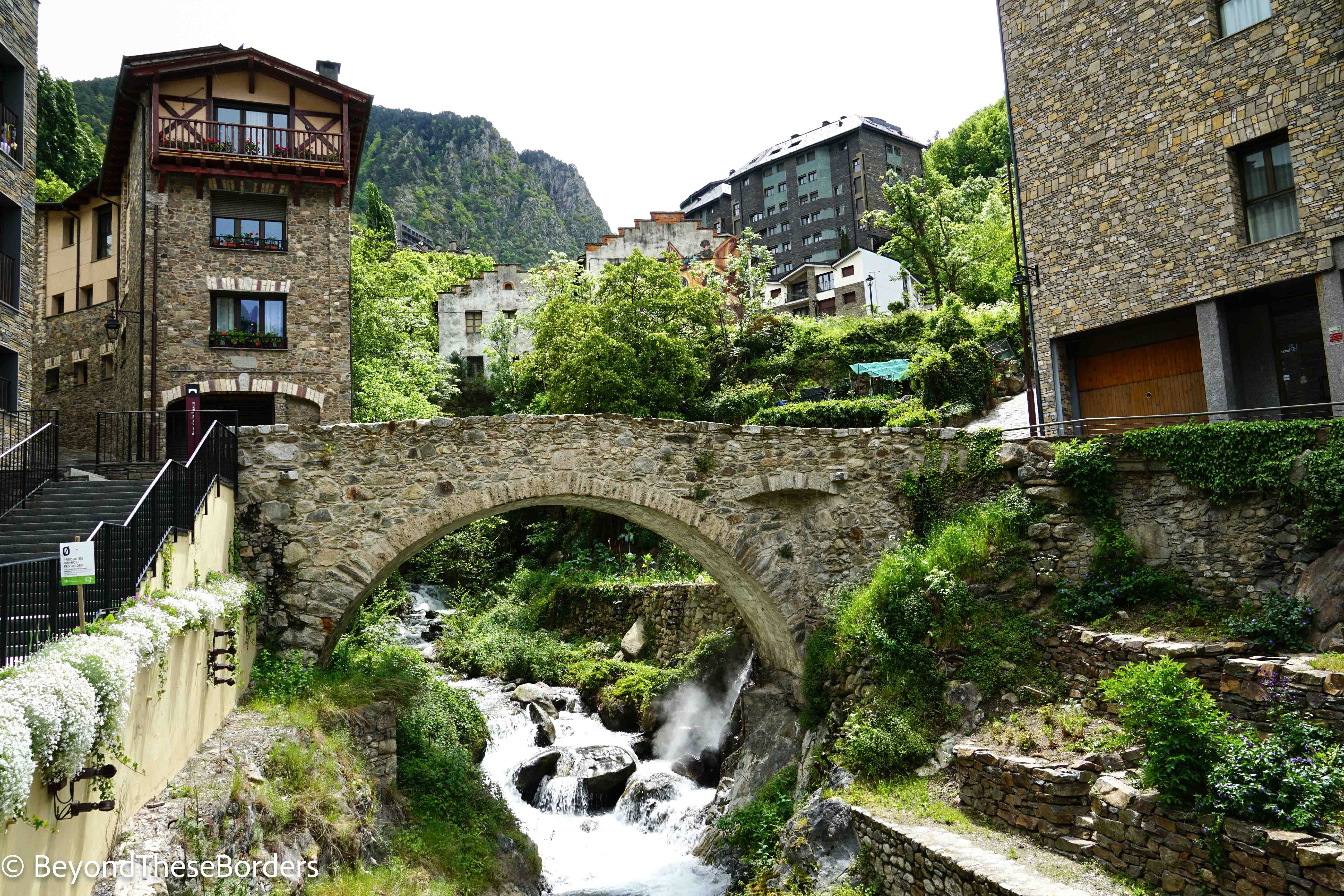
Across the road from this art piece is another stone bridge. The Tosca Bridge was constructed in 1820 and crosses the Madriu River near where it converges with the Valira d’Orient River. The view looking up to the bridge might be the most beautiful view I saw in Andorra. Waterfalls cascade over rocks below the old stone bridge, a few stone houses rise from each side, and the lush green Pyrenees Mountains tower behind the scene.
Santa Coloma, Andorra
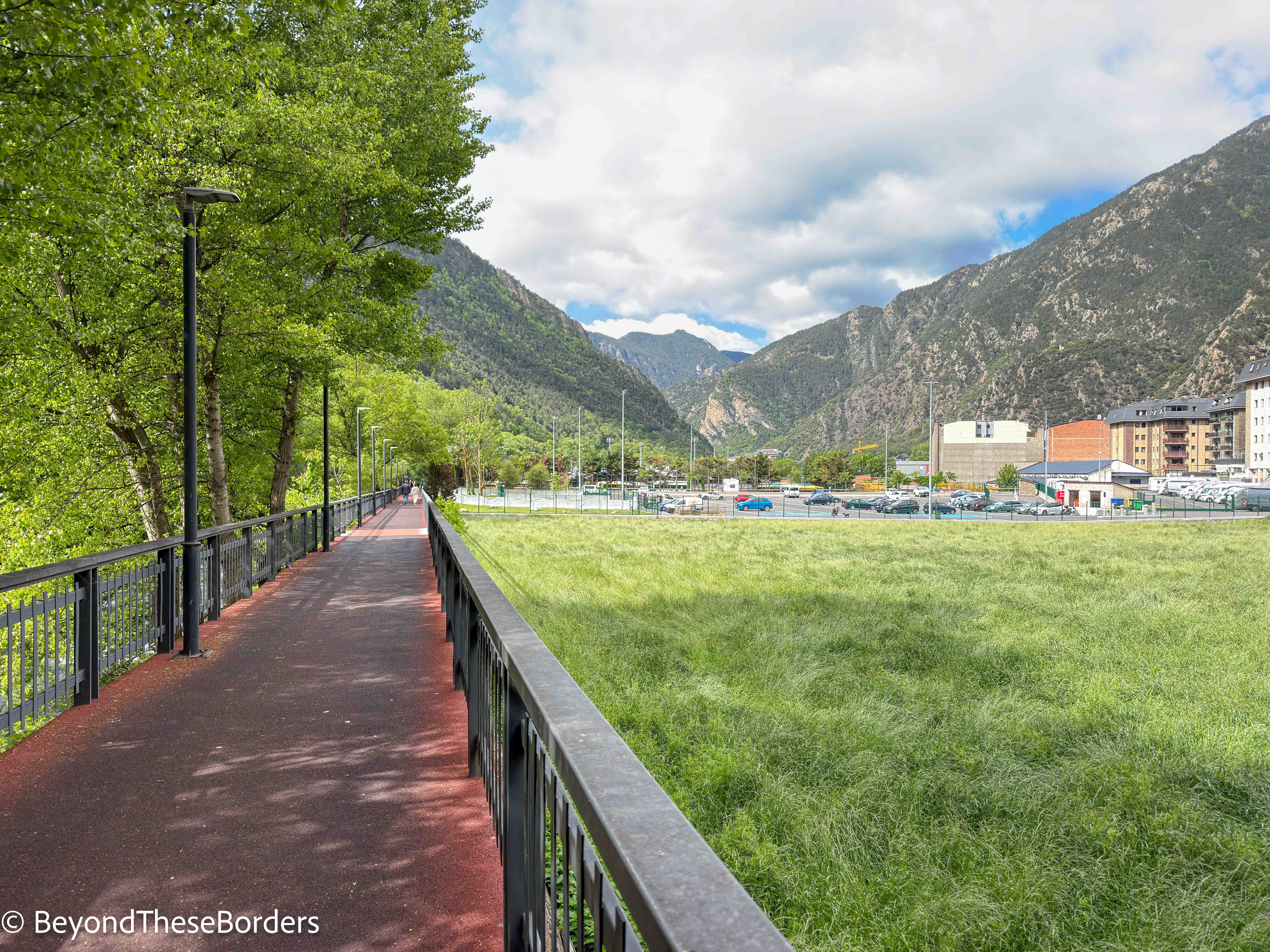
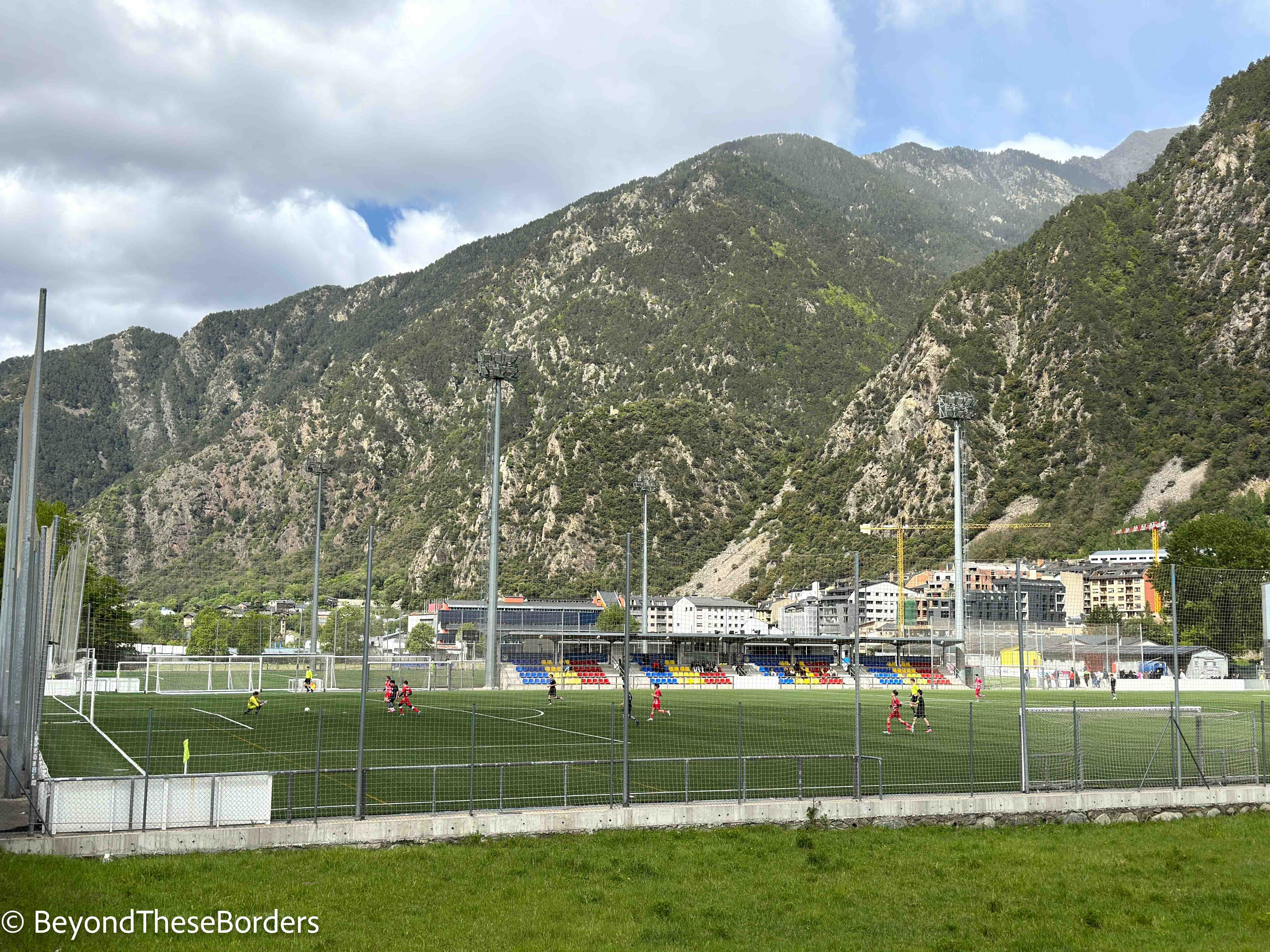
Santa Coloma is a small town in the Andorra la Vella parish that is just south of the capital city. It’s actually so close that you can easily walk there, I even made it on crutches. It was a nice walk, less than 2 miles long, mostly on a pedestrian path along the river. We had open views of the mountains and passed a nice big park and soccer field along the way.
Santa Coloma Church
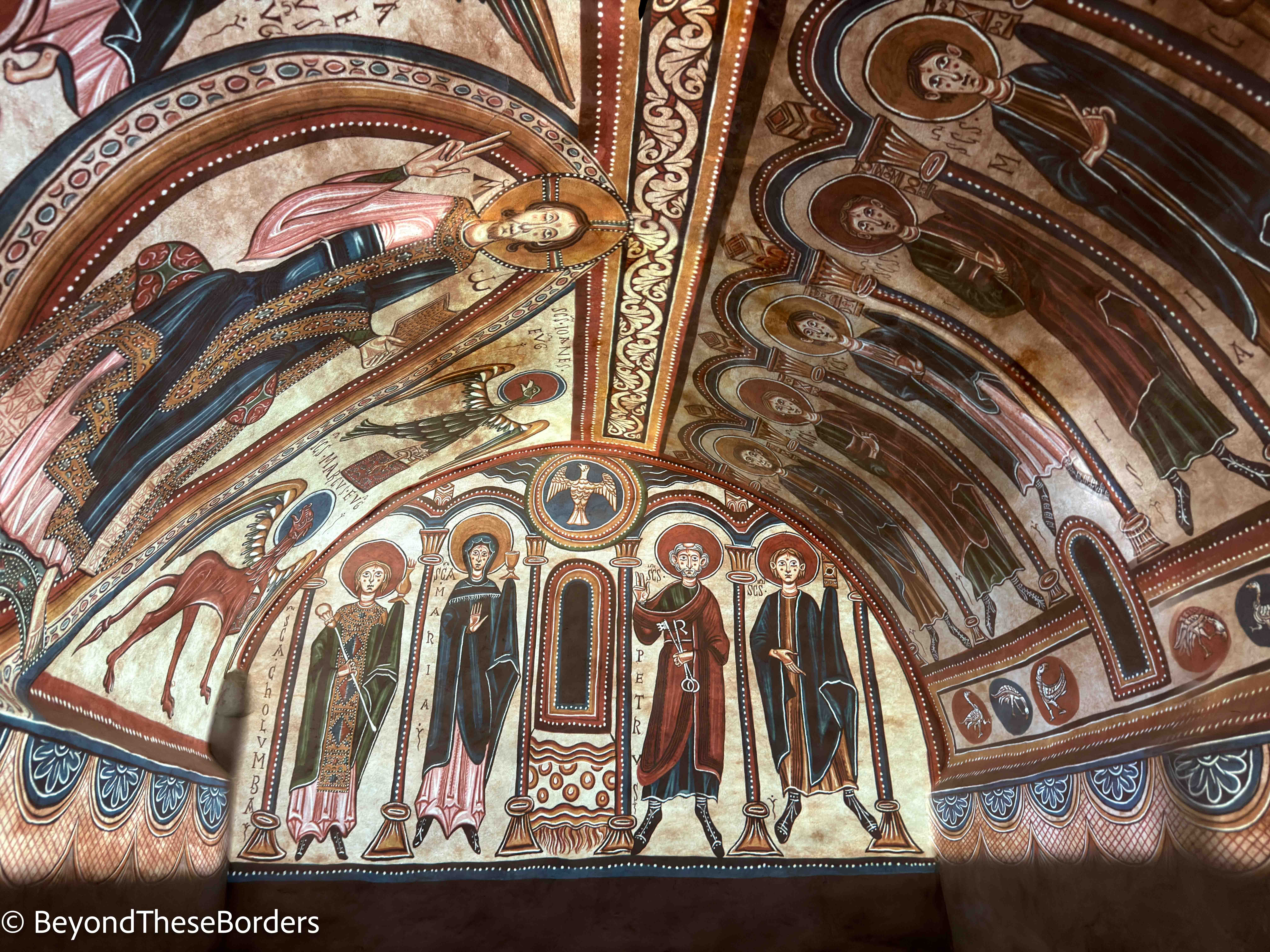
The Church of Santa Coloma is the oldest church in the country of Andorra, being built sometime between the 8th and 10th centuries. It is unique for being a Romanesque church with a circular bell tower which was added in the 12th century. To enter the church you must purchase a ticket to the Espai Columba museum across the street.
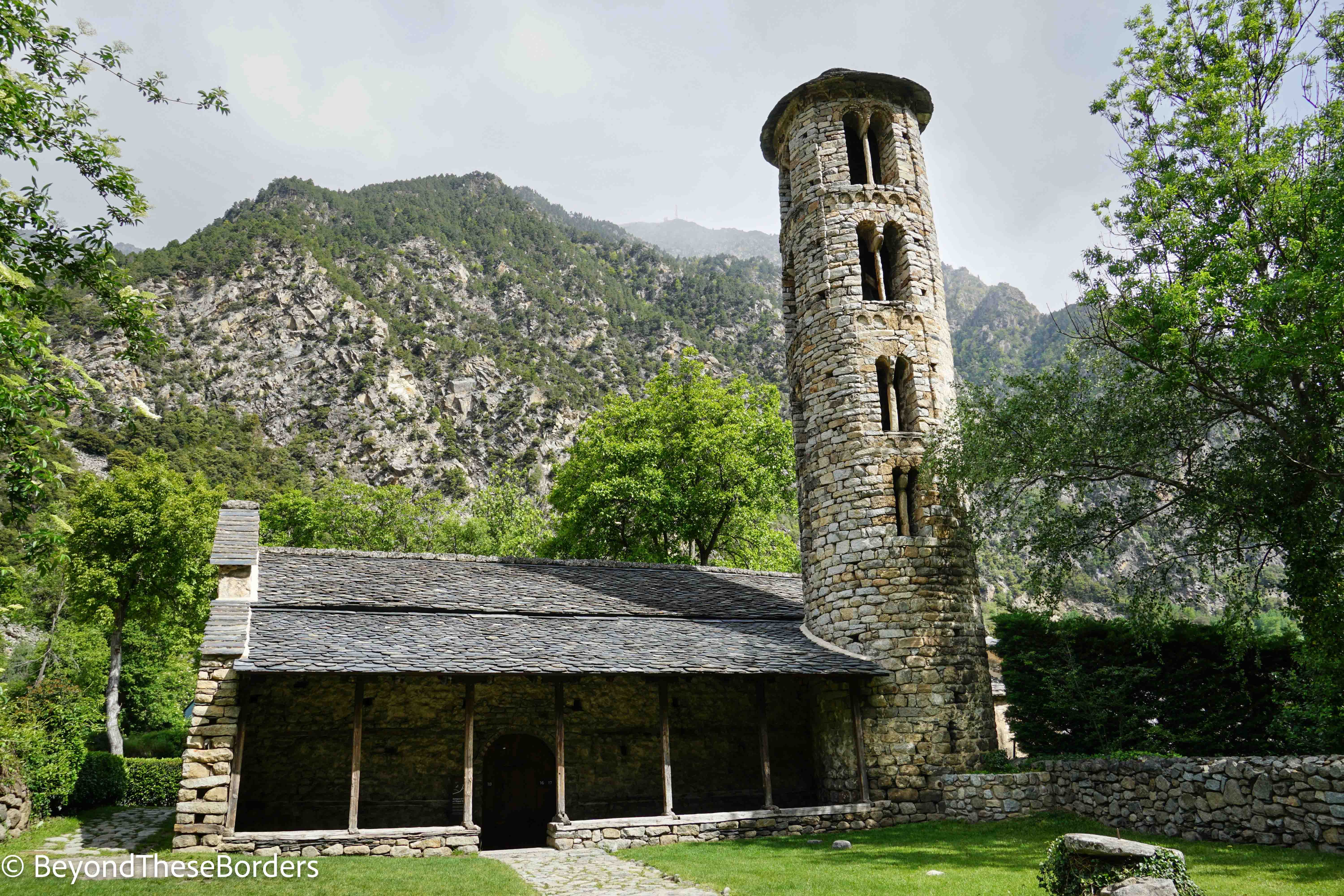
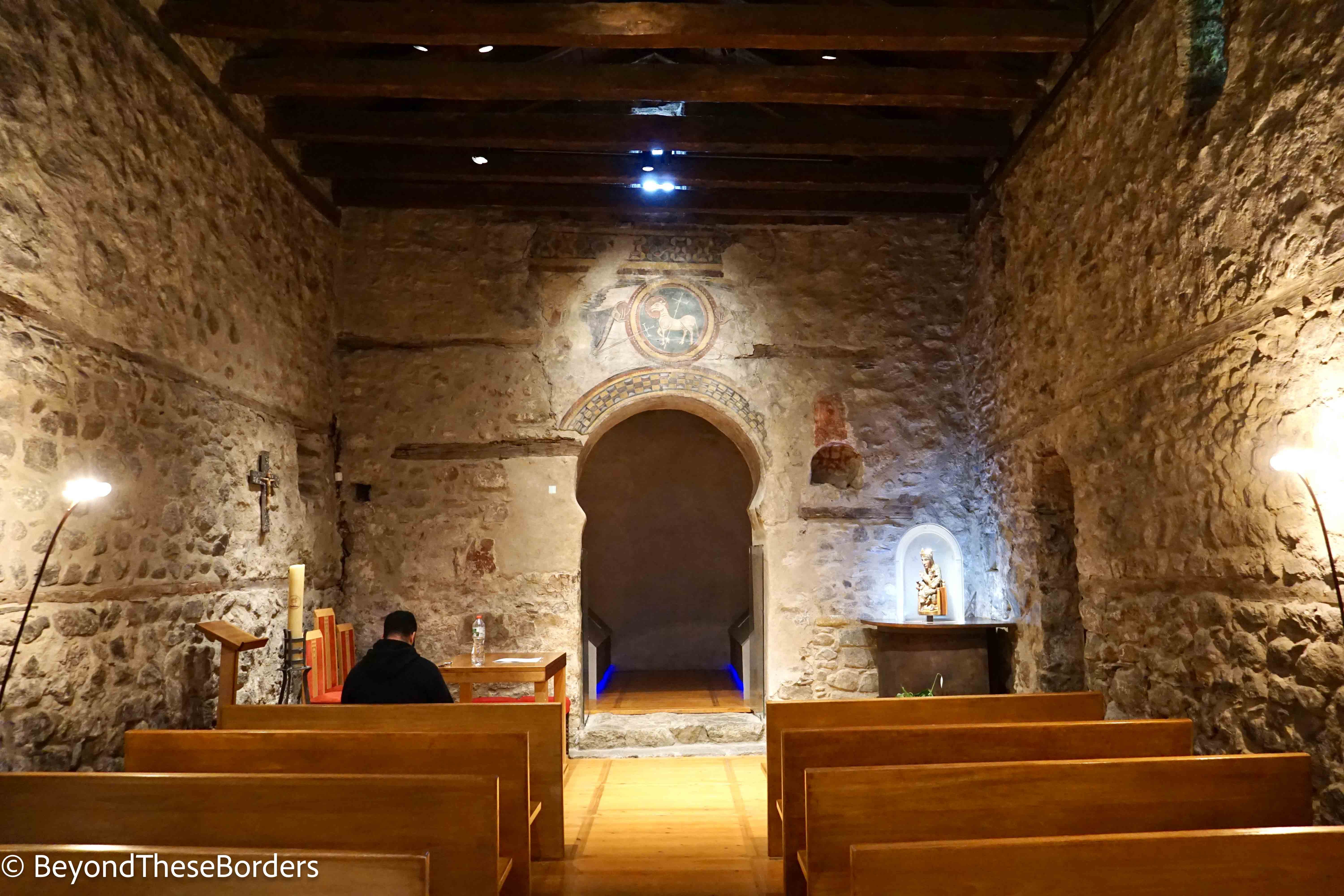
The 12th century mural paintings that were originally inside the Santa Coloma Church have been restored and relocated to the Espai Columba museum. An entrance fee of 7 euros gave us access to the museum and the church.
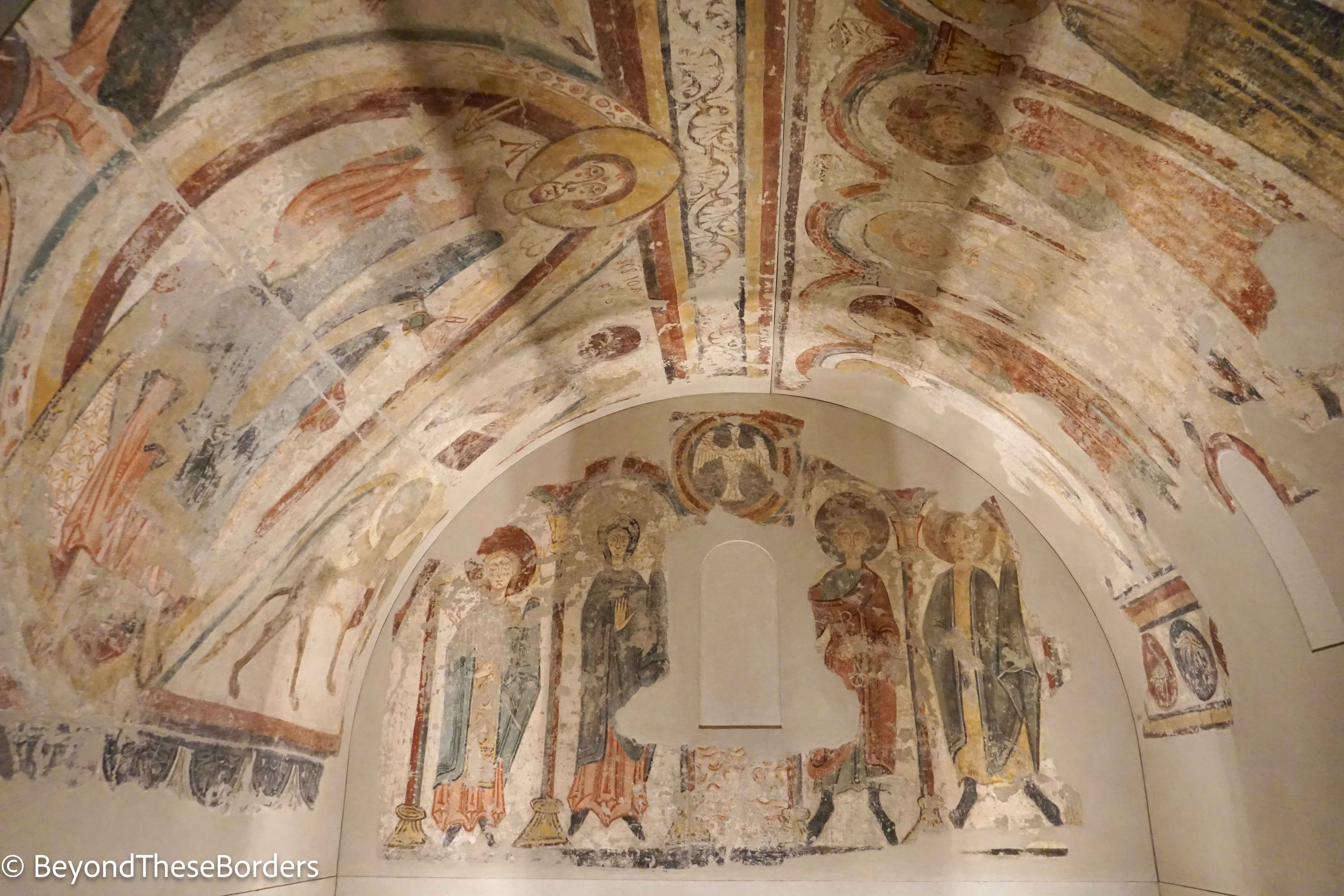
The paintings that originally were in St. Esteve d’Andorra Church have been reclaimed and are also on display in the Espai Columba museum along with some liturgical objects.
When you enter the Santa Coloma Church, a guide will play a light show. This light show has music and projects sections of the artwork onto the apse to the music. It ends with the entire apse lit up to show what the church looked like when it had the murals in their original condition.
Leaving Andorra
That wraps up our time in Andorra. We took the 3 hour bus directly to Barcelona and flew back to the States from there. Heading back to have a PRP procedure on my knee since I’m still struggling a year after injuring it. Then we will visit some family, renew our passports, and continue physical therapy in hopes that we can get back to traveling later in the year.